

























































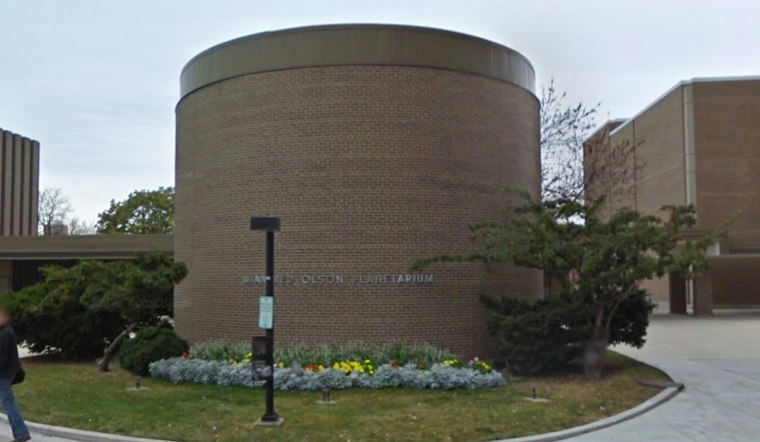
UW-Milwaukee's Manfred Olson Planetarium is inviting the public to explore some of the spookiest corners of the galaxy this month, with its Creepy Cosmos program running on Fridays in October starting Oct. 9, twice each night. Student presenters Elaina Hatley and Manal Khdour are leading the show, digging into topics like the mysteries of black holes, the eerie singing of Comet 67P and the possibility of life on other planets.
This marks the planetarium's third annual Creepy Cosmos program, according to WUWM 89.7 FM. Planetarium director Jean Creighton said the student staff have taken the lead on the program over the last few years, shaping what topics get featured and how they're presented to audiences. Costumes are welcome at the event, and attendees are invited to find real celestial objects and phenomena strange enough to earn their place in a haunted-house-style show.
What's Actually Creepy About Space
Khdour said the uncertainty of what remains unknown in space is part of what makes it feel creepier, per the same WUWM report. That framing has carried through past iterations of the show. In 2024, the planetarium transformed into a haunted manor, with portals in each room leading to different creepy celestial objects, as WUWM reported at the time, when topics included the sun, Venus, black holes and comets.
Creighton told the station that instruments like the James Webb Space Telescope are bringing researchers closer and closer to answers about whether life exists elsewhere in the universe — a theme that has carried into this year's exploration of other planets. Last year's version of the show, which transformed the space into the haunted Manfred Olson Manor, was student-led as well, highlighting neutron stars, the search for extraterrestrial life and Orson Welles' infamous War of the Worlds radio broadcast, according to a separate WUWM account.
Tickets, Access and Planning Your Visit
The Manfred Olson Planetarium is located inside UW-Milwaukee's Physics building, and the program includes an indoor stargazing session of the night sky followed by a chance for attendees to ask questions, according to the official event listing from UW-Milwaukee. The event is open to the public, and tickets are sold at the door starting 30 minutes before the stated start time, though the planetarium recommends buying online in advance since shows do sell out.
Accessibility notes from the university indicate the Physics building has one wheelchair-accessible entrance, reached via the path between the Physics and EMS buildings off Cramer Street. The rooftop stargazing deck itself is not wheelchair accessible, per the same university listing.
The Manfred Olson Planetarium, built in 1965 and opened in 1966, draws roughly 15,000 visitors a year, according to UW-Milwaukee. Creighton has directed the planetarium since 2007, overseeing a program that has grown from a single Halloween-season novelty into an annual tradition now largely shaped by its student presenters.





