

























































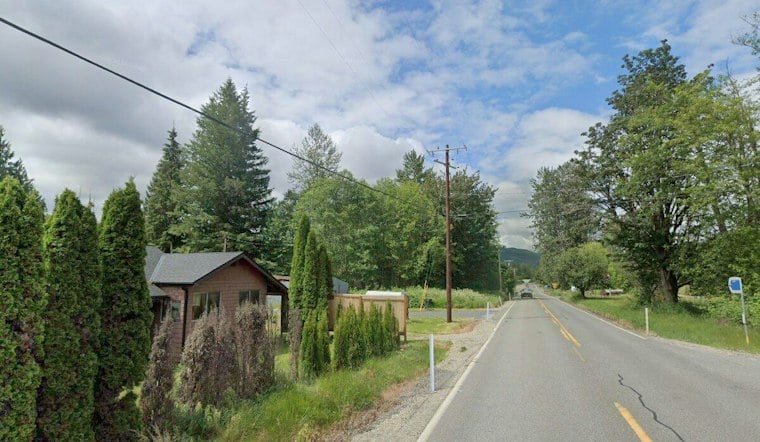
A video capturing two men handling a dead black bear on posted private property near Oso has landed the pair at the center of a Washington Department of Fish and Wildlife poaching investigation. The footage, taken on September 20, shows one suspected man dragging the bear while another holds a rifle, on land marked with a sign barring trespassing, hunting or fishing.
The Washington Department of Fish and Wildlife is now searching for the two people suspected of handling the bear while trespassing on the Snohomish County property, according to The Seattle Times. The bear seen in the video is believed to be about 2 years old and is not considered a cub, the paper reports. There's a grim irony baked into the location: Oso means bear in Spanish, per the same account.
Washington's black bear season runs from August 1 to November 15 this year, and anyone who wants to hunt one legally needs a license and a hunting tag. Licensed hunters may pursue up to two black bears, but state rules bar shooting cubs or adult bears traveling with cubs, and anyone who kills a bear must extract and submit a tooth from each animal for state records.
A Trespassing Case Layered With Wildlife Law
The property where the bear was found carries a posted sign explicitly prohibiting trespassing, hunting or fishing, a detail the Times notes separates this case from an ordinary poaching allegation. Under Washington law, unlawful hunting of big game in the second degree is a gross misdemeanor that triggers mandatory license revocation and a two-year suspension of hunting privileges upon conviction. Separately, knowingly entering private property without permission to hunt wildlife or retrieve killed game is its own misdemeanor under state statute, which also carries mandatory hunting license revocation.
According to the Times' report, the two suspected men could have their hunting licenses revoked and could face a misdemeanor charge for hunting while trespassing, with potential fines up to $500 and up to one year in jail. That penalty structure lines up with Washington's general criminal trespass statute, which under state law classifies second-degree criminal trespass as a misdemeanor punishable by up to 90 days in jail and a maximum $1,000 fine — a reminder that hunting trespass and ordinary property trespass are treated as distinct offenses under Washington code. Anyone convicted of unlawfully taking or possessing a black bear also faces a mandatory $2,000 criminal wildlife penalty assessment that funds the state's fish and wildlife enforcement reward account, a liability that courts cannot waive or suspend.
WDFW Wants Tips On the Men and the Bear
WDFW has asked anyone with information to contact its police division about the case and the bear's whereabouts. Tips can be phoned in at 877-933-9847, emailed to [email protected], texted to 847411, or submitted online through the department's website. People whose information leads to an arrest could receive money or bonus points toward special hunts.
That incentive structure runs through Washington's Turn in a Poacher program, which draws from a $10,000 annual reward pool or offers up to 10 hunting bonus points toward special permit drawings, according to a program description from eRegulations. Those bonus points can meaningfully improve an applicant's odds in competitive drawings for limited big-game tags. Hunters who do take a bear legally are also required to submit the unbroken root of the animal's first premolar tooth by December 1 so state biologists can study cementum growth rings and track the health of the bear population, per the same source.
A Bear Population the State Watches Closely
Washington's black bear population sits at roughly 20,000 to 22,000 animals as of 2024-2025, with numbers considered stable across the state's forested areas, according to a report from Capital Press. That stability follows a major policy shift: the Washington Fish and Wildlife Commission voted in 2022 to abolish the state's traditional spring bear hunting season, leaving the fall window as the only regular harvest period, as Hoodline reported in its prior coverage of bear encounters near Lake Whatcom.
WDFW fields around 500 black bear complaints statewide each year, and biologists estimate roughly 95 percent trace back to human-provided attractants like unsecured garbage and pet food left outdoors, per that same earlier Hoodline report. The Oso case, however, involves no such conflict — it centers on an alleged illegal kill on land where hunting was explicitly forbidden.
Oso itself is a rural, unincorporated community in Snohomish County along the North Fork Stillaguamish River, about 50 miles northeast of Seattle, with a population of just 172 residents as of the 2020 census, according to Wikipedia. The small community is better known nationally as the site of the devastating 2014 mudslide. For now, WDFW's investigation into the September 20 video remains open, and no charges have been confirmed against the two suspected men.




