

























































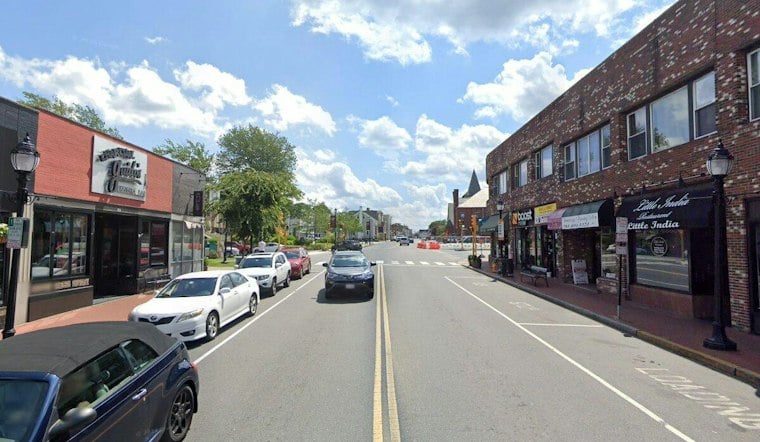
Waltham's Planning Director Robert Waters told the Traffic Commission this week that his department is no longer working on plans to adapt a pedestrian mall study for Moody Street, directly contradicting Mayor Jeannette A. McCarthy's recent statements that a comprehensive redesign was still in progress. The announcement effectively closes out years of debate over whether the popular restaurant strip should ever be closed to cars again.
The disconnect is striking given what the mayor told the Waltham Times just last month. McCarthy said in September that the department was working on a comprehensive plan for Moody Street that would address design elements of the street as a whole, not just traffic flow, and that she had personally participated in site views with planning department staff. She told the paper she expected the department to release a plan in the near future. Waters, however, confirmed at the commission's October meeting that no new updates were forthcoming, and he had previously told the Waltham Times the plan was simply tabled at the Traffic Commission.
City officials, business owners and residents have wanted improvements to Moody Street for years, a desire that predates the pandemic but intensified once Waltham began closing the street to vehicles in 2020. According to WCAC-TV, those 24/7 seasonal closures ran through October for three straight years and were widely praised by diners, even as they triggered lasting friction with merchants who didn't run restaurants.
From Emergency Closures to a Formal Study
That friction came to a head in February 2023, when McCarthy announced that full-time emergency closures could no longer continue under executive order, stating that “the powers of COVID are gone now” and handing outdoor dining permitting back to the City Council and Traffic Commission, per the station's reporting. A hybrid schedule closing the street from Thursday evenings to Monday mornings followed that season, a compromise the mayor defended as fair to parking-dependent businesses like salons, even as restaurant owners grumbled about scheduling uncertainty and expanded emergency lane rules.
A seasonal plan for Moody Street was approved in 2024. The corridor was designated a 20-mph safety zone enforced by Waltham Police, after local police and fire officials raised concerns about diners seated near moving vehicles.
Meanwhile, the city had already commissioned a traffic study from Nitsch Engineering back in 2023 to chart Moody Street's long-term future. By 2024, Nitsch had proposed three options: two that kept one-way traffic while expanding pedestrian and bicycle pathways, and a third that would have closed the street to vehicles entirely. The firm ultimately recommended what it called “Alternative 1,” one-way northbound traffic between High and Pine streets paired with bicycle accommodations, community gathering space and green stormwater infrastructure, according to Patch, which covered the Planning Department's November 2024 public input meeting on the findings.
Reactions Split Along Familiar Lines
The pedestrianization proposals drew the same mixed reactions that had defined the debate since 2020. Some local restaurant owners supported closing the street to cars, while some neighbors worried about traffic overflow onto side streets, and Moody Street store owners argued that removing street parking would cut into accessibility and their customer base.
By March 2025, the Traffic Commission had filed away further discussion of the Nitsch study at Waters' request, and Ward 9 Councilor Robert G. Logan said that same year the pedestrianization study had become a “moot question.” Even so, Traffic Commission members indicated as recently as September that they believed discussion remained ongoing pending further updates from the Planning Department, underscoring just how differently officials have read the plan's status.
At the September meeting, Traffic Engineer J. Michael Garvin recommended temporarily shelving discussion of other Moody Street traffic improvements until the Planning Department weighs in on any long-term plans. Waters declined an additional request for comment on an intern's work and the timeline for a future plan; the department has employed an intern to work on Moody Street plans over the past two summers, per the Waltham Times.
Smaller Fixes Take the Spotlight
Councilor Logan and fellow Councilor Cathyann Harris emphasized that the pedestrian study was not the only way to improve the pedestrian experience on Moody Street. Harris proposed sidewalk bump-outs at intersections to improve parking safety, along with parklets and increased bike parking as lower-impact alternatives to a full street redesign. The Traffic Commission also asked Garvin to study a rectangular rapid flashing beacon at Moody and Spruce streets.
Those incremental fixes arrive alongside a tightened set of rules for this year's restaurant season. For the 2026 outdoor dining season, which ran from May 22 through September 7, the Traffic Commission permitted restaurants to occupy sidewalk and parking spaces only directly in front of their own storefronts, eliminating a prior rule that let businesses expand into willing neighbors' frontages, Patch reported. Two-way vehicular traffic remained active seven days a week throughout.
Permit applications for that seating still carry a heavy regulatory lift. Site plans must comply with Section 521 of the Code of Massachusetts Regulations, the state building code governing ADA accessibility, aisle widths and sidewalk clearance pathways, and applicants must secure sign-off from the Mayor, City Council, City Clerk and Building Department, according to The Justice.
The corridor has also seen municipal investment even as the big redesign stalls. Earlier this year, Waltham installed enclosed, solar-powered “smart” trash receptacles along Moody Street after residents and business owners raised public health concerns about rodent sightings near outdoor dining areas, as Hoodline previously reported. The dining scene itself has also been under financial strain; the 7,300-square-foot chophouse The Federal permanently closed in April amid rising operating costs, though its ownership group kept its sister venue, Stazione di Federal, open on Moody Street.
With the Planning Department signaling the pedestrian mall study is finished and the mayor maintaining that work continues, whether or when the city will take up any large-scale Moody Street changes remains uncertain. For now, the street keeps its established model: two-way traffic, storefront-restricted curbside dining, and a patchwork of smaller safety upgrades instead of the sweeping overhaul many residents and merchants have pushed for since the pandemic first emptied the block of cars.





