

























































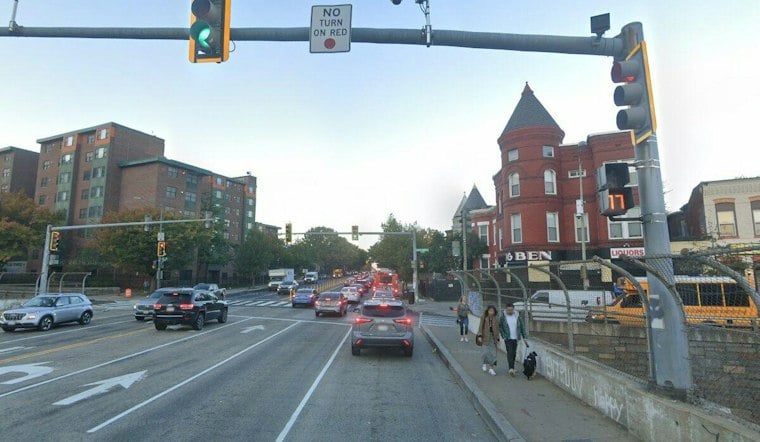
More than 1 million speed camera tickets and over $100 million in fines hit drivers in just two D.C. wards over the past year, and now a city councilmember wants to know why. Wards 5 and 7 have more than twice as many speed cameras as any other ward in the District, a disparity that has prompted Councilmember Wendell Felder to demand answers from the agency that puts them there.
According to WUSA9, speed cameras in Wards 5 and 7 collected over $100 million in fines and issued more than 1 million tickets in the past year, citing data from the District Department of Transportation. Ward 7 alone has around 70 active speed cameras, roughly 50 more than Ward 6, the station reports. Felder sent a letter to DDOT Tuesday night asking the agency to explain how it chooses camera locations and whether concentrating so many in certain wards unfairly burdens those communities.
The numbers behind individual cameras illustrate the scale of enforcement in those two wards. A camera on Kenilworth Avenue NE ticketed drivers more than 78,000 times in the past year, while a camera at North Capitol Street and New York Avenue in Ward 5 issued more than 47,000 fines over the same span, per the station's reporting. DDOT public records cited by WUSA9 also show a speed camera was installed on East Capitol Street in Ward 7 near the Whitney Young Memorial Bridge last month, adding to the ward's already outsized total.
Driver Says the Cameras Feel Like a Cash Grab
Saundra Black, who drives to work in Ward 5 from Prince George's County, told the station she has been caught by speed cameras several times, sometimes more than once in a single month. She said she now drives more cautiously when entering the District, but described the cameras as a bit of a cash grab. Black also said that having heavier enforcement concentrated in one area rather than spread evenly becomes concerning to her.
DDOT has said it selects camera locations based on factors including speeding, crash histories and roadway safety, according to prior testimony the agency gave to the D.C. Council, as reported by WUSA9. The agency has also identified Wards 5, 7 and 8 as having a disproportionate number of traffic deaths, per that same reporting. The District has acknowledged concerns about fairness in its automated enforcement program, though whether DDOT has concluded the current distribution is justified remains an open question raised directly by Felder's letter.
A Citywide Camera Buildout Years in the Making
The ward-level fight is unfolding against the backdrop of a much larger expansion of automated enforcement across the District. Greater Greater Washington found that DDOT roughly doubled the number of speeding cameras operating citywide by 2024, with automated enforcement cameras issuing just over 250,000 tickets in May of that year alone. The outlet also found that the average camera tends to issue fewer tickets over time than it does in its first few months of operation.
Separate reporting from Safety21 at Carnegie Mellon University found that a camera on northbound I-295 in Southeast recorded over 100,000 fines in the past year, the most of any of the city's 334 active speed cameras. That same account found Ward 5 collected more than half a million tickets worth $62 million in that timeframe, though it is not established whether that figure covers the identical period as the citywide totals reported elsewhere. A Johns Hopkins economist told Safety21 that getting drivers to slow down benefits both public safety and residents' finances, saying, “If we manage to have people slow down, everyone benefits. Their finances and public safety.”
Equity Concerns Are Not New to D.C.'s Camera Program
Questions about whether camera placement burdens some neighborhoods more than others predate Felder's letter. A 2023 mayoral budget proposal called for adding 342 new traffic enforcement cameras, including 122 new speed cameras, and projected the expansion would generate $580 million in revenue over four years for the general fund, according to DCist. That same proposal established a task force specifically to examine the equity of camera ticket fines and locations, with planned cameras meant to go on the District's high-crash corridors even though exact locations had not yet been determined.
That mayoral task force found that speed cameras can improve safety, but also found that traffic fines can place a greater financial burden on lower-income drivers, and that about 80% of speed camera tickets districtwide went to vehicles registered outside D.C., per the dossier's seed reporting. DCist also cited a 2019 D.C. Policy Center study finding that cameras are distributed in neighborhoods with more people of color and lower incomes. Research cited by Greater Greater Washington has found that cameras can reduce total crashes by roughly 20% near their location, and a DDOT presentation showed that the number of people driving 11 or more mph over the limit declined after a camera and traffic-calming measures went in on Wheeler Road SE.
D.C. is not alone in confronting these questions. A ProPublica analysis found that Chicago's traffic cameras disproportionately ticket Black and Latino motorists, and a city-backed report described by Block Club Chicago recommended more than a dozen changes to that city's program, including eliminating late fees and boosting transparency. For now, whether DDOT will adjust its approach in Wards 5 and 7 remains unanswered, with the agency's response to Felder's letter still pending.





