

























































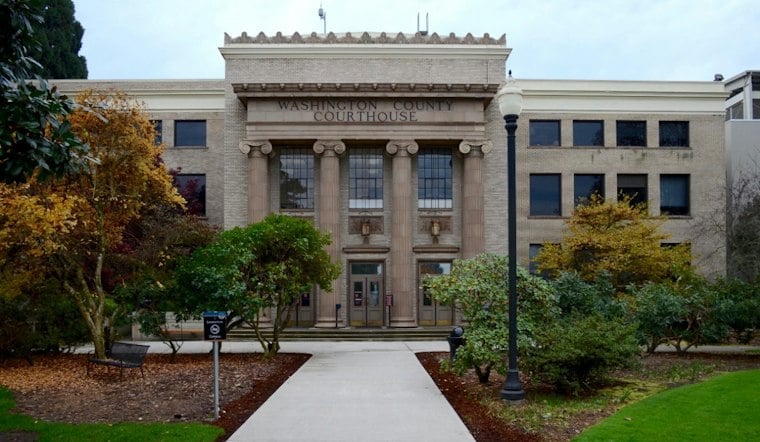
Washington County commissioners passed a resolution and order Tuesday that could shape how, or whether, large-scale data centers ever get built in the unincorporated parts of the county — even though no developer has filed a single application to build one there. The vote comes as communities across Oregon scramble to get ahead of an industry that has exploded in size over the past two years, fueled by the artificial intelligence boom.
A Resolution With No Projects to Regulate
According to KOIN, the resolution and order establishes the county's position on data center development and acknowledges community concerns about the industry's environmental footprint and potential to raise energy rates. The measure opposes large-scale standalone data center development in unincorporated Washington County and opposes offering tax or other financial incentives to lure such facilities to the area, per the outlet's reporting. It also directs county staff to assess whether a data-center-specific task should be added to the county's 2027-2029 planning work program, and it supports data center moratoriums in places where development is likely and a regulatory pause is needed.
The county's land-use authority covers only unincorporated areas outside city boundaries, and by that measure, there is not much to regulate yet. Washington County has no standalone data centers and no pending applications to build one, and officials have said there are no known large-scale facilities anywhere in the unincorporated county, according to oregonlive.com.
Why the County Skipped a Formal Moratorium
That scarcity is exactly why Washington County opted to forgo a moratorium altogether, the outlet reported. County staff identified only eight industrial parcels in the unincorporated area that met the criteria for data center development — and all eight were already developed. All but three of those parcels were smaller than 40 acres, and as of the article's reporting, no developers had submitted land-use applications for a data center anywhere in the county.
The county also has nearly 410,900 acres of unincorporated land, nearly 93% of which is rural, the report noted. There are currently no specific guidelines for data centers written into the county's land use code, and the county's rural land regulations would not allow data center construction in the first place, an assistant director of Land Use and Transportation told the outlet. With so little developable industrial land and no code provisions tailored to the industry, officials apparently judged a moratorium unnecessary for now.
Oregon's Statewide Reckoning
Washington County's measured approach stands in contrast to a wave of moratoriums moving through other Oregon jurisdictions. Hillsboro adopted a temporary moratorium on data centers and battery storage facilities on July 27, and the city's councilors later voted unanimously to approve permanent data center regulations, according to OPB. Hillsboro's new rules would cap data center development at just over 600 acres citywide, leaving only about 30 acres available for future projects, and would add a 1,000-foot buffer around schools, the station reported separately. Data centers already occupy more than 430 acres in Hillsboro, with another 140 acres under construction or allocated for development.
Woodburn, Salem and Clackamas County have also kickstarted the moratorium process, and on October 22 the Clackamas County Board of Commissioners unanimously approved a temporary moratorium on data center development in unincorporated areas, set to remain in place for 120 days unless extended or repealed. The station reported that rapid data center development nationwide is driven by advancements in artificial intelligence, and the Oregon Data Center Advisory Committee, formed by Governor Tina Kotek at the beginning of 2026, has said in preliminary findings that data centers pose both opportunities and risk for the state.
The Stakes Behind the Pushback
The numbers behind the statewide anxiety are substantial. Oregon had 111 operational data centers as of September, representing about 22.1 million square feet of building space, with 32 more facilities planned or under construction, per OPB's earlier reporting. Data centers accounted for roughly 23% of the state's retail electricity sales in 2025, and researchers expect that energy consumption to rise to nearly 25 terawatt-hours by 2030. The same report found the industry directly employed an estimated 2,630 workers statewide, with 2,205 of those jobs in Eastern Oregon, and that companies paid $60.2 million in property taxes on operating data centers in 2025.
Some jurisdictions that have slowed permitting say the trade-off is real. Umatilla officials calculated that a permitting pause could cost the city more than $2.5 million in annual tax payments and $12 million in water infrastructure improvements, OPB reported. Hermiston's city manager said the pause had cost residents approximately $550 million in anticipated future local fee revenue, and told the outlet that Amazon canceled plans for multiple new data center developments it had planned in the city after the moratorium was announced.
What Comes Next in Salem
A statewide framework is still taking shape. The Oregon Data Center Advisory Committee is expected to issue policy recommendations by the end of 2026, and the Oregon Legislature is expected to take up data center regulations after it convenes in January 2027, according to OPB. A recent OPB-commissioned poll found nearly two-thirds of likely Oregon voters favored a temporary statewide ban on data centers.
Governor Kotek paused environmental permits to build or expand data centers earlier in October, saying the pause would allow time to evaluate the advisory committee's eventual policy recommendations, per the KOIN report. Separately, Kotek's office has said she supports locally set moratoriums on new data center development until the committee's findings can be reviewed and a new statutory framework considered by lawmakers next year, according to the Oregon Governor's Office. Lawmakers have also passed the POWER Act, which would create a new electricity customer class for data centers and cryptocurrency operations starting at 20 megawatts, according to the Oregon Legislature. For now, Washington County's resolution supports that statewide advisory process while leaving its own unincorporated land largely untouched by the industry it is already bracing for.





