

























































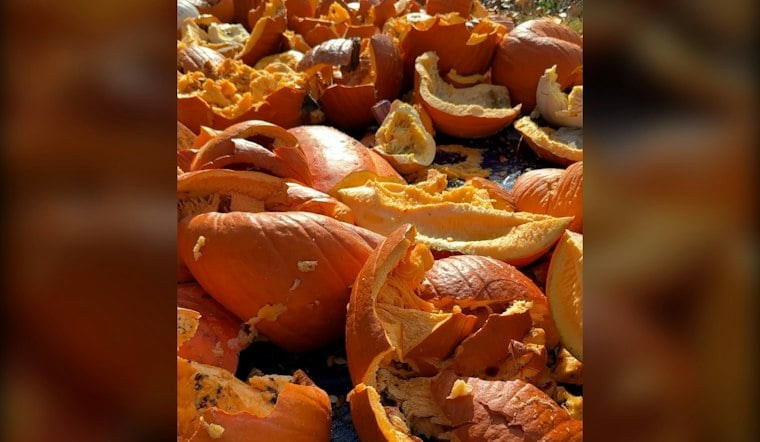
Webster Groves wants your dead jack-o-lanterns, and it wants you to smash them before handing them over. The city's annual Pumpkin Smash returns Saturday, Nov. 7, 2026, running from 9 a.m. to 1 p.m. at Blackburn Park, offering residents a free and environmentally friendly way to get rid of post-Halloween pumpkins instead of tossing them in the trash.
According to the City of Webster Groves, the event is open to the public and designed specifically to keep spent pumpkins out of landfills after the holiday. The Facebook video announcement from Webster Groves Parks Recreation describes the gathering as a community event featuring pumpkin smashing, games, activities and environmental education, with collected pumpkins composted into nutrient-rich material rather than sent to a landfill. Webster Groves is joined in the regional celebration by Brentwood, Maplewood, Crestwood and Sunset Hills.
Brentwood Volunteers Signing Up for Traffic Duty
The event isn't just a Webster Groves production. Per a report from citizenportal.ai, the Brentwood Sustainability Committee has agreed to support the regional pumpkin-smash composting event, which is backed by a St. Louis County grant. Organizers are anticipating a busy morning, with the host expecting roughly 160 vehicles to pass through.
To keep that traffic moving, organizers asked Brentwood for three to four volunteers to help with traffic control and ZIP-code tracking, the same report notes. The committee also discussed staffing a small volunteer contingent and an information table at the event, giving residents a chance to learn more about composting while they wait to swing away at their old jack-o-lanterns.
What You Can and Can't Bring
Attendees planning to drop off a pumpkin should do some prep work first. Candles, stickers, paint, glitter and other decorations need to come off before the pumpkin gets composted, according to the Webster Groves Parks Recreation announcement. That requirement lines up with guidance from St. Louis-area composting operations more broadly: St. Louis Composting states that pumpkins must be free of paint, glitter or other decorations to qualify for composting at any of its nine retail locations, where customers can also get a $10-off coupon by stopping at the office before placing a qualifying pumpkin in the designated bin.
Residents who can't make it to Blackburn Park on Nov. 7 have other options around the region. Earthday365 runs two pumpkin-composting drop-off points in St. Louis City, at 4125 Humphrey St. and the North Newstead Association at 4601 Pope Ave., according to firstalert4.com. Pumpkins dropped at those stations also need to be clean and free of paint or other decorations, the station reports.
Why Smashing a Pumpkin Actually Matters
The environmental case for all this smashing is bigger than one park. The same firstalert4.com report cites EPA figures showing 66.2 million tons of wasted food were generated nationwide in 2019, with only 5% of it composted, while solid-waste landfills accounted for about 14% of U.S. methane emissions in 2022. USDA data cited in that report indicate more than a billion pounds of pumpkins are discarded each year after Halloween, a sizable chunk of food waste that composting efforts aim to redirect. Earthday365 notes that composted pumpkins can supply plants with nitrogen, phosphorus and potassium, turning gourds that would otherwise rot in a landfill into usable soil.
Webster Groves isn't the only Missouri city betting on this approach. A similar Pumpkin Smash at Columbia's Agriculture Park, organized by the Columbia Center for Urban Agriculture, drew more than 100 people who were encouraged to bring their own Halloween leftovers, according to the Columbia Missourian. That event provided baseball bats and pumpkins for smashing, with the leftover mush ultimately used as compost instead of heading to the trash.
For St. Louis County residents, the Nov. 7 event at Blackburn Park offers a similarly hands-on option: bring the jack-o-lantern that's been rotting on the porch, strip off any decorations, and let it get a second life as compost rather than landfill waste.



