

























































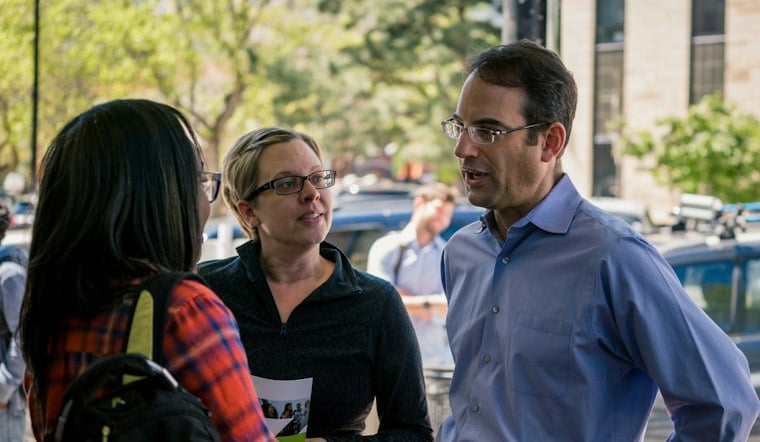
Colorado Attorney General Phil Weiser is asking voters to hand him the governor's office on a platform built around 40,000 new starter homes, a first-bill set of guardrails for data centers, and a promise to tackle a looming state budget shortfall. The Democratic nominee sat down for a wide-ranging interview covering water, housing and the state's finances as Colorado voters prepare to decide the race on Nov. 3.
Weiser secured the Democratic nomination after beating U.S. Sen. Michael Bennet in June's primary with 57% of the vote, according to the Greeley Tribune. He now faces Republican nominee Victor Marx in a general election shadowed by a projected $1.6 billion state budget deficit, a figure reported by the Denver Post. In a separate interview with Denver7, Weiser discussed issues ranging from water scarcity to masked law enforcement officers.
A 40,000-Home Pledge Amid a Statewide Shortfall
At the center of Weiser's economic pitch is a promise to build 40,000 new attainable or starter homes statewide, a goal documented by the Colorado Newsline voter guide. He says he would pursue that target by cutting red tape and streamlining permitting, the same guide notes.
Weiser's campaign blueprint, published on his campaign site, also calls for banning algorithmic price collusion by corporate landlords — language that echoes his statement to Denver7 that he would ban what he described as harmful AI technology used by corporate landlords to coordinate rent increases. He pointed to a White House study, which he said estimated AI-assisted rent increases in Denver at more than $130 per month.
Marx, the Republican nominee, has emphasized reducing red tape and opposing mandates he says drive up costs, while supporting property-tax relief, according to the Newsline guide.
Data Centers Top Weiser's Legislative To-Do List
Weiser told the Greeley Tribune his first legislative priority as governor would be a data center bill meant to put guardrails on the industry, a position he reiterated to Denver7 by saying he wants such a bill to be the first one he completes. Per the Newsline's reporting from August, Weiser said communities “should be able to say no” to data center development and has called for reporting requirements on the industry's water and electricity use. In his Denver7 interview, he identified three guardrails specifically: giving communities a choice over development, protecting consumers from rising energy costs, and ensuring consistency with the state's clean energy and water commitments.
Weiser also floated a specific use case for the technology, telling Denver7 that a geothermal-powered data center in northwest Colorado could employ workers displaced by coal plant closures in the region.
Budget Pressure and a Medicaid Commission Searching for Savings
Colorado's Medicaid commission is currently examining whether the program's budget is out of sync with current conditions, Weiser told the Coloradoan. He described the commission's work as “kicking the tires” on the state's Medicaid realities. The commission itself was established under state legislation, SB26-187, which the Colorado General Assembly says was created to develop recommendations on federal Medicaid policy changes taking effect in 2026, 2027 and 2028 and to support Coloradans affected by those changes.
Weiser told Denver7 he would collaborate with lawmakers and listen to families to address Medicaid spending and prevent waste, rather than impose cuts unilaterally. The fiscal backdrop adds urgency: the Greeley Tribune reports that individual-market health insurance premiums in Colorado are expected to rise by an average of 10%, layering additional cost pressure onto a budget already facing a $1.6 billion gap.
Education Funding Gap and an Unresolved Rail Question
Weiser told Denver7 that Colorado's education system faces a $10 billion funding gap, and said he supports Proposition NN as a vehicle to invest in education and children's future. He also told the Coloradoan he wants to convene civic assemblies across the state to help shape a broader education plan, framing the effort around the question of how to do right by Colorado's kids.
Not every issue drew a firm position. Weiser told Denver7 he has not taken a stance on Front Range passenger rail, leaving that question open as the campaign continues.
Water Scarcity and a Push for Solar-Covered Reservoirs
Weiser told Denver7 that Colorado has less water available than it did 10 or 20 years ago because of climate change and population growth. To address evaporation losses, he proposed covering reservoirs with solar panels, which he said could cut evaporation by as much as 40%.
Legal Fights With Washington Shape His Closing Argument
Weiser is leaning heavily on his record as attorney general, an office he first won in 2018, according to the Newsline's voter guide. He told the Denver Post that his legal battles with the federal government — including litigation he says protected the National Center for Atmospheric Research — helped lay the groundwork for his gubernatorial run. He said discovery in a lawsuit over U.S. Space Command revealed a White House meeting he characterized as intended to discuss punishing Colorado, and he said the federal government denied Colorado unemployment insurance funds the state is entitled to.
Weiser also pointed to his office's litigation against the Trump administration. He also pointed to his office's handling of opioid settlement funds, saying Colorado recovered close to $1 billion in opioid-related settlements and that overdoses declined by more than 20% over the last couple of years. His office separately said the state's opioid settlement spending framework was recognized as a national model, a distinction confirmed on the Colorado Attorney General's office announcement on the Teva, Allergan, CVS and Walgreens settlements.
Other Positions: Social Media, Policing and Labor
Weiser told Denver7 he would sign legislation creating accountability and oversight for social media companies — a bill Gov. Jared Polis previously vetoed, according to the same interview. He also said masked law enforcement officers undermine public safety and that he favors transparent, trustworthy policing. On labor, Weiser said he supports changing Colorado's Labor Peace Act through collaboration between business and labor groups.
Weiser told Denver7 he previously served in the Clinton and Obama administrations. Weiser has described himself as a collaborative and creative problem solver as Colorado heads toward its Nov. 3 decision.


