

























































A Wendell man says his 911 call for an ambulance ended with a Lyft on the way instead, and by the time he got to an emergency room on his own, doctors found he had appendicitis. Brett Rothstein, 39, a retired New York City EMT, called 911 on October 18 seeking emergency transport, and says Wake County dispatch sent a rideshare rather than a medic unit.
Rothstein's account, first reported by CBS 17, describes his wife telling the 911 operator that he was doubled over in pain and could not walk. The call was routed to Wake County's 911 Nurse Navigation Program, and per Rothstein, the nurse navigator who responded was located in Dallas, Texas. That remote staffing arrangement is by design: Wake County contracts with Global Medical Response to run the program, using North Carolina-licensed registered nurses who work out of a centralized call center in Lewisville, near Dallas, according to Wake County government.
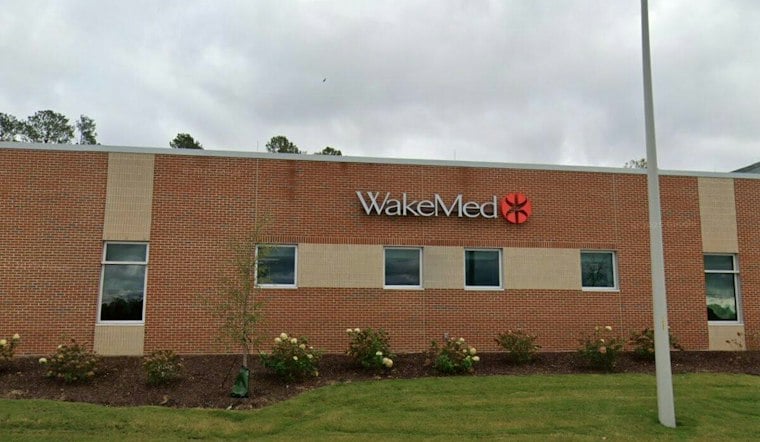
Per Rothstein, the nurse told him a Lyft would be arranged and estimated it would arrive in 15 minutes. He says his pain, which he rated a 10 out of 10, worsened in the time it took to wait. Rothstein ultimately canceled the Lyft request and drove himself to WakeMed Wendell, where he was diagnosed with appendicitis before being transported by ambulance to WakeMed Raleigh, where he is recovering.
How the Nurse Navigation Program Is Supposed to Work
Wake County EMS and Lyft partner on the nurse navigation service, which uses trained telecommunicators to ask callers questions about their condition before connecting them to a registered nurse, who assesses the patient and suggests care options — including dispatching either an ambulance or a free Lyft ride, per the CBS 17 report. In a statement issued the day after the incident, Wake County EMS said callers with non-life-threatening concerns may be transferred to a nurse navigator, who may recommend a virtual doctor visit, a trip to urgent care, or a free Lyft ride.
County protocol, however, preserves an exit ramp: nurse navigators are required to send callers back to standard 911 dispatch if the nurse believes an ambulance is needed, or if the caller declines the Lyft option and insists on an ambulance instead. Wake County EMS's medical protocols explicitly state that every 911 caller retains the right to request an ambulance regardless of a nurse navigator's assessment, according to county EMS medical protocol documents. Wake County EMS has said its protocol sends an ambulance to callers who need one and does not refuse ambulance transport to any caller, per the county's statement cited by the station.
A Program Built Amid Ambulance Shortages
Nurse navigation was added to Wake County's 911 system in 2021 to help callers navigate the healthcare system, and the county says calls needing that kind of help make up about 20% of people who access 911. Roughly 35% of patients who qualify for nurse navigation do not end up going to the hospital by ambulance, per the CBS 17 report. Wake County EMS Director Jon Studnek said in February that the program's goal is to rapidly send ambulances to patients with dire illnesses while still providing reliable care to everyone who calls, and the station reported that 911 receives about 400 calls a day in Wake County, with life-threatening emergencies accounting for roughly 10 percent of those calls.
The program sits inside a broader overhaul: beginning in March, Wake County EMS phased in a four-tier dispatch triage system meant to prioritize life-threatening Level 1 calls while routing low-acuity Level 4 callers to nurse navigators, paired with a policy to cut ambulance lights-and-sirens usage from 80% to 20% of calls to reduce traffic accidents, as Hoodline reported in February. The county has also faced ambulance shortages, including so-called Level Zero scenarios in which all active units were committed to calls.
Open Questions Over Training and Liability
CBS 17 asked Wake County whether Lyft drivers receive any training tied to the nurse navigation program, who is liable if a patient's condition worsens during a Lyft ride, and whether the system actually reduces 911 wait times and taxpayer costs. Those questions remain notable given Lyft Healthcare's own platform guidelines, which state its rideshare services are designed solely for non-emergency medical transportation and are explicitly prohibited for emergency situations or for patients who cannot move or enter a vehicle on their own, according to Lyft.
National data suggests these programs generally function as intended. A study published by the National Association of EMS Physicians found that about 50% of low-acuity 911 callers transferred to nurse triage avoided an emergency room visit entirely, while only 2.9% required re-escalation back to emergency dispatch for advanced life support, according to research cited via Hoodline's coverage of a similar Columbus program. Wake County's Nurse Navigation Program directs callers to non-emergency care options.
In 2023, the estate of a Seattle woman filed a wrongful-death lawsuit alleging a delay in her emergency response. Wake County is not alone in outsourcing this work to GMR's Texas call center — Snohomish County, Washington, and Santa Clara County, California, launched comparable programs in 2024 using the same remote nursing operation, according to the HeraldNet.





