

























































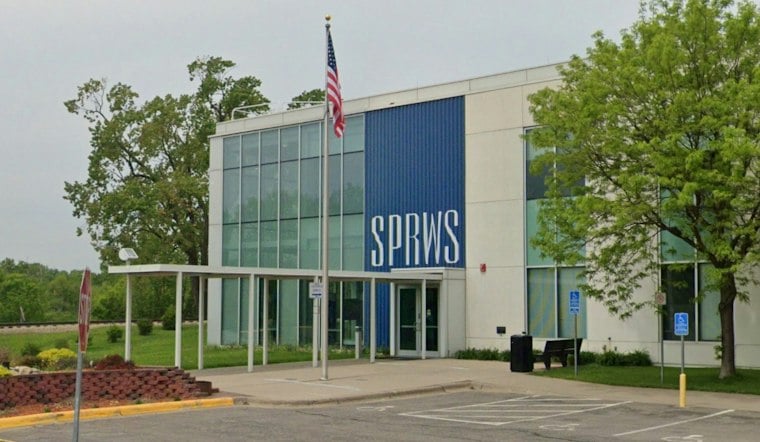
A 21-year-old self-described urban explorer has been sentenced for breaking into an underground water reservoir in West St. Paul, an incident that forced Saint Paul Regional Water Services to cut the tank off from the rest of its distribution system as a precaution against possible contamination. Zachary Daniel Laiho received a 364-day jail sentence that was stayed for two years, meaning he will avoid incarceration as long as he meets the terms of his probation, which include 40 hours of community service and an as-yet undetermined amount of restitution.
According to the Pioneer Press, Laiho reached a plea deal with prosecutors last month in which a felony property damage charge was reduced to a gross misdemeanor, while two other charges were dismissed at sentencing. The case stems from a November 19, 2024 disturbance call that sent West St. Paul police to a fenced-in reservoir on Imperial Drive west of South Robert Street, where dispatch reported three or four people on top of the structure. Officers found the reservoir's hatch had a damaged lock and was standing open, with a crowbar, headlamp and backpack left behind at the scene.
A Scramble to Secure the Water Supply
The reservoir holds and supplies approximately 5 million gallons of drinking water for the area, and Saint Paul Regional Water Services moved quickly to isolate it from the broader system. The state health department ran laboratory tests and found no drinking water quality concerns, and the reservoir was back in service the day after the break-in. Saint Paul Regional Water Services pumps an average of 40 million gallons of treated drinking water daily across a distribution network serving roughly 450,000 customers in 14 Twin Cities area communities, according to the City of Saint Paul, which also notes the utility directly serves Saint Paul, Maplewood, West Saint Paul, Mendota Heights, Falcon Heights, Lauderdale and Mendota, plus additional wholesale customers. The response to this single breach cost Saint Paul Regional Water Services $2,468 in labor, while the health department incurred $848.68 in testing costs, per the same Pioneer Press account.
Tracking down the suspects required a significant show of force. Drone and helicopter searches involving seven area police agencies combed the neighborhood before officers found Laiho hiding in the backyard of a nearby home and a 16-year-old boy hiding behind a house about a half-mile away. The multi-agency response used police drones and a Minnesota State Patrol helicopter to establish a perimeter across neighboring yards after the suspects fled on foot, according to FOX 9.
Fishing Videos and a Refusal to Name Friends
Laiho told police that he and his friends make fishing videos and had heard there were fish in the reservoir, and that his friends — not him — had damaged the lock. He refused to identify those friends to investigators. He later told authorities that he and his companions partake in urban exploring, a hobby built around exploring abandoned buildings. Per FOX 9's reporting, a third adult male who was present during the break-in later turned himself in to police, admitting he was on site but denying he opened the hatch or put anything into the water.
Laiho was initially charged with felony aiding and abetting first-degree criminal damage to property, gross misdemeanor trespassing on critical public service facilities, and misdemeanor fleeing a police officer. The 16-year-old boy faced identical charges. Dakota County District Court handled both cases. Minnesota's trespassing statute covering critical public service facilities, enacted as part of the state's post-9/11 Anti-Terrorism Act of 2002, classifies such intrusions as a gross misdemeanor carrying up to a year in prison and a $3,000 fine, according to the Minnesota Revisor's Office. The felony property-damage statute Laiho originally faced carries penalties of up to five years in prison and fines as high as $10,000.
A History of Run-Ins With the Law
The West St. Paul reservoir break-in was not Laiho's only brush with the justice system around that period. He was booked into the Anoka County Jail on October 11, 2024 — about five weeks before the reservoir incident — on suspicion of burglary and theft, according to Anoka County Sheriff's records. He had also been charged with second-degree burglary and first-degree criminal damage to property in connection with an alleged break-in at a Blaine home in May 2024. He pleaded guilty to the burglary charge in that case in March 2025 and entered a diversion program for first-time offenders, ultimately completing 40 hours of community service and one year of probation. The Blaine burglary charge was dismissed after he met all the program's conditions.
Urban exploration, often shortened to “urbex,” has become a widespread online content genre in which people trespass into off-limits or obscure infrastructure specifically to film videos for social media, FOX 9 reports. That trend sits alongside a broader pattern of warnings: federal agencies including the FBI and EPA have repeatedly flagged physical and digital security vulnerabilities at municipal drinking water facilities nationwide, concerns that Hoodline has previously covered in incidents involving water utilities in other cities. It remains unclear whether Saint Paul Regional Water Services has since added security measures such as enhanced hatch locks, cameras or motion sensors at its satellite reservoirs, or whether the third adult suspect who turned himself in in the West St. Paul case faced separate prosecution.



