

























































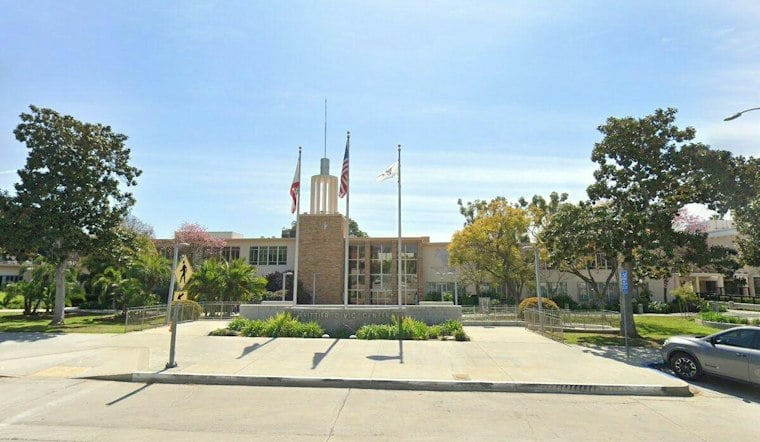
Whittier City Council voted Oct. 27 to temporarily ban new data centers, detention facilities, massage parlors and car washes across the city, adopting four urgency ordinances that take effect immediately for 45 days. The vote came after a public hearing where council members cited strain on infrastructure, water supplies and public safety as reasons to pump the brakes on all four land uses while the city studies longer-term rules.
Three of the four measures passed unanimously, according to the Whittier Daily News: urgency ordinance 3174 establishing a temporary moratorium on data centers, ordinance 3179 banning detention facilities, and ordinance 3181 establishing a temporary moratorium on massage parlors. Council member Cathy Warner cast the lone dissenting vote on ordinance 3180, the measure halting new car washes, while the rest of the council backed it.
The hearing followed direction the council gave city staff back in August to draft urgency ordinances that could pause data centers, detention or processing sites and car washes so officials could study their impacts on infrastructure, water and public safety, according to citizenportal.ai. That review was meant to examine whether code changes were needed before any of those projects could move forward in the city.
What Each Ordinance Covers
The data-center moratorium targets a use that city planners say comes loaded with infrastructure demands: electrical draw, cooling and water needs, backup generators and round-the-clock operations, per a report from whittier360newsnetwork.com. The same draft also swept in cryptocurrency-mining and blockchain-processing operations, which share similar power and cooling footprints.
The detention-facility ban, meanwhile, is written broadly enough to temporarily block any new, expanded or intensified detention facility in Whittier, not just immigration-related ones, the outlet reported. The restrictions apply only within Whittier's city limits; unincorporated pockets like South Whittier and West Whittier/Los Nietos remain under Los Angeles County jurisdiction.
Council Members Weigh In
Ben Pongetti, Whittier's director of community development, said the moratoria grew directly out of concerns residents raised about the impacts of each business type. He said the temporary measures give the city time to study the issues and decide whether to make any code changes permanent in the Whittier Municipal Code.
Council member Vicky Santana cited the proliferation of massage parlors and questions about their legitimacy, along with concerns that detention facilities don't belong in Whittier neighborhoods. She said a moratorium also positions the city to respond if state or federal regulators eventually require data centers to meet new standards, without unfairly singling out future developments. Santana added that the ordinances address land-use concerns tied to data centers' electricity and water demands, backup generation infrastructure, capacity and sound pollution.
Council member Aida Macedo said future prohibitions should spell out the council's intentions clearly, including worries about data centers' environmental impacts, the potential for abuse and human trafficking tied to massage parlors, and the detention and treatment of immigrants. She said the broader goal of the prohibitions is to protect the city's integrity and reflect what residents actually want for their community.
What Comes Next for the Moratoria
The council could extend the moratorium on Dec. 8 for another 10 months and 15 days, and could extend it again after that for up to two years total, giving the city a long runway to craft permanent zoning language if it chooses.
Whittier Joins a Regional Wave
Whittier is far from alone in moving against data centers. Baldwin Park, the City of Commerce, Montebello, West Covina and South El Monte have all issued their own temporary moratoriums on the facilities, part of a broader scramble among Los Angeles County cities to get ahead of a data-center boom fueled by demand for artificial intelligence infrastructure.
El Segundo's City Council voted 4-1 on Oct. 20 to extend its own temporary data-center ban for another 10.5 months, until roughly September 2027, according to the Daily Breeze. That city's moratorium blocks approval of any land-use entitlements, permits or other processes that would let data centers be built, expanded or operated, and staff there said the zoning code hadn't been updated since the 1990s even as the technology advanced. A data-center developer had already withdrawn a proposed El Segundo project in July after residents raised concerns about power use, noise and pollution.
Elsewhere in the region, Monterey Park became the first U.S. city to permanently ban data centers through a voter-approved ballot measure on June 2, after residents there opposed a project over environmental concerns and what research group CalMatters described as inadequate public information. Irwindale's City Council approved its own data-center ban on Sept. 9, and Alhambra voters are set to decide a charter amendment permanently banning the facilities on Nov. 3.
A Statewide Water and Energy Reckoning
The local pushback is unfolding against a wider statewide debate over data centers' environmental footprint. A report from Next10 and Santa Clara University researchers found that a patchwork of state, federal and local policies lets data-center operators avoid publicly disclosing how much water they actually use, even as facilities expand into water-stressed California communities including the Central and Imperial valleys, according to CalMatters. The same reporting found that publicly available environmental impact reports for data centers in the state are rare, with the few that researchers located largely limited to facilities in Santa Clara.
State lawmakers have taken some steps to address those gaps. During the 2026 legislative session, Gov. Gavin Newsom signed seven bills addressing data-center development, covering environmental review, water and energy reporting, and cost allocation, according to law firm Brownstein Hyatt Farber Schreck. For now, Whittier's four 45-day clocks are ticking, with the council's next decision on whether to extend them expected Dec. 8.





