

























































Two Republican incumbents who have repeatedly voted down large solar farms are facing a pair of Democratic challengers for Will County Board District 4, a race that covers Mokena, Homer Glen, New Lenox and Lockport and could shape the balance of power on a board split evenly between the parties. Voters will choose two candidates to serve four-year terms, deciding whether to keep Republicans Jim Richmond and Steve Balich in their seats or hand them to Democrats Sheri Boniecki-Cooling and William Pratt.
The stakes extend well beyond the district's borders. As reported by the Chicago Tribune, the 22-member county board is divided 11-11 between Republicans and Democrats, a deadlock that leaves Democratic County Executive Jennifer Bertino-Tarrant casting tie-breaking votes on contested measures, according to Shaw Local. Richmond, a 65-year-old business owner who has served on the board since 2022, has led the board's Republican caucus since 2024, succeeding Balich, a 75-year-old retired board member who has held his seat since 2012 and led the caucus from 2022 to 2024.
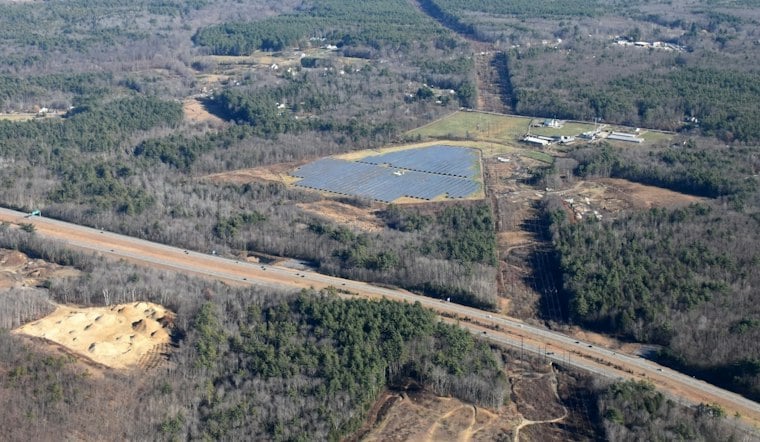
Both incumbents have voted against utility-scale solar developments, including a 2,400-acre project near Crete and a 6,100-acre proposal spanning Green Garden, Wilton and Manhattan townships, the Tribune reports. Richmond says the county is losing agricultural land to solar developments and would consider projects on low-fertility farmland if nearby residents and municipalities did not object. Balich takes a harder line, saying he will continue voting against solar projects and arguing the technology will eventually become obsolete and be replaced.
Solar Fight Runs Into State Law
Balich has also criticized state mandates that require the county board to approve solar projects, a frustration rooted in Illinois Public Act 102-1123, which took effect in January 2023 and bars county boards from imposing siting rules stricter than state standards or outright moratoria on renewable projects, according to Inside Climate News. The law was designed to help Illinois reach its goal of 100% clean energy by 2050. Hoodline has previously reported that the Crete-area project from Earthrise Energy was projected to generate roughly $2.3 million in first-year revenue for local taxing bodies, including $1.2 million for Crete-Monee School District 201-U and $135,000 for Will County.
Boniecki-Cooling, a 47-year-old home health aide from Lockport who founded the Homer Township Democratic Organization and serves on its open space committee, takes a different view. She supports responsible, controlled growth and says she backs renewable energy and investment in solar plants when appropriate, acknowledging that farmers may choose to lease or sell their land to solar developers, per the Tribune's reporting. She draws a sharper line on data centers, opposing large facilities that strain energy and water supplies, generate noise, and commit land to long-term industrial use — a concern that echoes county board members who introduced proposals this month calling for a moratorium and first-time zoning rules for data centers, according to Shaw Local.
Cameras, Trucks and the Budget Fight
License plate reader cameras have become another dividing line. Boniecki-Cooling opposes the Flock Safety devices, citing risks of abuse and privacy violations, and says the cameras should be shut down until strong safeguards are in place. Balich says he will keep voting against using county rights of way for the cameras. The county board voted 14-8 in August to approve agreements letting municipal police departments install the cameras along county rights-of-way in six municipalities, including Mokena and Frankfort, CBS Chicago reported, with public comment split between law enforcement supporters and privacy-minded residents. The debate has local roots in District 4: Homer Glen suspended its $106,650 Flock camera contract in August after a Will County Sheriff's deputy was placed on administrative leave during a misuse investigation, as Hoodline has reported.
Property taxes dominate the rest of the race. Richmond says taxes in the area are among the highest in the country, while Balich argues the county routinely underestimates revenue and overestimates expenses, producing larger-than-needed surpluses. The Republican caucus proposed a 2% reduction in the property tax levy this year, and Republicans plus one Democrat voted for no increase in the fiscal year 2026 levy. Boniecki-Cooling calls the 2% reduction proposal political one-upmanship rather than a serious plan, noting that Bertino-Tarrant has proposed no increase in the 2027 levy, with the full board set to vote on that levy later this year.
Pratt, a 68-year-old retired electrician from Mokena running as a moderate Democrat without backing from the Will County Democrats organization, says overtaxation is one of the county's biggest problems and calls for stronger accountability and management. He argues partisan politics have become too divisive and says board members should prioritize constituents and the county over party loyalty. Boniecki-Cooling points to the board's reconciliation of an unbalanced budget using cash reserves last year as evidence the county needs more responsible use of reserves and clearer public explanations of its budget, and says board members should come to votes better prepared.
Beyond the Ballot Box Issues
Pratt, who volunteers at Misericordia Homes in Chicago and Park Lawn, says Will County lacks enough programs for seniors and people with special needs, and wants to help expand support for vulnerable residents. He also points to growth pressures on police and emergency services along with a shortage of affordable housing as problems the board needs to address.
Balich has staked out positions on truck traffic through residential neighborhoods, saying he wants semi-trucks kept off roads not built for their weight and out of residential areas, and supports stricter fines for drivers who use unauthorized shortcuts. He opposes raising weight limits on county roads, arguing it would drive up infrastructure repair costs. He has also called for the county board to study data centers and micro nuclear plants and write ordinances before project proposals are submitted — a notably different emphasis than Boniecki-Cooling's opposition to large-scale data center development.
Balich's record extends beyond policy votes. In June 2024, while serving as Homer Township Supervisor, he flew the American flag upside down outside township offices to protest Donald Trump's criminal conviction in New York, a move Hoodline covered at the time; Balich defended it as a display of national distress, while local Democratic lawmakers criticized the gesture. Despite their policy differences, both incumbents and both challengers say they support keeping property taxes low, leaving voters to sort out which approach to budgeting, land use and surveillance technology they trust most when they cast ballots for District 4's two seats.





