

























































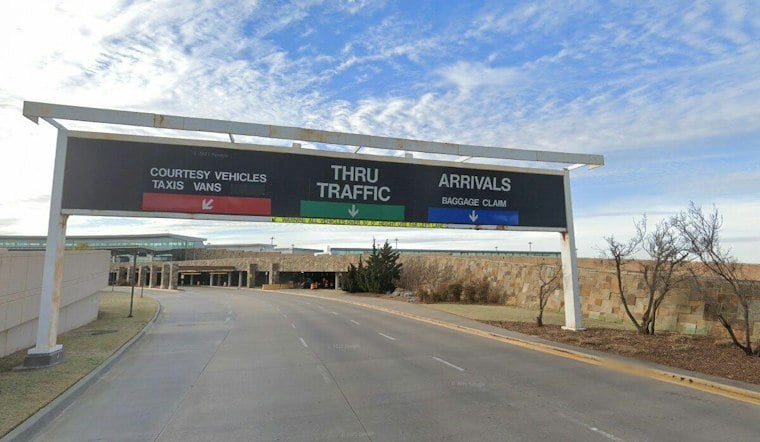
Will Rogers International Airport unveiled a long-range blueprint Tuesday that would eventually increase its annual passenger capacity from roughly 4.6 million travelers to as many as 20 million, about 4.35 times its current level, with the terminal eventually sporting 40 gates instead of today's much smaller footprint. The plan, dubbed “Cleared for Takeoff,” is designed to prepare the Oklahoma City airport for growth over the next 25 years, according to airport officials who unveiled it Tuesday.
The vision was detailed by News 9, which reported that Jeff Mulder, the airport's director of airports, said the plan balances landside facilities with airside terminal capacity, improves passenger processing, and keeps Oklahoma City connected to the global economy. Rather than locking in a fixed completion date, the expansion will unfold in three phases tied directly to passenger growth, the station reported.
A Demand-Driven Rollout, Not a Fixed Deadline
Phase 1 is set to begin once annual passenger demand approaches 6 million, per the station's report, while Phase 2 kicks in once volume nears 8 million travelers a year. Phase 2 calls for extending the terminal frontage westward to roughly 550 feet, expanding the concourse to between 24 and 26 gates, and building at least one gate designed to accommodate larger widebody aircraft, the same report notes. That phase would also add a permanent two-level roadway for passenger drop-off and pickup.
Phase 3, the furthest-out stage, envisions the airport eventually handling 20 million passengers annually with a full 40-gate terminal and a curbside roadway expanded to six lanes split across two separate curbs, according to the same account. Airport officials have stressed that the designs remain conceptual and subject to change as planning progresses, and that the entire expansion will be guided by passenger demand rather than a preset schedule.
Record Traffic Already Straining a Growing Hub
The scale of the ambition tracks with how fast the airport has already grown. In calendar year 2024, Will Rogers International Airport set an all-time annual passenger record with 4,602,573 travelers, a 4.6 percent jump over 2023 driven by expanded domestic flight schedules, according to Visit Oklahoma City. That growth pushed the airport beyond its pre-pandemic peak of 2.14 million enplanements, the organization reported.
The airport's push toward international relevance has been building for a couple of years. The Oklahoma City Council approved renaming the facility from Will Rogers World Airport to OKC Will Rogers International Airport as part of a rebranding meant to enhance global marketing and signal international expansion plans, The Points Guy reported, noting the airport was originally named in 1941 to honor humorist and aviation advocate Will Rogers. The airport followed that rebrand by expanding into scheduled international air travel in November 2025, when American Airlines launched nonstop seasonal flights to Cancún, Mexico, according to Partybusoklahomacity.net.
Building on a Recent $80 Million Expansion
This new master plan builds directly on a previous $80 million terminal expansion that opened in September 2021. The airport has four new gates, an eight-lane centralized TSA security checkpoint, a public observation deck, and a lower-level customs area. Before the terminal expansion, only one gate was available to lease.
That 2021 expansion also left a distinctive mark on the terminal floor: a 44,000-square-foot public terrazzo artwork called “OKConnected,” created by Oklahoma City artist Matt Goad through the state's 1.5 percent public art capital expenditure mandate, a requirement that directs Oklahoma capital projects over $250,000 to set aside funding for public art. Hoodline covered the artwork's roots in its reporting on Matt Goad's broader public art portfolio.
Infrastructure Work Already Underway Before New Construction Begins
Even as the long-range vision takes shape, immediate groundwork is already in motion. The airport began replacing its terminal flooring in September 2026, installing custom terrazzo across the baggage claim, pedestrian tunnel, ticketing hall, and concourses, with the project expected to finish in January 2028, according to the News 9 report. Roadwork at Terminal Drive and Amelia Earhart is scheduled to begin in mid-October 2026 and finish in February 2028, the station reported, while restroom renovations in the baggage claim and ticketing areas, designed to exceed standard accessibility requirements, are expected to wrap up by December 2027.
On August 27, 2026, the Oklahoma City Airport Trust approved a program management contract with Burns & McDonnell Engineering Company and authorized revenue bond resolutions to finance preparatory capital projects, including roadway realignments and parking garage construction, according to Govly. Airport expansion projects like these are financed through airport revenue bonds and trust-managed revenues rather than general city tax funds, the filing noted.
Aerospace's Outsized Role in Oklahoma's Economy
The push to quadruple airport capacity reflects the broader weight aviation carries in the state's economy. Oklahoma's aerospace and aviation industry ranks as the state's second-largest economic driver, generating $43.7 billion in annual economic output and supporting more than 205,000 jobs across 109 public airports, according to the Oklahoma Department of Aerospace & Aeronautics. Will Rogers International Airport serves as central Oklahoma's primary commercial aviation hub within that statewide network.
The airport also encompasses 8,081 acres southwest of downtown Oklahoma City and functions as a joint civil-military facility. It logged 98,508 aircraft operations in 2025. That expansive footprint gives planners room to pursue the phased landside and airside buildout the new master plan lays out, with construction timing ultimately dictated by how quickly passenger numbers climb toward each phase's trigger point.





