

























































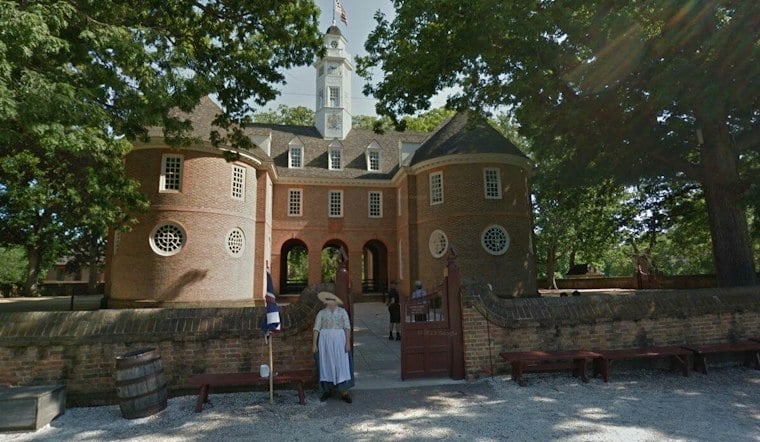
Colonial Williamsburg is marking its 100th birthday with a ticketed evening gala called A Toast to the Next 100, running from 5:00 pm to 8:30 pm on November 14, 2026, at Market Square North in the heart of the Historic Area. The event honors the foundation's century-long legacy and the start of its next hundred years, capped off with a fireworks finale at the Capitol. Tickets are limited, and organizers are asking guests to dress in refined but comfortable attire suited for an evening outdoors.
The gala, detailed by Williamsburg Families, includes hors d'oeuvres, handcrafted cocktails and fellowship before guests move into reserved seating for exclusive evening programming. The gala runs from 5:00 pm to 8:30 pm. Market Square North sits in the heart of the Historic Area, placing the toast right at the symbolic center of the restored colonial capital. According to Colonial Williamsburg, the event is scheduled to proceed rain or shine, with severe weather triggering a move indoors to the Virginia Ballroom at the Williamsburg Lodge, and full refunds available for anyone who cancels before November 6, 2026.
A Free Day Before the Ticketed Night
The gala caps a full day of public celebration that starts hours earlier and costs nothing to attend. Colonial Williamsburg is offering free admission to the Historic Area on November 14 from 10:00 a.m. to 5:00 p.m., with special anniversary programming and a grand procession featuring interpreters, community members and the Fifes and Drums, per the foundation's own announcement. That daytime access gives locals and visitors a chance to take part in the milestone before the evening's ticketed reception and fireworks take over.
The following day brings an unprecedented pause for an institution that rarely closes its doors. Colonial Williamsburg will shut the Historic Area, the Art Museums and the Campbell Archaeology Center entirely on November 15, 2026, holding what the foundation describes as a private appreciation gathering for employees, volunteers, retirees and their families. It's a single-day closure the foundation calls unprecedented, closing down the world's largest living history museum to turn the thanks inward for a change.
How a Rector and a Rockefeller Built the Place
The institution being celebrated traces back to a partnership struck a century ago between Reverend Dr. W.A.R. Goodwin, rector of Bruton Parish Church, and philanthropist John D. Rockefeller Jr., who secretly agreed in late 1926 to fund the acquisition and restoration of the town's 18th-century properties, according to Virginia Living. That quiet deal kicked off the restoration of the town's 18th-century properties. Rockefeller and his family funded the effort almost exclusively, with total contributions exceeding $79 million by the end of the 1960s before the foundation transitioned to broader public donor support, per the Rockefeller Brothers Fund.
What emerged from that investment is a 301-acre Historic Area containing 89 original 18th-century buildings alongside hundreds of reconstructed colonial structures, making it the world's largest living history museum. The timing of the centennial is no accident of scheduling, either: 2026 also marks the United States' semiquincentennial, 250 years since the signing of the Declaration of Independence, positioning Williamsburg as a national focal point for the country's broader anniversary commemorations this year.
A Year of Centennial Programming Beyond the Gala
The November gala and closure are the bookends of a year that has already brought new exhibits and facilities to the Historic Area. The Art Museums of Colonial Williamsburg opened a special exhibition titled Colonial Williamsburg: The First 100 Years on February 28, 2026, showcasing more than 200 archival objects, decorative arts and folk art tracing the foundation's history. The foundation also opened the Colin G. and Nancy N. Campbell Archaeology Center this year, a modern facility with research laboratories and curated artifact collections that lets visitors watch archaeologists analyze historic finds in real time.
The centennial has also reached into the foundation's archives. As Hoodline reported in its earlier coverage of the foundation's October letters series, the John D. Rockefeller Jr. Library holds roughly 160 major manuscript collections spanning 17th- to 19th-century primary sources, including Patrick Henry's Resolves and historic local correspondence collected continuously since 1926. Those holdings have fed public readings this fall as part of the broader centennial lineup, tying the archival work directly to the public-facing celebrations culminating in next month's gala and fireworks at the Capitol.





