

























































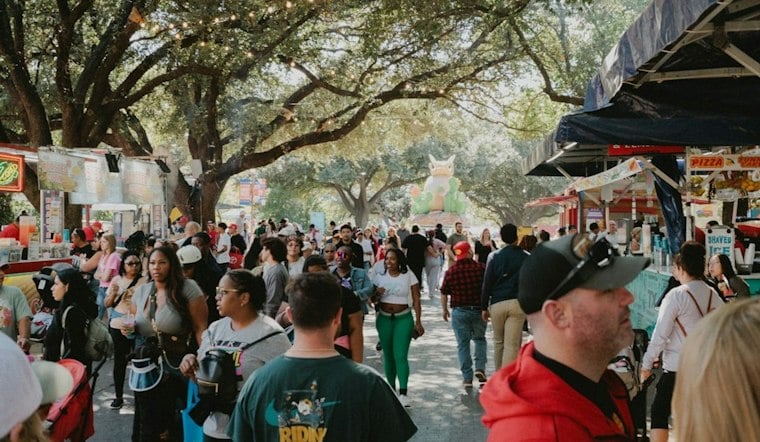
Regional ingredients offer one way into Gather ’Round the Table: Texas Food Traditions, now on view at the Witte Museum through February 7, 2027, as part of the museum’s centennial programming. The exhibit covers 1,300 years of food history in a 5,500-square-foot gallery, according to the San Antonio Report; the San Antonio Express-News also covered the exhibit.
A regional map of what Texans grow and eat
The displays connect foods with the places where they are grown or harvested: Hill Country peaches, Rio Grande Valley citrus, Gulf Coast oysters, and South Texas peanuts and pecans. The San Antonio Report describes these regional examples as part of the gallery’s journey across the state. An interactive station lets visitors smell eight spices associated with cultural groups cooking in Texas today, the Express-News reports.
The museum’s exhibition page describes an interactive table where visitors assemble a Texas plate and compare choices such as breakfast tacos, barbecue and potluck foods. The activity invites visitors to consider how geography, available ingredients, family traditions and cultural influences affect what people eat.
Corn across a long history
Corn is one of the exhibit’s links between earlier food practices and present-day dishes. The San Antonio Report notes that the gallery includes a mortar and pestle for grinding corn and an exhibit label connecting the summer harvest with Mesoamerican cultural and culinary roots. It also describes corn in foods ranging from roasted corn and corn cups to cornbread, grits and dishes made with handmade masa.
The sources place the development of Caddo agriculture at different points. The San Antonio Report says Native American communities, including the Caddo, were growing corn in East Texas by 700 A.D. The Texas State Historical Association places dispersed Caddo communities in the region by about A.D. 800 and describes an economy that included maize, beans and squash. Texas Highways says that by about 1100 the Caddo and other peoples in Texas had begun agricultural forays.
Objects that document work and food
A 1911 chuck wagon on loan from the Panhandle-Plains Historical Museum recalls food prepared for workers on the XIT Ranch, according to the Express-News. The gallery also includes artifacts and historic photographs; the San Antonio Report says a team of 80 Witte staff members completed the exhibit in nearly five months.
The exhibition also presents San Antonio’s contemporary food scene. The San Antonio Report identifies the Pearl district, the Culinary Institute of America, St. Philip’s College and Mixtli among the institutions recognized in the gallery. A mural by Kat Cadena depicts food traditions and figures from different eras, including the chili queens and chef Nicola Blaque; the Express-News reports that the museum plans to add the mural to its permanent collection after the exhibition closes.





