

























































Maria Martinez was visiting her mother in Dayton this past June when she experienced sudden, intense neck pain. It turned out to be the first sign of a hemorrhagic stroke, one that would land her in the hospital for 10 days and take about two months before she felt normal again.
Martinez described sudden, intense neck pain. The pain did not fade quickly, and soon after she developed a severe headache with no other symptoms accompanying it, according to WKRC. She saw her doctor the day after the headache began, and the doctor characterized it as a thunderclap headache before ordering a CT scan.
That description matters. Dr. Collin Herman, medical director of stroke and neurocritical care at TriHealth's Bethesda North Hospital, says subarachnoid hemorrhage typically presents with a thunderclap headache, often described as the worst headache of a person's life. It is one of two broad categories of stroke; Herman notes that ischemic strokes, caused by blocked blood flow, account for roughly 85 percent of all strokes, while hemorrhagic strokes like Martinez's involve bleeding in or around the brain.
A Quick Catch Inside the Hospital
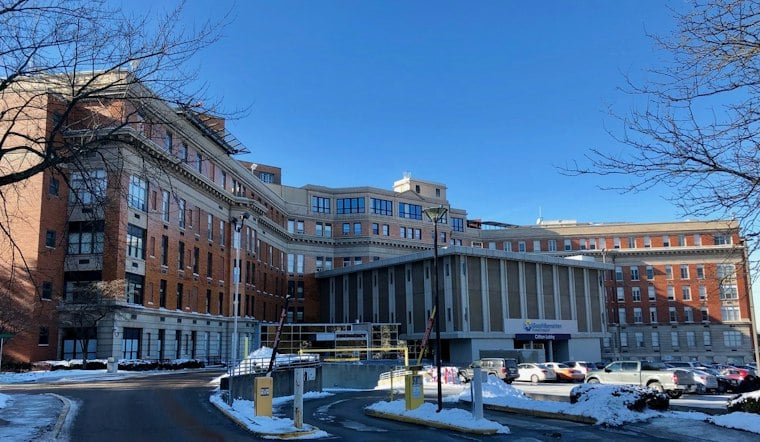
Shortly after Martinez's CT scan, TriHealth's Stroke and Neuroscience Emergencies team recognized that she had suffered an intracranial hemorrhage, according to Kelly Rath, a nurse practitioner with the team. Rath says the team relies on software that flags critical abnormalities for staff, helping speed up that kind of recognition. Martinez's husband, Alessandro Ferraris, said he was told to get his wife to Good Samaritan Hospital immediately once the bleed was identified.
Ferraris described the care that followed as prompt, measured, and emphatic. Martinez was diagnosed with subarachnoid hemorrhage, a type of hemorrhagic stroke, and was monitored closely throughout her 10-day hospital stay. Herman says recovery from this type of stroke often takes time, since the blood from the hemorrhage has to be reabsorbed gradually.
Martinez has reported feeling well since her recovery and does not use any maintenance medication. Still, it took about two months before she felt normal again. Ferraris said the experience taught him that people should pay attention to changes in how they feel rather than dismissing them.
Why Timing Keeps Coming Up on World Stroke Day
Martinez's case surfaced as part of World Stroke Day, which this year falls on the same day this article published and is built around the message that recognizing stroke symptoms quickly, even when they're unusual, and getting care fast can change outcomes. The World Stroke Organization says one in four people face a lifetime risk of stroke, and that seeking emergency care as soon as symptoms appear can save lives and improve the odds of full recovery.
The American Stroke Association encourages people to use the BE FAST acronym to catch signs that the original FAST test can miss. It adds Balance and Eyes to Face drooping, Arm weakness, Speech difficulty, and Time to call 911. As NeurologyLive notes, sudden dizziness, loss of balance, or vision loss can signal a posterior circulation stroke that the standard FAST signs wouldn't necessarily catch. The outlet also reports that hypertension remains the single most important modifiable risk factor for stroke, and that patients commonly delay calling for help, waiting to see if symptoms pass or trying to reach a family member first.
The guidance from that same reporting is blunt: note the time symptoms started and call 911 immediately rather than driving to the hospital.
What Delay Actually Costs
Research distributed through the American Heart Association newsroom has quantified just how much speed matters. A preliminary study found that for every 10-minute delay between arriving at the emergency room and starting stroke treatment, patients with severe strokes may lose eight weeks of healthy life, and each hour of delay in the hospital was tied to 11 months of healthy life lost. In that same study, the median time between symptom onset and ER arrival was 188 minutes, just over three hours.





