

























































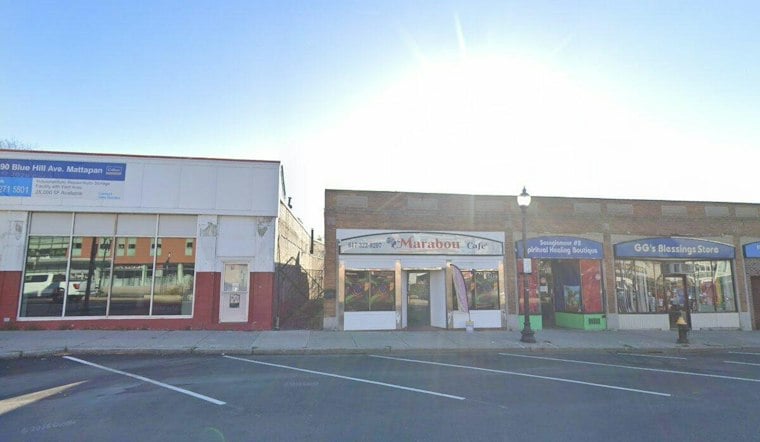
Opening a restaurant in Boston can mean months of waiting on permits before a single plate ever reaches a table, and Mayor Michelle Wu says she wants to change that. Wu proposed changes to the city's zoning rules intended to simplify restaurant permitting and licensing, unveiling the plan at a press conference at Marabou Cafe, a Haitian restaurant in Mattapan Square.
The proposed changes include accelerating review of restaurant ownership transfers and allowing more restaurants in commercial and mixed-use areas, according to The Boston Globe, whose reporter Andrew Brinker covered the announcement. Wu said permitting can trip up entrepreneurs right after they have already raised money, found a location, chosen a menu, and built out the ambiance of their space — the exact point, she argued, where red tape shouldn't be the thing standing between a business plan and an open sign.
Why a Simple Ownership Change Can Still Take Months
Under current Boston zoning rules, a new owner buying an existing restaurant and wanting to offer takeout can trigger a licensing review even if nothing else about the operation changes, per the Globe's reporting. That additional zoning review can take four months or longer, the paper reported, and the overall restaurant opening process in Boston can stretch for months. The proposed changes would eliminate the additional zoning review triggered by takeout service alone, and under the plan, new owners of existing restaurants could see their opening wait reduced to as little as two weeks.
Separately, Boston's own food-service permit guidance says that when no changes are made to a restaurant — for example, a change of ownership with no renovation — the city typically processes that application within one to two business days, according to Boston.gov. But the city's guidance on choosing a location also notes that approvals tied to a previous owner, known as provisos, do not automatically transfer to a new owner, and that construction, renovation, layout changes, or new equipment all require additional city approval and permits. Boston's construction and renovation guidance similarly states that someone taking over an existing, unchanged restaurant does not need a plan review, but that changes to the space require construction and building permits.
Zoning Changes Would Need Board and Commission Sign-Off
The planned zoning changes would allow more restaurants in commercial and mixed-use areas, the Globe reported. City officials will begin an effort to change zoning rules in commercial and mixed-use districts, but the proposed zoning changes still require approval from the Boston Planning and Development Agency board as well as review by the city's zoning commission before anything takes effect.
A separate report from the Boston Business Journal frames the effort as part of a broader push by the Wu administration and the city's new licensing board chair to remove what the outlet calls slow zones for small businesses. Wu has said the goal is to save restaurant owners time, money, and stress — a framing that lines up with a 2022 finding from the Institute for Justice, cited in the Globe's reporting, that opening a basic Boston restaurant without zoning approvals or a liquor license involved more than 90 steps, thousands of dollars in fees, nearly two dozen forms, and interactions with nine city agencies.
Liquor Licenses Remain a Separate, Uneven Fight
The zoning push comes alongside a different but related effort: in 2025, Massachusetts created 225 new liquor licenses for Boston, the largest influx of new licenses to the city since the end of Prohibition, according to WBUR. Marabou Cafe itself received a liquor license this year, making it a fitting backdrop for Wu's announcement. The state legislation, signed by Governor Healey, was designed to address licenses that had historically been difficult to obtain, particularly for restaurants in communities of color, per the Massachusetts governor's office.
Uptake of those new licenses has been uneven. As of WBUR's reporting, 61 businesses had received initial approval from the city's licensing board, and about half of those had final approval and their license in hand. Most of the new licenses are restricted to ZIP codes covering 10 select neighborhoods, including Dorchester and Roslindale, but Mattapan, West Roxbury, and Charlestown had each used just one of their 10 allotted licenses, while East Boston and Brighton's Oak Square had claimed all of theirs, the station reported. Some existing Boston liquor licenses, outside the new program, have reportedly sold for upwards of $600,000.
The process can still be slow even for those who qualify. Fresh Food Generation, a Codman Square restaurant that first applied for a license back in 2021 only to be told none were available, told the station its all-alcohol application took almost eight to 10 months before the restaurant could confidently serve its first drink. Boston Licensing Board executive secretary Danny Green has said the board has hosted information sessions and planned more for this fall, alongside biweekly office hours meant to help restaurant owners navigate the process.
What Wu's Team Says Is Next
Boston's restaurant industry was the focus of Wu's planned announcement. A Spanish-language report from Telemundo Nueva Inglaterra said Wu was expected to speak at 1:30 p.m. at Marabou Cafe to announce new regulatory changes and initiatives meant to boost restaurant openings and operations across the city, though the outlet noted that no further details had been offered at the time of its report.
For now, the specifics of how quickly the zoning package moves through the Planning and Development Agency board and the city's zoning commission remain to be seen. But for restaurant owners who have watched a simple ownership transfer or a takeout menu trigger months of review, Wu's team is betting that trimming the zoning rulebook will matter as much as any new liquor license.





