

























































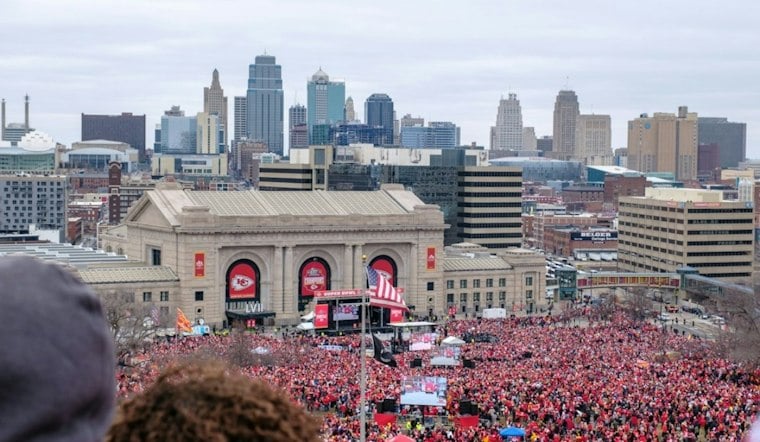
Kansas and Wyandotte County have settled the lawsuit that threatened to stall the Kansas City Chiefs' new stadium project, with the Unified Government agreeing to dismiss its case against the state without prejudice in exchange for retaining local control over the land surrounding the facility. Gov. Laura Kelly and Kansas City, Kansas, Mayor Christal Watson announced the agreement Friday, clearing a path forward for a stadium deal that has been tangled in legal uncertainty for weeks.
The settlement resolves a lawsuit the Unified Government filed against the state two weeks ago, alleging that House Bill 2466 stripped away local authority over taxing, zoning and utility service within the Chiefs stadium district, according to KCTV5. As reported by ksnt.com, the lawsuit had sought greater local control over the stadium planning process and alleged the Kansas Sports Facilities Authority was not required to consult local governments.
Under the deal, the Unified Government and the Wyandotte County Board of Public Utilities will retain jurisdiction over all ancillary development surrounding the stadium, including local planning, zoning and BPU payments in lieu of taxes, kshb.com reports. The stadium and parking areas themselves, however, will remain state facilities owned by the Kansas Sports Facilities Authority and won't be subject to local zoning or building codes — a split that effectively draws a line between the stadium footprint and everything built up around it.
Who Pays For What
The Chiefs are expected to lease the stadium and parking facilities from the state for $7 million a year, per the same account from kshb.com. BPU will provide water service to the stadium, while the Unified Government handles wastewater and stormwater service — and BPU and Evergy are expected to work out a separate partnership to supply electricity to the site. Outside the stadium footprint, BPU and the Unified Government will remain the sole utility providers for the surrounding ancillary development, the station notes.
Officials emphasized that the settlement doesn't open the door to new local taxing power beyond what's already on the table. No additional Unified Government revenue is being requested outside the stadium, parking and ancillary development area, according to the report.
Watson said collaboration in recent days had been a game changer. She said all parties now support the Chiefs, the stadium project and the economic opportunity it represents for Wyandotte County and Kansas. Kelly, in her own statement, called the agreement an important step in what she described as a historic deal that will shape Kansas for generations.
Why The Lawsuit Was Filed In The First Place
The Unified Government's suit, filed Oct. 9, argued that HB 2466 removed local government's power to tax, zone and plan, to set and collect local fees, and to provide utility service within the stadium district — while also giving the Chiefs a permanent seat on the sports authority board, according to kshb.com. County leaders were careful to frame the fight as narrow in scope. As KCUR reported, Unified Government officials said the lawsuit was intended not to stop a stadium, but to ensure that the people of Wyandotte County retained a voice in how it gets built.
That tension traces back to the Kansas Sports Facilities Authority Act, which Kelly signed in April. Under the law, the authority is structured as a body corporate and politic and a political subdivision of the state — explicitly not an agency or instrumentality of any city or county, according to the Kansas Secretary of State's 2026 Session Laws. The 11-member authority includes two seats that may be appointed by mayors of cities where a sports facility is located, and its oversight extends to the physical infrastructure around a stadium, including plazas, parking structures, lighting, fencing and utility-related improvements.
A Multibillion-Dollar Bet On Wyandotte County
The broader project goes well beyond a single stadium. KCUR has reported the plan includes a Super Bowl-capable domed stadium in Wyandotte County along with Chiefs headquarters and a practice facility in Olathe, with the team expected to begin playing at the new venue in 2031. Cost estimates have varied: KCUR put the stadium deal at $3 billion when the sports authority was created in April, while kansascity.com has described the Chiefs' full project — stadium, headquarters and surrounding development combined — as a $4 billion undertaking.
Financing leans heavily on STAR bonds, with private investors expected to cover up to 60% of construction costs, according to KCUR's reporting. Kansas could issue up to $2.775 billion in STAR bonds overall, using captured sales tax revenue to help cover payments for as long as 30 years, per kansascity.com. The proposed STAR bond district stretches across most of Wyandotte County and into part of Johnson County, according to the Kansas Reflector, with sales tax collected above an existing revenue baseline earmarked to help fund the stadium. That baseline, however, has not yet been finalized, kansascity.com notes — a detail that leaves a key piece of the financing picture still unsettled even as the lawsuit itself is resolved. State officials have projected the broader Chiefs project could create 4,000 permanent jobs and generate roughly $1 billion in annual economic impact, according to the same report.





