

























































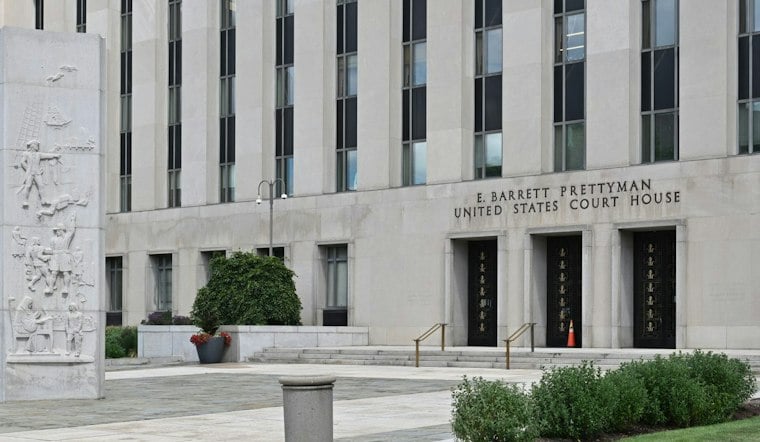
A New Jersey food importer is taking the fight over Trump’s tariffs straight to federal court, arguing that a 50 percent duty on Canadian cheese could cost the company roughly $40 million a year. Gellert Global Group, based in Elizabeth, New Jersey, says it has been absorbing those costs rather than passing them on to customers — for now — but warns that can’t continue indefinitely.
The company is suing the Trump administration over the tariffs and seeking refunds, according to CBC News, which reported that Gellert’s leadership described the company as “eating the cost of the tariffs for now.” The duty applies to the entered value of the company’s Canadian cheese imports and was imposed under what CNBC identified as Section 338 tariff authority, which CNBC reported could cost Gellert an estimated $40 million per year. Gellert Global Group sources more than 4,000 unique food items from more than 60 countries, according to the Liberty Justice Center, which is representing the company in its lawsuit.
Company executive Thomas Gellert said the added tariff costs are not sustainable, according to reporting cited in the dossier of facts surrounding the case. The lawsuit comes as the company pays millions of dollars in added costs and tariffs just to maintain distribution and keep its products on store shelves.
A Landslide Win, But a Steep Climb to Repeal
The timing is notable: Democrats won a landslide victory in the November 3 midterm elections, and the incoming majority is weighing measures to lift punitive tariffs on Canada, starting with the kind of duties hitting companies like Gellert, according to The Christian Science Monitor. But as the Boston Globe reported, undoing the tariffs is likely to prove difficult even with that win, since Trump retains the power to veto any legislation repealing the tariffs or limiting his authority to impose them.
Overriding that veto would require a two-thirds majority in both chambers of Congress, meaning Democrats would need Republican support they may not have. A White House official, Jim Goyer, told the Monitor the administration intends to continue its tariff approach for the rest of Trump’s term, saying, “Our ambition is to continue this pace for the remainder of the president’s term in office.”
Voters Say the Tariffs Are Hurting Them
Public opinion on the tariffs is lopsided. An NBC News exit poll covering 45 states found that 66 percent of voters thought the tariffs had hurt the national economy, according to the Peterson Institute for International Economics. The same Peterson Institute analysis notes that Section 301 authority is propping up baseline tariffs of 10 to 12 percent on nearly all U.S. imports.
CNBC’s Election Desk, tracking results from the midterms, projected Democrats would win at least 245 House seats, and the Associated Press projected Democratic Senate flips in Iowa, Kansas, North Carolina, Ohio, South Carolina, and Texas, according to CNBC. In Maine, Democratic nominee Troy Jackson was projected to defeat longtime Republican Sen. Susan Collins, per the same CNBC account.
Farm States and Factory States Don’t Agree
Even with momentum on their side, Democrats face internal disagreement over how far to go. The diverging interests between industrial and agricultural states make getting any trade legislation through Congress complicated, the Monitor reported, since the tariffs disrupted crop exports to China, costing farmers sales and leaving American farms at a disadvantage.
That split mirrors a broader divide inside the party over trade policy generally, with some Democrats pushing for a return to lower-tariff trade and others wanting tariffs preserved as leverage against unfair trade practices and adversaries like China. The Boston Globe’s reporting on the fight captured both camps as Congress prepares to take up the question of how much authority lawmakers ceded to the president in the first place.
What's Next for the Gellert Lawsuit
For now, Gellert Global Group’s case remains pending, with the company’s attorneys seeking both an end to the Canadian cheese tariffs and refunds for what it has already paid. The Liberty Justice Center, which filed the case on the company’s behalf, has not disclosed a timeline for resolution.
Whether Congress moves to claw back tariff authority from the White House — and whether any such effort could survive a presidential veto — remains an open question as the new Democratic majority prepares to take office. The lawsuit from a single New Jersey importer offers an early test case for how courts, and eventually lawmakers, might handle the broader fight over who controls America's trade policy.



