

























































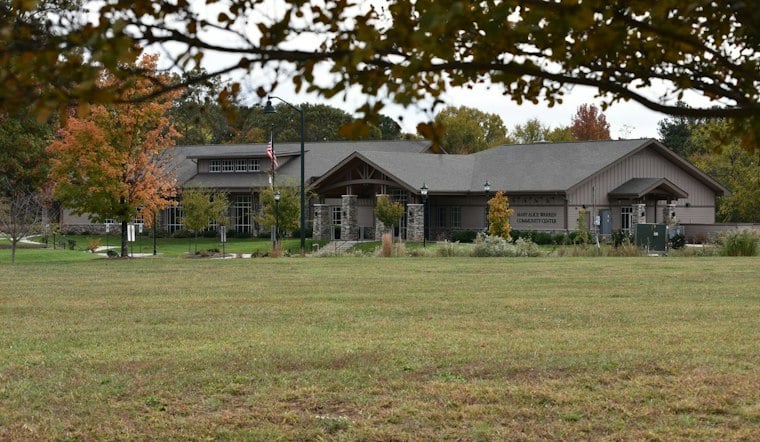
Mary’s Center, a nonprofit federal health center serving the Adelphi area, has landed a $5 million federal earmark to help it leave a current site that officials say needs significant renovation or a full rebuild — even as federal auditors have flagged recurring accounting and grant-management problems at the organization for five straight years.
U.S. Senators Chris Van Hollen and Ben Cardin secured the fiscal year 2024 earmark specifically for Mary’s Center’s transition to a new site, according to WBFF. The award description explains why the move is needed: the current Adelphi site is owned by Prince George’s County Public Schools and needs significant renovation or a full rebuild. That same FY2024 description warned that closing the health center would leave more than 10,000 residents without a vital resource for health, education, and social services.
Mary’s Center is based in Washington, D.C., and operates two Maryland locations as part of the federal health center program, which is designed to provide care to underserved populations. CEO Nancy Ban said the organization had spent the past year evaluating community needs, market conditions, and potential locations, and that it continues weighing sites based on financial and operational considerations. The earmark’s award period extends through September 2027, and Mary’s Center has said it will coordinate with the federal Health Resources and Services Administration if additional time is needed.
A Pattern of Repeated Audit Findings
Federal auditors have identified dozens of accounting issues at Mary’s Center from 2021 to 2025, and several of those findings recurred from one year to the next, per the station’s reporting. In 2021, auditors found several instances where cash disbursements lacked corroborating documentation, along with weak controls over recording revenue transactions and insufficient effort to grow a thin finance department staff. Auditors that year also found Mary’s Center had not billed correct indirect costs to the federal government, raising the possibility it had overcharged or undercharged the government.
By 2022, auditors said the organization was unable to properly reconcile grant balances, had failed to properly track and allocate federal expenditures, missed grant-reporting deadlines, and failed to properly screen potential vendors, contractors, and consultants. The 2023 audit, filed with Candid.org, found Mary’s Center could not provide supporting documentation — invoices, contracts, or similar records — for four expenditures charged to a federal program, resulting in $25,326 in questioned costs. The auditor classified that lapse as a repeat of a 2022 finding, and separately noted the vendor-screening problem had still not been resolved in 2023.
That 2023 audit also identified three deficiencies in internal control over financial reporting that the auditor considered material weaknesses, and found Mary’s Center lacked evidence of approval for eight expenditures charged to a federal program, plus a federal financial report submitted with incorrect data. Despite those findings, the 2023 audit still delivered an unmodified compliance opinion on the organization’s major federal programs. In 2024, auditors said several patients received incorrect sliding-fee adjustments, and the audit covering the end of 2025 found that the grant-revenue schedule did not agree with the trial balance presented for the review, along with insufficient documentation to verify that the time between transfer and disbursement of funds had been minimized.
Federal Oversight and Expert Concerns
The Health Resources and Services Administration told the station it monitors health center program grantees through progress and data reports, financial audits, calls, and operational site visits, and places a condition on a health center’s notice of award when it does not demonstrate compliance with program requirements. HRSA said it is in communication with Mary’s Center for Maternal and Child Care Inc. to ensure health center program compliance and will continue monitoring the organization under Section 330 of the Public Health Service Act, adding it is committed to ensuring funded organizations meet program requirements and deliver affordable, high-quality community care.
Amanda Beck, an accounting professor at Georgia State University, said repeated audit findings that fall under management’s control reflect poorly on an organization. She added that audit issues around verifying fund use are not themselves evidence that money was misused, but said the pattern doesn’t provide high confidence in oversight of spending. Beck also said she would be concerned if senators made the earmark award without considering the single-audit results.
Van Hollen’s office said the $5 million earmark comes with federal agency requirements attached, and that the senator’s office will continue identifying good stewards of federal investment who demonstrate community impact and support from state and local partners. Ban said Mary’s Center takes its responsibility to manage public funds seriously and has strengthened financial oversight, improved grant-accounting and reconciliation procedures, and implemented additional controls. She said the organization remains committed to transparency, responsible stewardship of public resources, and serving patients and families.
State Review Found No Major Problems
Separate from the federal findings, the Governor’s Office of Crime Prevention and Policy said it has not found any significant issues with Mary’s Center’s grant compliance over the years, including during a fiscal 2021 site-visit review, according to Arinze Ifekauche, the office’s deputy director of communications and legislative affairs. GOCPP, which conducts site visits, single-audit reviews, whistleblower complaint reviews, desk audits, receipt reviews, audits, and investigations, can work with subrecipients to fix poor fiscal controls or questionable programming, or redirect funding if necessary. Ifekauche said the office revamped its audit, fiscal, and grants management units in 2024 by securing funding for two dozen additional staffing positions.
The Maryland Transparency Portal lists more than $11 million in vendor payments and more than $2 million in grants to Mary’s Center between fiscal years 2021 and 2027, though it does not specify how much of that funding came from federal versus state revenues. Separately, Mary’s Center has received a little over $200,000 through GOCPP. The federal government issued $44 million to Mary’s Center from fiscal years 2021 through 2026, some of it tied to funds allocated to combat the COVID-19 pandemic.
Mary’s Center is not the only Maryland health nonprofit navigating this mix of congressional earmarks and audit scrutiny. CCI Health Services reported $55 million in revenue in fiscal 2025, including more than $20 million in government grants, but its own auditors found fiscal 2022 accounting errors overstated contract revenue by $87,000 and understated pharmacy revenue by tens of thousands of dollars, as a separate WBFF report detailed. CCI also failed to meet a federal award’s cost-sharing requirement in fiscal 2023, leaving nearly $1.2 million in questioned costs that remained unresolved as of its fiscal 2025 audit. Van Hollen and Cardin separately requested $940,000 in 2024 earmarks for a CCI dental practice in Prince George’s County, and Sen. Angela Alsobrooks has requested $4.5 million in fiscal 2027 earmarks to help CCI build a new health center for low-income residents.
The scrutiny on both organizations comes as Maryland’s congressional delegation has leaned heavily on earmarks since Congress lifted a decade-long ban on the practice, securing $969 million in earmark funding over the past five years, according to the Capital Gazette. Single audits like the ones that flagged Mary’s Center’s repeated findings are costly, and are intended to hold nonprofits receiving federal money accountable for how they spend it.





