

























































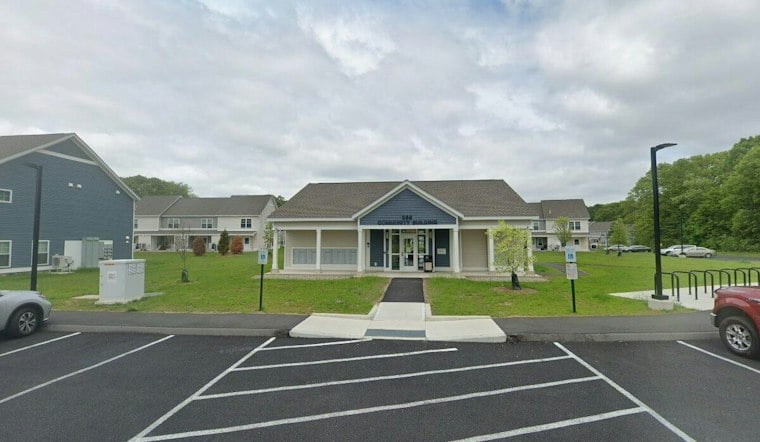
Agawam's City Council voted Wednesday to create a municipal affordable housing trust, a plan that squeaked through on the strength of six supporters on the 11-member board after public skepticism about handing new powers to an unelected panel. The vote followed discussion over whether the city needs another mechanism to steer affordable housing — or whether it's inviting bureaucracy and political interference it doesn't need.
A Plan Years in the Making Finally Gets a Vote
The trust fund, sponsored by Councilor Rosemary Sandlin and Mayor Christopher C. Johnson, was designed to set up a fund explicitly for “creating and preserving affordable housing” in Agawam, according to masslive.com. The council had actually delayed its initial vote in October, instead opting to bring in outside experts to answer lingering questions before councilors would commit either way, the outlet reported. That extra step reflected just how contested the idea had become among council members even before the Nov. 4 roll call, as MassLive.com detailed in its account of the eventual vote.
Mayor Johnson spent the days before the vote defending the proposal. The trust could allow the city to work with developers and purchase property. He said he does not envision the trust operating with an independent budget; instead, trustees would need to go through the Community Preservation Committee and the City Council for approval on every individual project, the outlet reported. Johnson added that he plans to have the trust apply for funding project by project, a structure that supporters argued allows the council to maintain close budget control rather than ceding oversight to a standalone board.
Supporters Point to a Stalled Track Record
Agawam has moved slowly on affordable housing funding. In the past 20 years, the city's CPA account funded only one project that spent money on actual housing: $244,191 in 2007 renovations at the Agawam Housing Authority. Councilor Thomas D. Hendrickson argued that without a trust, the council has essentially no leverage over developers who come looking for money, while a properly funded trust could set real conditions and negotiate terms — conditions that housing trust supporters say could include prioritizing current Agawam residents already on affordable housing waiting lists.
Councilor Anthony J. Russo, meanwhile, framed the trust as a tool for preserving local control rather than ceding it, arguing that affordable housing trusts make the most sense in communities that already have the CPA and potential housing funding streams to work with. He said the arrangement would let Agawam residents decide what affordable housing projects come in and how. Councilor Robert E. Rossi, who reportedly switched his position on the issue before the vote, said the trust would not strip authority from the City Council or the Community Preservation Act committee, and argued it would instead give Agawam more flexibility to build housing that matches residents' priorities since the entity could buy, sell and hold property.
Opponents Warn of an Unelected Board's Reach
Councilor Edward P. Borgatti led the opposition, arguing Agawam does not need another layer of bureaucracy and warning that a board of trustees could open the door to more political influence rather than less. He contended that when elected councilors lose power, residents lose power along with them, and he specifically opposed letting an unelected board make decisions that could ultimately lead to large housing developments. Borgatti was joined in voting against the measure by Councilors Cecilia P. Calabrese, Peter T. McNair, George Bitzas and Dino R. Mercadante.
Bitzas raised his own set of concerns, saying family-oriented low-cost housing could end up costing the city more in public services than it generates in tax revenue, and warning that affordable housing projects more broadly could lower property values, strain infrastructure and change the character of neighborhoods. He said he'd rather see Community Preservation Act money directed toward affordable senior housing instead. Mercadante, for his part, argued Agawam needs more business development to offset residents' tax burden rather than additional family housing.
The Shadow of Rosewood Way
Much of the debate circled back to Rosewood Way, the 62-unit mixed-income development built on former farmland on Mill Street that became a flashpoint for the city's affordable housing politics. The project, first announced roughly a decade earlier according to Rossi, ultimately used the state's Chapter 40B law to secure a permit despite local zoning restrictions — a process Johnson said he does not expect the new trust to replicate for large-scale projects like it. The land had already been sold to the nonprofit organization now known as Way Finders. The development, which totaled $28 million including $21 million in construction costs, reached completion in 2024, WAMC reported at the time.
That project emerged against a backdrop the city's own 2023-24 Housing Production Plan laid bare: just 4.5% of Agawam's year-round housing stock is considered affordable, with the city aiming to produce 62 affordable units per year, per the same WAMC report. The pressure isn't new — in 2015, the City Council approved $15,000 in Community Preservation Act funds for a housing needs study.
Agawam Joins a Growing List of Trust Towns
Agawam isn't charting new territory statewide. Among the state's 201 communities with the CPA, 155 had adopted an affordable housing trust. Agawam itself was recently selected for MHP's intensive technical assistance program aimed at helping communities stand up trusts of their own, according to mhp.net, alongside Hatfield, Randolph and Westford.
Under the structure approved Wednesday, the trust will operate with five trustees appointed by the mayor and confirmed by the City Council, with authority to solicit donations and apply for grants. State law backs up the basic framework: Massachusetts General Laws Chapter 44, Section 55C permits a city or town that accepts the statute to establish a municipal affordable housing trust fund, according to the Massachusetts Legislature. Just how the Agawam trust will function day to day — which projects it funds, and under what conditions — remains to be seen as the newly confirmed board begins its work.





