

























































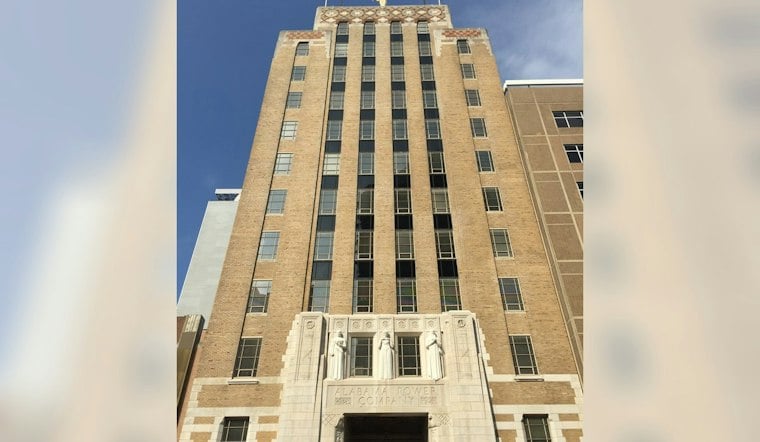
Alabama Power has filed with state regulators to cut customer rates by about $160 million in 2027, a reduction the utility says will show up automatically on bills starting in January. The company says the savings trace mainly to new revenue expected from large data centers signing onto its grid — not a one-time credit, but a lower per-unit price for electricity that customers won't need to sign up for.
How the Numbers Break Down for Alabama Homes
According to Alabama Power, a home using 1,000 kilowatt-hours a month would save more than $50 a year compared with current rates at the same usage level, which works out to roughly $4 a month. Households using less power would see smaller savings — about $40 a year for a home at 750 kilowatt-hours monthly — while a heavier-use home at 2,000 kilowatt-hours would save about $106 a year, the utility says. Those examples apply to homes, not businesses, and a household that uses more electricity could still end up with a higher bill overall despite the lower rate, since usage still drives the total. Alabama Power filed the request with the Alabama Public Service Commission, as The Cullman Tribune reported, and the lower rate is set to kick in automatically with January 2027 bills without customers needing to enroll in any program or download an app.
The company frames increased 2027 revenue from agreements with large-load data centers as the primary reason for the reduction, saying those customers must pay the full cost of serving their own energy needs and also contribute toward the cost of the power system already in place. al.com confirmed the $160 million filing with the commission, and the reduction itself runs through a formula called Rate Stabilization and Equalization, or Rate RSE, which the Alabama Public Service Commission established. Alabama Power says the portion of the rate cut through Rate RSE is set to stay at or below its new lower level through 2028.
A Tax Credit Dispute Clouds the Data-Center Story
Not everyone agrees the data-center contracts are doing the heavy lifting. An Energy Alabama director argued there would be no cut at all without a roughly $180 million drop in the company's tax bill, which Alabama Power ties to nuclear tax credits under the Inflation Reduction Act, according to the Alabama Reflector. That outlet also reported a slightly different framing of the typical savings, estimating about $50 a year, or about $4 a month, for a household using roughly 1,000 kilowatt-hours — in the same range as Alabama Power's own estimate but phrased without the “more than” qualifier.
State lawmakers have been quick to take credit for the cut. Sen. Garlan Gudger said Senate Bill 270, sponsored by Sen. Lance Bell, made the reduction possible, though he also acknowledged the bill strengthened customer protections and made them state law without itself creating revenue from past contracts. The bill passed the Alabama Senate 30-0 in March 2026 and cleared a House amendment 33-0 in April on Gudger's motion before taking effect October 1. It applies to qualifying data centers expected to need at least 150 megawatts at peak demand, and it requires the state commission to review those contracts for terms expected to cover added service costs over the life of a deal and benefit other customers — though the law itself sets neither a rate-cut order nor a specific date for one.
Regulators Tighten Review Timelines on Data-Center Deals
The Alabama Public Service Commission issued an order in October reviewing large data-center contracts under a rate policy first approved in 1996, extending the original 10-day review window to as much as 90 days. A contract can still be deemed approved if the commission does not vote within that 90-day span, and certain contract details, including pricing analyses, remain confidential. The commission's earlier reviews considered added costs and potential benefits for other customers, and lower costs for the broader customer base remain one possible upside of the data-center agreements.
Alabama Power has also asked regulators, in filings under docket U-5504, for authority to treat some large customers' charges as an accounting reserve meant to protect other ratepayers if a data-center project fails to meet its financial obligations. The company says this changes how charges are recorded rather than whether cash moves into a separate account, and that reserve amounts would not immediately help lower rates while the reserve builds. Alabama Power says it would begin releasing the reserve over time once most of the associated infrastructure is in service and protections exceed the remaining estimated risk. Energy Alabama has said it supports the proposal's underlying goal but wants more information about how defaults would be handled.
Open Questions the Filings Don't Yet Answer
Gudger has said the January rate calculation assumes the commission will authorize that accounting request, but The Cullman Tribune reported it has not obtained the supporting calculations needed to verify that assumption or its financial effect. The available records establish a link between data-center revenue and the proposed savings, but they do not establish exactly how much of the $160 million reduction is specifically attributable to Senate Bill 270 itself.
Alabama Power has also proposed extending its pause on annual-rate-formula increases through 2028, separate from a newer measure, House Bill 475, that bars increases before January 1, 2029 to retail base rates in effect as of October 1, 2026 — though that law does not freeze every individual charge on a customer's bill. As of November 24, the commission's public docket listed the November 20 filings as still pending. The commission has scheduled an informal review for December 8 at 9 a.m. in Room 900 of the RSA Union Building in Montgomery.
Alabama Power's High Bills Set the Backdrop
The proposed cut lands against a backdrop of scrutiny over how much Alabama Power customers already pay. An Inside Climate News investigation published in November 2025 found that Alabama Power customers had the highest total electric bills in the country in 2024, citing above-average rates combined with high electricity use. A separate analysis of 2024 federal filings covering 100 large electric utilities found none reported higher average total residential electric bills than Alabama Power, the Alabama Reflector reported in a different story examining the utility's rate history. That same reporting put Alabama Power's average residential rate at 16.77 cents per kilowatt-hour, above the national average of 16.48 cents and 35th highest among the 100 utilities examined, and noted that a typical Alabama Power residential customer using 1,129 kilowatt-hours a month paid about $189, while a Louisiana customer using the same amount would have paid $58 less each month.




