

























































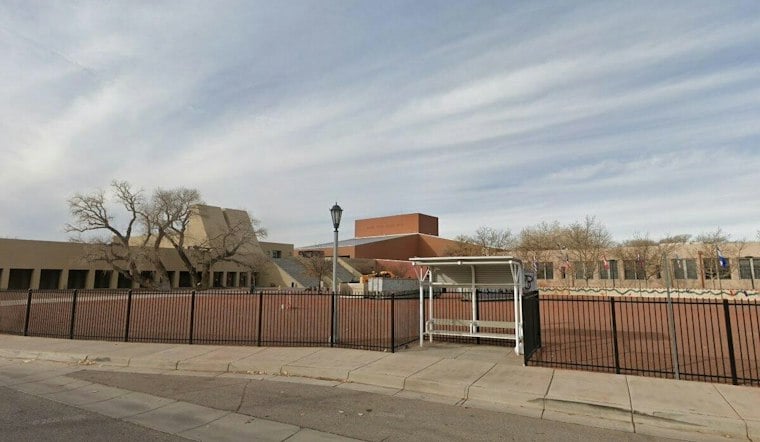
Opera Southwest is bringing Rudolfo Anaya’s beloved holiday story back to life onstage, reviving its bilingual production of “The Farolitos of Christmas” for four afternoon performances at the National Hispanic Cultural Center in Albuquerque. The one-act opera, set in northern New Mexico during World War II, follows a young girl named Luz who invents a new way to light the path home on Christmas Eve after her father is sent off to war and her grandfather grows too ill to chop piñon wood for the traditional luminaria bonfires.
According to the Albuquerque Journal, the production takes place at the National Hispanic Cultural Center, located at 1701 Fourth St. SW, with four shows scheduled for 2 and 4 p.m. on Saturday, Dec. 5, and Sunday, Dec. 6. General admission runs from $25 to $65, with discounts available for qualified individuals, the newspaper reports. Opera Southwest commissioned Mexican American composer Héctor Armienta in 2025 to adapt Anaya’s story for the stage, and the company calls the work an opera for people of all ages, with English and Spanish translations projected above the stage, Opera Southwest notes on its site.
The opera depicts a fictional origin story for farolitos — the festive paper lanterns, also known as luminarias, that decorate New Mexican homes every Christmas — and draws on the nine-day pre-Christmas festival known as Las Posadas, per the Journal’s reporting. Armienta blended New Mexican folk music traditions into the score, which includes motifs from Mexican mariachi music and traditional Las Posadas songs, the newspaper reports.
A Returning Cast Member Reflects on the Role
Soprano Cristina Bakhoum Sanchez, who has performed in more than 20 operas since 2010, made her Opera Southwest debut as Dolores in the 2025 premiere of “The Farolitos of Christmas” and is reprising the role for the second run, according to the Journal. Bakhoum Sanchez, who grew up in Texas and has a Mexican mother, told the paper she was unfamiliar with the farolito and luminaria tradition before coming to New Mexico, but has come to see how deeply the story resonates locally. She said New Mexicans connect deeply with the farolito tradition and Anaya’s story, per the Journal’s reporting, and described the experience as blurring the line between playing a role and feeling it is part of herself.
Bakhoum Sanchez also told the newspaper that some audience members were moved because the returning father in the story reminded them of their own fathers coming home from war. She said Armienta’s score is traditionally beautiful and melodic compared with many modern operas, and noted that she researches each role she takes on to prepare and aims to perform authentically, according to the Journal.
A New Voice Joins for 2026
Bass-baritone Javier Ortiz will sing in “The Farolitos of Christmas” for the first time this year, playing both Abuelo and the grocer who sells Luz the bag central to her Christmas Eve invention, the Journal reports. Ortiz previously sang in Opera Southwest’s 2018 adaptation of “Bless Me, Ultima,” another work drawn from Anaya’s writing — the author widely regarded as one of New Mexico’s best-known writers. Ortiz described the score as heartwarming and enveloping, and told the paper the story is distinctly New Mexican and a source of local pride.
Tenor Ángel Vargas plays the father returning from war in uniform, according to the Journal’s reporting. The story, set in the fictional community of San Juan, premiered in 2025 and received an appreciative audience response, the newspaper notes — a reception that helped convince the company the story was worth repeating.
A Tradition Opera Southwest Hopes Will Stick
Opera Southwest’s page for the production describes the upcoming shows as the opera’s second annual run at the National Hispanic Cultural Center. That framing lines up with comments the company’s executive director, Tony Zancanella, made to the Journal last December, when he said he intended to produce the opera every year in hopes that it would become a New Mexico holiday tradition.
The Journal has also reported on a friendly north-south rivalry within New Mexico over whether the lanterns should properly be called farolitos or luminarias — a debate the opera leans into by using both terms. Opera Southwest calls the work suitable for people new to opera, including children, and the Journal reports that audiences may dress comfortably, since the daytime performance schedule is designed to avoid interfering with dinner and young children’s bedtimes.
Bakhoum Sanchez told the paper that opera companies more broadly are trying to show the art form is not elitist and that formal attire is not required. For a story many see as relatable and deeply personal, that casual approach, paired with the opera’s daytime scheduling, is meant to keep the tradition accessible to families returning for a second year running.





