

























































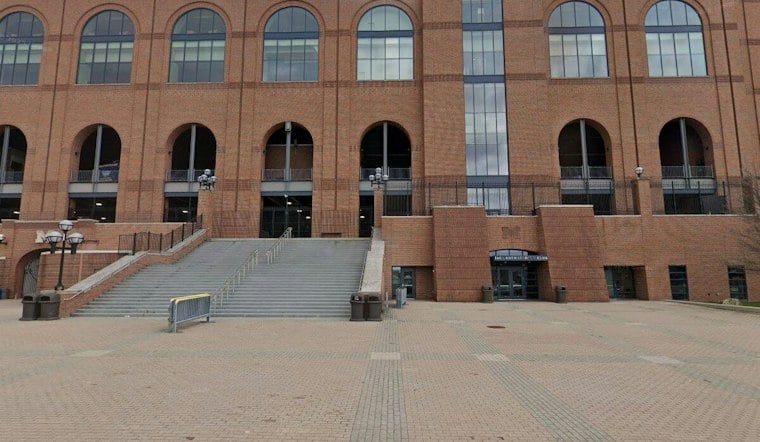
Before the Michigan and Michigan State rivalry game kicks off Saturday, fans tailgating near Michigan Stadium will have the chance to do something a little unusual for their school: pee in a yurt. Researchers from both universities are setting up competing urine-collection stations at the Ann Arbor Golf Club, hoping to turn tailgaters' bathroom breaks into raw material for campus fertilizer.
Yurts, Urinals, and School Pride on the Line
According to The Detroit News, UM scientists will collect urine from fans of each team in urinals set up in yurts at the Ann Arbor Golf Club on East Stadium Boulevard before kickoff. The urinals will be designated as UM or MSU, turning the whole affair into a friendly contest over which fan base can out-donate the other. Scheduled collection hours differ between reports: WKFR says collections will run from noon until 8 p.m. on Saturday, while WNEM reports that donation stations will open at 1 p.m. and remain open through the final whistle of the 7:30 p.m. game.
Volunteers are expected to direct fans, tailgaters, and passersby toward the donation locations, according to the seed reporting from ClickOnDetroit. The effort is being organized by the university's Nutrient Energy Water, or N-E-W, Cycles group, per the same reporting, and is billed as a competitive push to see which school's supporters contribute the most. Organizers describe it as the country's first stadium-scale urine-recycling pilot, according to WNEM, though that first-in-the-nation claim comes from organizers themselves and hasn't been independently verified.
Who Can Donate, and What Happens to It
Not everyone can take part. The collection is limited to people who stand up to urinate, per a report from WKFR, a detail that shapes who can actually use the waterless urinals set up for the event. WNEM reports that the collected donations will be pasteurized, concentrated through a patented freeze-thaw process, and turned into solid struvite pellets and custom fertilizer blends certified by the Michigan Department of Agriculture and Rural Development.
WKFR's report notes the resulting fertilizer is intended for horticultural crops, such as grass and ornamental plants, rather than anything grown for human consumption. Organizers plan to use the processed material in agricultural research projects at both universities, the station reports. The Detroit News reports the fertilizer created from Saturday's donations will be used for ongoing research at MSU's Kellogg Biological Research Station in Ross Township and UM's Matthaei Botanical Gardens and Nichols Arboretum.
Years of Research Behind One Game-Day Stunt
This isn't the first time Michigan has experimented with urine as fertilizer. Since 2023, four beds at U-M's W.E. Upjohn Peony Garden have been treated with urine-derived fertilizer, according to The Detroit News. The university's interest in the practice goes back further still — a 2016 report from Michigan Engineering News noted that researchers had been exploring ways to remove bacteria, viruses, and residual pharmaceuticals from urine since 2014.
A separate U-M-led study modeled what city-scale urine diversion and recycling could achieve, finding environmental reductions ranging from 26% to 64% depending on the impact category, according to University of Michigan News. Those figures reflect modeled outcomes from that study, not measurements from Saturday's tailgate event. The same research notes that while no city-scale urine-diversion and recycling systems exist yet, several small-scale demonstration projects are already underway, including urine-diverting toilets installed on U-M's North Campus alongside a lab where the collected urine is converted to fertilizer.
Michigan Isn't Alone in the Pee-Cycling Business
Ann Arbor's tailgate experiment has an international cousin. A separate project in Sweden collects urine from supporters at Malmö FF's Eleda Stadium, with organizers aiming to gather 1,000 liters of urine for a fertilizer pilot, according to Oatly. That collected urine is dried in closed containers, blended with by-products from Oatly's oat drink production, and turned into pellets, the company says.
Whether Saturday's contest actually determines a winner, or how much urine fans ultimately donate, remains to be seen once the gates open and the yurts start filling up. For now, organizers are betting that rivalry-week bragging rights can extend even to the restroom line, with the real payoff showing up months later in soil at research sites across both campuses.




