

























































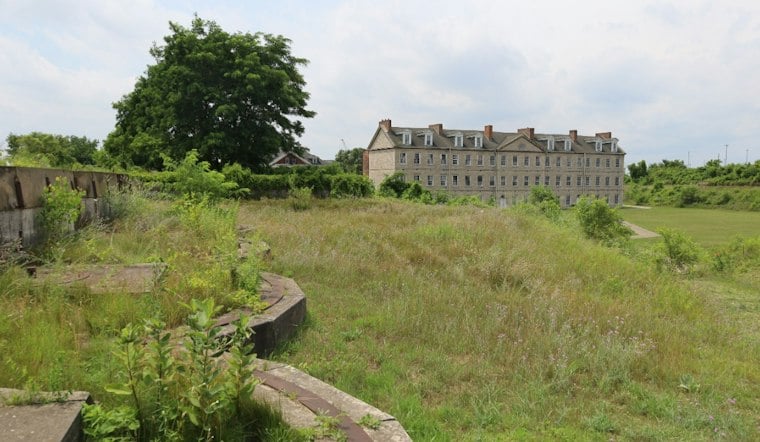
Historic Fort Wayne, southeast Michigan's oldest surviving military fort, is drawing crowds it hasn't seen in decades now that the Gordie Howe International Bridge has opened less than a third of a mile from its gates in southwest Detroit. Visitors have been parking at the roughly 80-acre riverfront site to walk the new bridge path, and the foot traffic has spilled straight into the historic grounds themselves.
Detroit parks officials say visits to the fort increased dramatically after the bridge opened on July 27, 2026, according to The Detroit News. Detroit General Services Director Crystal Perkins described the shift bluntly, telling ClickOnDetroit that “now that the bridge is there, it's getting a lot of attention.” Jeremy Dimick, the Detroit Historical Society's director of collections and curatorial, has had offices at the fort since roughly 2008 and told the paper more people have simply been out and about since the bridge opened.
Canton Township resident Rahul Modi is one of them. He parked at Fort Wayne to walk the bridge and told the Detroit News that accessing the span and the walk itself “was very easy.” The bridge's multi-use path connects to local cycling and walking routes in both Detroit and Windsor-Essex and is free to use, according to the Gordie Howe International Bridge operator, which also notes there's no on-site parking at either port of entry and directs Detroit-side visitors to the Clark Park trailhead.
A Fort With Nearly Two Centuries of History
Fort Wayne's star fort was built in the 1840s to guard against a feared British invasion from Canada that never came, and the site is named for General Mad Anthony Wayne, who accepted the British surrender of Detroit in 1796. Over the decades it served as a Union troop mobilization center during the Civil War, housed regiments during the Indian conflicts and the Spanish-American War, sheltered a Civilian Conservation Corps unit during the Depression, and operated as a wartime supply depot during World War II before the government deactivated it in 1967. Detroit has owned the property since the 1970s, and the city traditionally closes it at the end of November each year.
The grounds also hold an ancient Native American burial mound on a grassy half-acre section, dating to roughly 750–1200 A.D. and belonging to the Nottawaseppi Huron Band of Potawatomi. The Detroit City Council agreed in April 2025 to transfer ownership of the mound to the tribe. As traffic near the fort has tapered off with the cooler weather, officials are now weighing whether to keep the site open through the winter; Juliana Fulton, a chief planner for Detroit's Parks and Recreation Department, said there will be some hours available, calling the surge “wonderful.”
Grant Money Targets Crumbling Roofs
Detroit has found that all but one of the fort's roughly 30 buildings are salvageable, though many suffer serious structural problems and caved-in roofs from years of deferred maintenance. The city received federal grants totaling $1.25 million to stabilize buildings from decay, according to Axios. Those funds came through two National Park Service Save America's Treasures grants, which Perkins told CBS News Detroit will “restore and repair roofs at Historic Fort Wayne.” One grant covers roof updates on seven buildings, while a second is going out to bid to restore four more intricate roofs. The Michigan Department of Transportation has also allocated funds over the next year for entrance improvements, a new Jefferson fence, and parking lot lighting.
Restoration work at the fort is expensive and bound by restrictions tied to its status as a historic property. Per the site's own strategic planning page, the city's permitted uses are limited to historical monument, recreation, and public benefit purposes under deed requirements, and any proposed demolition would require Detroit Historic District Commission approval — a formal “notice to proceed” issued after a public hearing, with some cases also requiring National Park Service review.
Past Redevelopment Pitches Fizzled Out
This isn't the first time Detroit has tried to find new life for the site. During the Covid-19 pandemic, the city sought bids from potential restoration partners but received none that succeeded. Around 2021, six private businesses and nonprofits expressed interest in restoring a building in exchange for reduced rent, with potential partners including a coffee roastery, a tribal partner and an events-space operator, as well as a brewery and museums — but as Axios reported, “those projects didn't come to pass.”
The restoration-in-lieu-of-rent concept was first floated in a 2020 strategic plan that Fulton helped develop, and Dimick said he still supports the idea of tenants restoring fort buildings as long as their historic character is preserved. Detroit parks officials say they may seek restoration bids again in about a year. The fort briefly closed during Covid-19 and currently has just one public restroom accessible to visitors; metro Detroit bridge walkers have taken to using a Tim Hortons across the river in Windsor as the nearest alternative. The visitors' center itself has limited hours and lacks bathrooms or concessions, though the fort ultimately aims to build a full-service visitors center with both.
City Councilwoman Pushes for Year-Round Access
Detroit City Councilwoman Gabriela Santiago-Romero, whose district includes the fort, said the site has long served a quieter purpose for the neighborhood regardless of the bridge traffic. “It's always been a park that we've used,” she said, noting southwest Detroit residents have treated the grounds as green space for years. She plans to meet with Mayor Mary Sheffield's staff next year to discuss the fort's future and restoration funding, and said she wants more year-round programming alongside restoration of its historic buildings.
City officials, meanwhile, appear to be aiming for a lighter touch rather than big events. Fulton said activities drawing thousands of people are hard on the site, and Detroit officials want to shift away from some third-party activities toward lighter programming instead. That approach lines up with new guided tours that launched at the fort this fall, with the Historic Fort Wayne Coalition offering them on select Saturdays across September, October and November 2026.





