

























































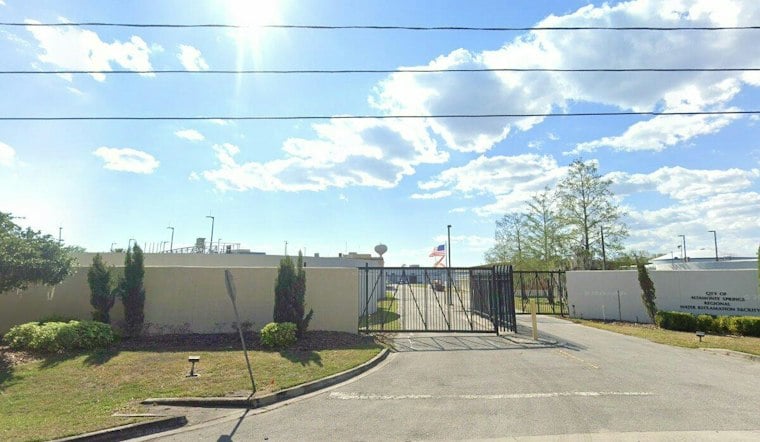
A regional reclaimed-water system can deliver water only as reliably as its receiving and distribution infrastructure allows. In Apopka, that constraint has become central to a dispute with Altamonte Springs over deliveries under a long-term agreement, even as Apopka works on projects intended to expand storage access and move water through its network.
A regional system built to share water
Altamonte Springs’ A-FIRST project began operating in October 2015, according to the City of Altamonte Springs and the city’s infrastructure plan.
The cities’ 50-year agreement, signed in 2013, calls for Altamonte Springs to provide up to 4.5 million gallons per day on an annual-average basis, with deliveries of up to 7 million gallons on a single day permitted without additional written approval, according to WKMG ClickOrlando’s account of the agreement. The water is supplied without charge. Apopka says it provides more than 8 million gallons of reuse water daily to over 9,300 residences and businesses, though that citywide figure is not a measure of how much it receives from Altamonte Springs.
Receiving and moving the supply
Apopka’s operating limits help explain why the regional arrangement has been difficult to manage. Utilities Operations Director Glen Brooks told ClickOrlando that the city treats about 3.8 million gallons of wastewater a day, has approximately 6 million gallons of tank storage at its Cleveland Street facility and another 16 million gallons in lined ponds, and can move about 6.8 million gallons daily from Cleveland Street into its distribution network. Brooks said limited storage and distribution capacity have made it difficult to handle all potential incoming reclaimed water while meeting operating-permit requirements. Those figures describe different parts of the system; they do not by themselves establish whether any particular delivery request breached the agreement.
The disagreement became public after Altamonte Springs sent Apopka a certified letter on January 27 alleging that Apopka had repeatedly requested reduced or interrupted deliveries. As reported by ClickOrlando, the letter cited requests dating to October 2018 and another in December 2025, and argued that the agreement did not permit Apopka to restrict deliveries unilaterally. Those are Altamonte Springs’ claims, not a court determination that Apopka violated the contract. The letter raised possible risks to the Wekiva River basin and Interstate 4 drainage areas if deliveries were interrupted; it is not evidence that the dispute caused flooding or property damage.
Projects address storage access and distribution
Apopka’s Golden Gem project is intended to expand its ability to store and move reclaimed water. The current work includes pumping infrastructure and planned improvements to large transmission pipes. Construction was expected to begin three to four weeks after the September 8, 2026, notice to proceed, and the station was expected to take at least 18 months. Officials have described the project as giving Apopka access to more than 300 million gallons of additional storage capacity, but published descriptions of the site’s pond capacity differ: News 13 reported a combined 349 million gallons, while The Apopka Voice reported about 250 million. The pump work should not be confused with construction of a pond of that capacity.
A separate project is intended to improve flow in northern Apopka. The city secured a $5,784,615 state grant for a 30-inch reclaimed-water main along Plymouth Sorrento Road, covering the project cost without a local match, according to ClickOrlando. The planned route is about 5,600 feet, between West Lester and West Ponkan roads, and is intended to connect parts of the network and help move water toward Golden Gem and Northwest Recreation Center storage tanks. Construction is expected to begin in September 2027 and finish in May 2028, with Wekiva Run, Ridgebrook and Rock Springs Ridge among the areas expected to benefit.
Cooperation has improved, but the contract question remains
The cities have moved past their disagreement over the reclaimed-water agreement.



