

























































NASA’s timetable shapes the bid
Arizona’s proposal offers a near-term start in Tempe and two possible permanent homes, against a federal schedule that calls for students to begin in temporary facilities in 2028 and move to a permanent campus by 2031. NASA’s site criteria include at least 300 acres, capacity for 1,200 undergraduates at the outset, and room to grow to as many as 4,000, according to Ars Technica.
A ready start, then a choice between two sites
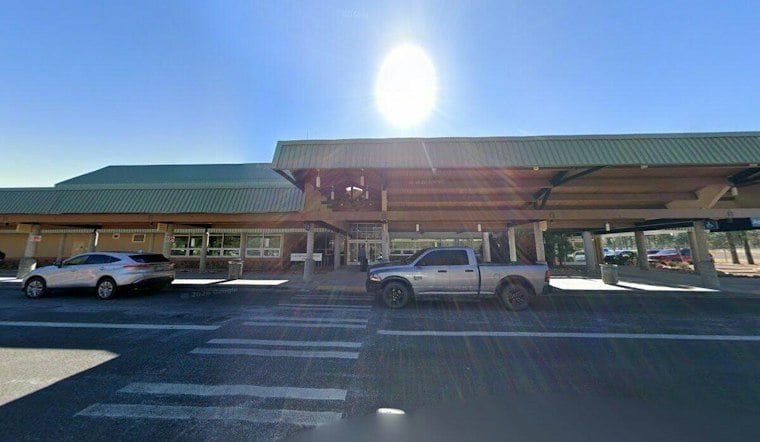
The proposed temporary location is in ASU’s Novus Innovation Corridor in Tempe. The state says it could accommodate an initial class of 300, and the Arizona Daily Star reports that the site could later grow to more than 1,200 cadets. Arizona’s application also names Flagstaff, near Pulliam Airport, and ASU’s Polytechnic Innovation Zone in Mesa as permanent-site candidates, according to the proposal announcement distributed through EIN Presswire and the Arizona Daily Star.
The two permanent options have different nearby institutions and infrastructure. The Mesa site is next to ASU’s Polytechnic campus and Phoenix-Mesa Gateway Airport; the Flagstaff option is near Pulliam Airport, Northern Arizona University, Lowell Observatory and the U.S. Naval Observatory’s Flagstaff Station. The Star reports that Arizona’s proposed schedules allow for groundbreaking at the Mesa site in 2027 and operation by 2031, while the Flagstaff campus could also be ready by 2031. Those dates are part of the state’s proposal, not a federal decision.
The state’s case draws on universities and industry
Arizona’s application was developed with a steering committee and working group assembled by Gov. Katie Hobbs, according to the announcement distributed through EIN Presswire. The state points to an aerospace sector of more than 1,200 companies, over 65,000 jobs and $30.6 billion in economic impact, figures reported by AZFamily. Its proposal also cites Arizona’s No. 4 ranking in NASA funding and the University of Arizona’s No. 1 public-university ranking for space science, according to the announcement.
The bid further points to ASU’s engineering school and the University of Arizona’s research assets. The Arizona Daily Star reports that the proposal cites the university’s spacecraft-testing chamber and telescope-mirror work, as well as its No. 2 national standing in astronomy and astrophysics research spending. The Star also identifies Flagstaff’s dark-sky designation and Arizona military facilities among the state’s other cited qualifications.
Other states have put forward different locations
Maryland proposes beginning at the University of Maryland and later locating the Academy near NASA’s Goddard Space Flight Center in Greenbelt; the state’s plan also includes a role for the University of Maryland Eastern Shore, CBS Baltimore reports. Colorado has proposed a Colorado Springs site, according to The Colorado Sun. That outlet also reported interest from officials in Alabama, Florida, Louisiana, Nevada, Ohio and Texas.
Other reported proposals include a Texas site anchored by Johnson Space Center, an Ohio location near Wright-Patterson Air Force Base and a Pennsylvania plan to convert the closed Pittsburgh Technical College. The Arizona Daily Star reported those details. Louisiana has proposed a campus at LSU in New Orleans, about nine miles from NASA’s Michoud Assembly Facility, according to Louisiana Economic Development.
A federal decision is still pending
President Donald Trump signed an executive order establishing the Academy in August. A presidential commission is expected to deliver recommendations by the end of 2026 on the institution’s governance, graduate service obligations and permanent location, according to NASA. The Arizona Daily Star has reported that the proposed program would be tuition-free and combine technical study with leadership training, with graduates expected to serve NASA or the government’s civil service. No permanent location has been selected.



