

























































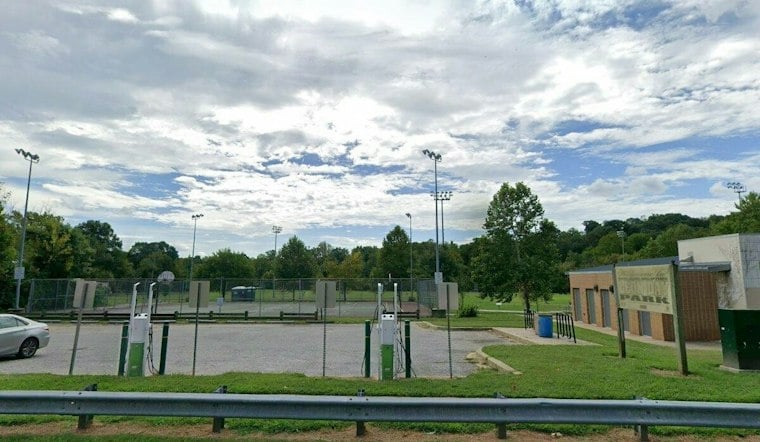
Roughly 2,000 people return to Baltimore from incarceration every year, but the city's support system for them is thin, scattered, and in at least one recent case, bypassed entirely. The gaps have drawn new scrutiny following the arrest of Tyree Reynolds, who was released from prison eight days before a October shooting at Leon Day Park and has since been charged with first-degree murder in the killing of 12-year-old Khloe Ishway.
A Patchwork System With Funding Problems
City agencies' work to help people adjust to life after prison has faced funding challenges for years, and the programs that exist don't always work together, according to The Baltimore Banner. Community leaders have said Baltimore's approach falls short in helping people avoid crime after leaving prison, per the same report. A state dashboard projected that 456 people would return to Baltimore from Maryland prisons between July 2026 and June 2027 alone, which the Banner described as nearly 35% of everyone released statewide.
The scale of the challenge is tied to deeper disparities. MONSE chief of staff Chanel White cited a Justice Policy Institute finding that Baltimore residents make up 40% of Maryland's prison population while representing just 9% of the state's overall population, according to 92Q. White also said roughly 2,000 people return to the city from incarceration each year, the outlet reported.
A Program That Ran Out of Money
The Office of Returning Citizens used a $946,000 grant from the American Rescue Plan Act to launch its Returning Citizens Behind the Wall initiative, the Banner reported, though a Baltimore City government page separately described the same effort as funded by a $986,400 ARPA grant. The program aimed to connect with incarcerated people before their release but served only those eligible for work release, and it ended when federal funds dried up in June 2025. By the end of that year, MONSE said it had completed 224 safe return plans that connected participants to housing, employment and mental health support, per the Banner's reporting.
With that program gone, the office retained two reentry specialists who manage and coordinate return plans, but participants must now self-refer or be referred to get help, the outlet noted. MONSE director Stefanie Mavronis said she hopes to hire at least two additional staff using earmarked MONSE funds. The agency is also building a partnership with the state correctional system to transfer incarcerated people's cases, though that effort was delayed by recent leadership changes at the Department of Public Safety and Correctional Services, which itself has limited resources for reentry work.
Losing Access the Moment You Walk Out
Gordon Pack, reentry coordinator at the University of Maryland Embrace Resource Center, said people lose access to state correctional department information about available resources the moment they leave prison. Pack also said that until recently, no concrete guidelines specified what reentry services local government should actually provide, the Banner reported. Carolyn Scruggs, who began bringing in reentry specialists during her time as Maryland corrections secretary, has since resigned, according to the same reporting.
Baltimore has no program dedicated solely to reentry, the Banner noted, instead relying on a mix of city offices and nonprofits. A 2024 city council ordinance ratified legislation creating the Office of Returning Citizens within MONSE and established a Re-Entry Action Council of people with lived experience to advise on supporting returning citizens, but members of that council weren't sworn in until this month. Baltimore City Council has described the office's mission as serving as an advocate for returning citizens, coordinating services and advising on city policy.
Nonprofits Fill Some Gaps, With Limits
Roca, a violence intervention organization, predominantly works with people who are not incarcerated, offering them therapy tools, housing assistance and employment opportunities, per the Banner. The organization automatically dismisses participants sentenced to more than six months in prison, a policy Roca director Tyrone Kent wants to change. Roca hopes to hire a permanent reentry coordinator, and a Roca violence interrupter began working with incarcerated participants in January.
Kent said accountability can be delivered with compassion, and warned that returning from prison without resources can push people under pressure toward guns or drugs, according to the Banner. Research cited in the same reporting lends some support to that concern: a 2018 University of Pennsylvania Crime and Justice Policy Lab study found that a reentry program in Massachusetts produced significant reductions in recidivism, and an earlier study of a Maryland reentry program reported similar findings.
A New State's Attorney Initiative
Baltimore State's Attorney Ivan Bates is launching the Baltimore Emerging Adults Program in January 2027, a 12-month initiative that will mostly target people ages 18 to 25. Bates has said participants will receive financial literacy lessons, social-emotional training and an apprenticeship, per the Banner's reporting. The program excludes people charged with sex offenses or violent crimes, as well as those incarcerated without the possibility of parole.
The Maryland correctional department will determine eligibility for the program but declined to discuss the initiative in more detail, the Banner reported. Separately, Baltimore allocated $300,000 in its fiscal year 2027 budget to expand the Office of Returning Citizens, which 92Q described as the first direct investment of general funds in the office's reentry efforts.
How Reynolds Moved Through the System
One of the conditions of Reynolds' modified sentence was that he participate in a reentry program, but MONSE never officially engaged him, according to the Banner. Mark Mason, chief of victim services at MONSE, wrote a letter on Reynolds' behalf that influenced his early release. Mavronis said Mason vouched for Reynolds in a personal capacity without supervisors' approval.
Per WMAR, MONSE described Mason's letter as an unauthorized character statement written without permission from the agency's director, and said MONSE has no direct authority over detention release or sentence modifications. Reynolds had been released eight days before the October 3 shooting at Leon Day Park that injured four people and killed Khloe Ishway, the station reported. Mavronis told the Banner that the person who pulled the trigger should be held responsible for that decision. Reynolds now faces a first-degree murder charge in connection with the shooting; the charge is an accusation, and the case has not been resolved.




