

























































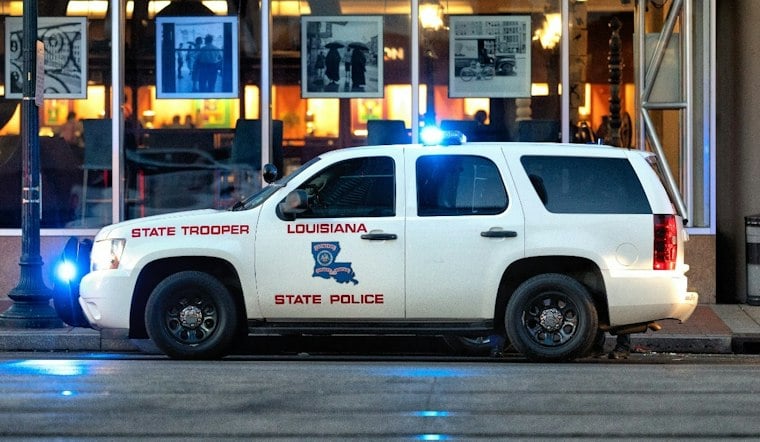
Louisiana State Police is moving into a sprawling new crime laboratory in Baton Rouge, a facility more than twice the size of its predecessor that officials say is designed to handle rising demand for forensic testing across the state. The lab will serve law enforcement agencies throughout Louisiana, including the New Orleans Police Department, which has leaned on the state lab for most of its DNA testing since 2010.
The new facility, which WWL-TV reports cost $110 million, replaces a 53,000-square-foot building with a new 118,000-square-foot structure, though WAFB reported that officials expected the project to run closer to $100 million when construction began, according to WAFB. The construction contractor describes the project as a 115,000-square-foot facility including specialized forensic laboratories, staff offices, evidence warehousing and meeting rooms, according to LEMOINE Building Construction. Crews broke ground on the project in November 2023, and WAFB reports the final beam was signed and placed on the new facility on December 2, 2025, after the current lab — which opened about four decades ago without a major renovation since — had grown increasingly strained.
A Tour Led by a Gretna Native
Crime lab Captain Chad Guidry, a Gretna native, gave WWL Louisiana investigator Katie Moore an exclusive tour of the new facility. Guidry said the project aims to improve the work environment while increasing efficiency, capacity and the lab's ability to meet growing demand, per the station's report. The new building includes upgraded evidence storage, more efficient intake areas and specialized forensic-analysis spaces, along with a firearms section whose equipment connects to the ATF's National Integrated Ballistic Information Network, which allows analysts to compare shell casings and other ballistic evidence to identify possible links between crimes.
One room stood out to Guidry in particular: a mock courtroom where analysts can practice testimony and evidence presentation before facing the real thing. Guidry told the outlet he had never had a room like it in 24 years with state police and 32 years in law enforcement altogether. The lab is also built to accommodate as many as 25 additional employees as Louisiana State Police hopes to grow its roster of analysts and scientists, addressing burnout and turnover that have long plagued the agency's crime lab staff.
Art From Louisiana Hands, Including New Orleans
Beyond the labs and evidence rooms, the building is dotted with artwork from Louisiana artists, some from New Orleans. Charlie Hoffacker created a large lobby installation along with a pelican sculpture fashioned from bullet casings displayed near the firearms section, while Will Nemitoff designed a wall-hanging relief sculpture for the fingerprint analysis area. The facility also includes wellness spaces and dedicated rooms for nursing mothers, additions tied to the broader goal of improving employee retention alongside the lab's scientific capabilities, the same report notes.
New Orleans' Own DNA Delays Still Loom Large
The need for a stronger regional forensic hub traces back two decades, to when Hurricane Katrina destroyed the NOPD crime lab and its DNA testing capabilities in 2005. New Orleans has since built its own new $35 million crime lab, but the opening of its DNA unit has been delayed by construction and design problems along with hiring difficulties, according to the station's report. In the meantime, New Orleans and state lawmakers have provided one-time funding for outsourced testing to help bridge the gap.
Much of the equipment inside the new Baton Rouge lab was transferred from the existing facility rather than replaced, since buying all-new equipment would have added millions of dollars to the project's cost, per the same account. At the time of Guidry's tour, about half of the DNA equipment had been moved over, and Guidry said DNA testing capacity had fallen to roughly one quarter of its pre-move level during the transfer. He said DNA capabilities are expected to ramp back up in January, once the lab is fully set up and re-certified.
Earlier reporting on the current lab's DNA work, also from WAFB, found that the facility overhauled its practices in 2010 to speed up processing, with high-priority cases able to move through collection, extraction, quantification, amplification and detection in about 9 to 12 hours. State police have said the crime lab can assist any law enforcement agency in Louisiana, a mission the new Baton Rouge facility is designed to support at a larger scale once it's fully operational.





