

























































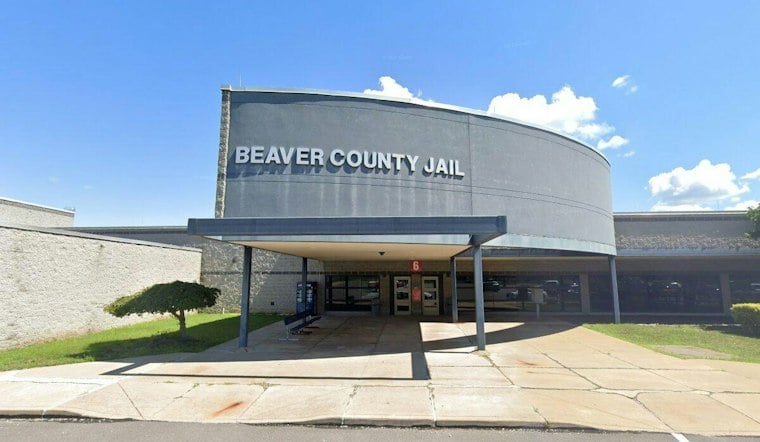
A new report counted 209 ICE detentions across Pennsylvania's 17th Congressional District between Jan. 1 and Aug. 6, with the vast majority concentrated not in densely populated Allegheny County suburbs but in Beaver County, where several local police departments have signed on as federal immigration partners. The numbers, compiled by the office of U.S. Rep. Chris Deluzio, suggest that where local law enforcement cooperates with Immigration and Customs Enforcement matters more to detention totals than how many immigrants actually live in a given community.
According to Axios, Deluzio’s office found that detentions were concentrated in communities where local police cooperate with federal immigration enforcement under 287(g) agreements. The 17th District includes Beaver County and parts of suburban Allegheny County. The office’s analysis used ICE records published by the Deportation Data Project, a California-based group that says it obtains immigration enforcement data from the federal government primarily through Freedom of Information Act litigation, according to the Deportation Data Project.
Beaver County accounted for nearly two-thirds of the district’s detentions despite having a population roughly one-quarter the size of the Allegheny County portion of the district and a foreign-born population of less than 2%, compared with 6.6% in Allegheny County, Axios reported. The reported Beaver County share varies slightly by outlet: WESA put it at just over 64%, while PublicSource described it as more than two-thirds.
Why 287(g) Agreements Loom Large
The report found that 54% of detentions across the district were associated with 287(g) agreements, which allow local police to assist federal immigration enforcement. In Beaver County, where the sheriff’s office and several local police departments hold such agreements, just under 69% of detentions came about as a result of the program, WESA reported. In the Allegheny County portion of the district, 75 detentions were recorded and 26.6% were tied to 287(g) agreements, according to WESA; Axios described the Allegheny County figure as 27%.
Jaime Martinez, executive director of Frontline Dignity, which first shared its analysis with Deluzio's office, told Axios that detentions in the district nearly doubled since 2025. In Beaver County specifically, detentions rose from 25 last year to 134 in the first seven months of this year, according to PublicSource. Martinez said the records raise important questions about whether the narrative surrounding immigration enforcement is matching the available evidence, Axios reported.
Several Municipalities Cycled In and Out of the Program
The reporting period also captured changes in local 287(g) participation. Coraopolis, Stowe, and Springdale took part in the program at some point during the period, though Coraopolis and Stowe later withdrew, according to Axios. Glassport, Pitcairn, and Versailles also joined. PublicSource reported that a majority of detentions in northern Allegheny County for which ICE said it received help from local law enforcement occurred in municipalities without formal ICE agreements. The underlying data do not identify the agencies involved in individual detentions, so they cannot show which departments provided that assistance.
Sheriff Says Jail Role Predates His 287(g) Deal
Beaver County Sheriff Tony Guy told Axios that he had signed a 287(g) agreement but his office had not yet acted on it. He suggested much of the ICE activity may involve local police departments rather than his office. Guy said the sheriff’s office role is limited to the Beaver County Jail in Aliquippa, where it runs a regional booking center. Deputies there process arrests and turn over detainees to ICE upon request, a practice Guy said predates the 287(g) agreement.
“I haven't trained any deputies in accessing [ICE] databases, and we have not received any money from them, nor have we submitted any information to them to receive money,” Guy told Axios. ICE did not respond to Axios' request for comment on the findings.
Detainer Requests and Jail Agreements
Guy’s account above describes Beaver County’s handling of ICE detainer requests as a practice that predates his office’s 287(g) agreement. That local account does not establish a statewide policy for jails or police departments without such agreements. Separately, Spotlight PA found that five Pennsylvania county jails had or recently had federal agreements to hold people; Clinton, Erie, Franklin, and Pike Counties collectively charged more than $21 million for detention in 2024 and 2025. Those agreements provide additional context but do not answer how other counties handle detainer requests.
Most Detainees Had No Convictions, Report Finds
Roughly 67% of detainees in PA-17 had no convictions or pending charges, Axios reported. WESA’s review of the report found that nearly seven in 10 people detained across a 10-county southwestern Pennsylvania region — 69% of 921 detainees — had no criminal charges or convictions, and nearly nine in 10 were not identified as posing any safety threat.
Axios tied the numbers to a broader pattern of escalating federal immigration enforcement in western Pennsylvania, including detentions of asylum seekers with work permits and no criminal records, restaurant raids, and increased activity in places such as Beechview. The outlet named José Flores, an Oakmont bakery worker, and Maklim Gomez Escalante, a Brentwood asylum seeker, among those detained. Nationally, Vera's detention tracker has found that ICE detention populations reached unprecedented levels by mid-March 2026, with populations on almost every day since mid-June 2025 exceeding the previous peak set in August 2019, according to Vera's dashboard, which also found that local jails comprise the most common type of detention facility ICE has used over the nearly 18-year period its data covers.
Deluzio Calls for Scrutiny of Officer Conduct
Deluzio said the 287(g) agreements are increasing ICE detention rates in local communities and redirecting local law enforcement time and resources into federal immigration enforcement that is overwhelmingly targeting people who pose no risk to communities, according to Axios. He also called for an investigation into officers who may have acted outside their jurisdiction. The report, he said, highlights gaps in ICE detention data, including why people were detained under 287(g) in areas without active agreements — a question the underlying records do not answer.





