

























































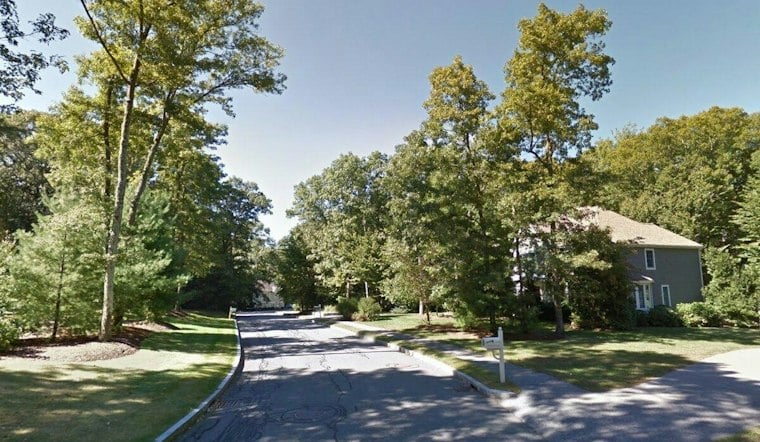
Bedford’s Planning Board voted 4-0 to declare the Page Hill subdivision in default, opening a possible route for the town to address roads and municipal services left unfinished long after their July 15, 2002 deadline. The vote does not itself accept the roads as public ways or establish when repairs will begin, according to The Bedford Citizen’s account of the meeting.
The 58-home development covers about two miles of roads. Bedford approved it in December 1993, and its subdivision plan was last revised in April 1997, The Bedford Citizen reported. The outstanding work includes road repairs or paving, plantings, a storm-drain issue, and required documents and easements.
Default and road acceptance are separate steps
A default declaration gives the town the option to claim the project’s existing security and use funds toward required work; it does not mean the town has already collected that money. Massachusetts law permits a planning board to require security it considers sufficient for subdivision roads and municipal services, under Chapter 41, Section 81U. The Bedford Citizen reported that Page Hill has two performance bonds totaling $357,000, an amount not reassessed since 1997. DPW Director David Manugian estimated the remaining work at about $1 million four years ago and said the cost is likely higher now.
The town has also identified a separate process: accepting the roads at Town Meeting. Bedford’s Unofficial Street Register documents road ownership and acceptance using records that include Town Meeting votes, and is updated to the latest vote. Formal acceptance would make the roads locally owned or accepted, a condition the state’s Chapter 90 guidance sets for using those funds on road construction.
Bedford plans to put Page Hill road acceptance before the spring Town Meeting. The Select Board did not call a special meeting in November, The Bedford Citizen reported. The town still needs easements for utilities and access to conservation land tied to the project. Acceptance would allow Bedford to seek Chapter 90 funding for eligible costs beyond any bond proceeds, but it would not by itself set a repair schedule.
What residents can—and cannot—read into paving schedules
The town’s annual paving program is another distinct process. Bedford Public Works directs residents to its paving-program page for current project schedules and affected roads; that program is separate from decisions to accept Page Hill’s roads. The town has not, in the information reported here, set a Page Hill paving date.
The Bedford Citizen reported that town staff previously held off on a default declaration while trying to resolve physical work and documentation. Draft deeds for open-space parcels and roads were described by town officials as unusable, and staff had received no known resubmissions after redlining them. Manugian proposed increasing security to roughly $1 million; whether the developer will agree to that increase remains unclear.
The condition of a sinkhole on Robinson Drive was disputed at the meeting: Manugian said he had not seen it repaired, while Planning Board member Pam Brown said the developer told her it had been fixed. Residents also raised safety concerns about children walking and biking near the unfinished roads. The town’s next decisions—whether and how to pursue the security, whether roads are accepted in spring, and how outstanding easements and repairs are resolved—remain separate and unresolved.




