

























































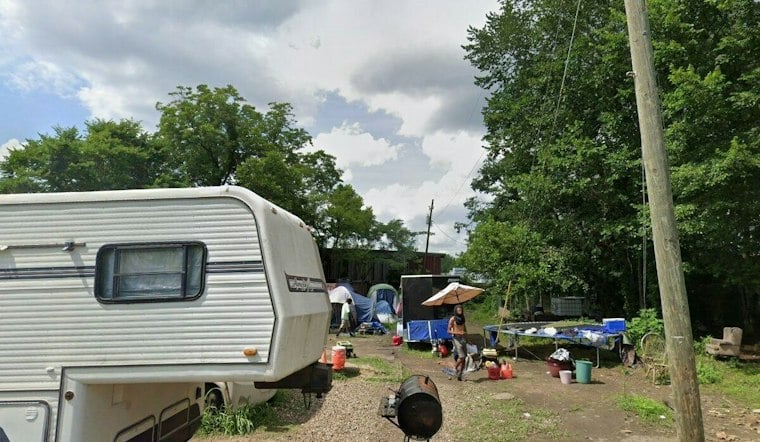
Birmingham's Committee of the Whole has passed an ordinance that would ban camping on public property, require the removal of unlawful encampments and direct the city to connect unhoused residents with resources. The measure now heads toward a vote by the full City Council, but it's already stirring disagreement among members over exactly how far it should reach.
The ordinance prohibits camping on public property, requires removal of unlawful encampments and mandates that the city provide resources to people experiencing homelessness, according to WVTM 13. As written, the station reports, the ordinance is specific to public property — a detail that became a sticking point during committee discussion. One councilor suggested the language should specify city property, while another pushed for stricter rules addressing encampments that pop up on private land, the station reported.
Outreach Before Eviction, Director Says
Birmingham Director of Unhoused Strategies Alanah Melton told councilors she's proposed a tiered enforcement system that leans on outreach rather than eviction as a first step. Dedicated officers respond to people experiencing homelessness and severe mental illness, Melton said, and their approach varies by situation. “Sometimes they go out with the HEART team. Sometimes they go out alone,” she said, according to the same report. Melton added that those officers have had real success getting people into shelter: “They've been really successful in getting people to move to shelter.”
The ordinance still has to clear the full City Council, and it's expected to land on that body's agenda within the next few weeks, per the report. An earlier version of the proposal, listed for a public hearing in late July, would have prohibited camping on publicly owned property including rights-of-way and required removal of unlawfully established camps, while also setting up a city response to connect unhoused residents to services, according to BirminghamWatch. Separately, a blog post from the City of Birmingham describes a version of the proposal that would give 48 hours' written notice before removal from spaces like parks and rights-of-way, with faster action allowed in priority or emergency situations — though it's not confirmed whether that notice provision is part of what the committee actually passed.
The Collegeville Encampment Fight
The push for a citywide ordinance follows a legal battle this past August, when the city moved to evict a religious encampment in Collegeville after nearby residents reported feeling unsafe, WVTM 13 reported. A court order in that case declared the property a public nuisance and ordered it abated, with the judge finding it lacked running hot and cold water, a permanent heat source and a permanent dwelling structure, according to ABC 33/40. The order gave anyone staying at the property until 3 p.m. on Aug. 13 to leave and remove belongings. Nearby residents had also raised concerns about sanitation and loose dogs at the site, the station noted.
How Many People Are Affected
Melton has told councilors that roughly 500 people experience homelessness on Birmingham's streets on a given night, even as unsheltered homelessness has climbed while overall homelessness has declined, according to BirminghamWatch's earlier coverage. The 2024 point-in-time count tallied 911 homeless individuals across Jefferson, St. Clair and Shelby counties, up from 847 the year before, the outlet reported. The city has also put money behind services: last year the council approved two contracts totaling $2.69 million for shelter and support, including $1.1 million to Faith Chapel Care Center for case management, showers and 15 micro-shelters, and $1.5 million to Urban Alchemy to build and run up to 60 micro-shelters at sites still to be determined. The city separately approved $1.7 million for its HEART program, which it said had served more than 400 residents and placed 10 people with service providers.
What Other Cities Are Doing
Birmingham isn't alone in wrestling with how to regulate encampments. More than 300 cities across 14 states have passed camping bans since a Supreme Court ruling cleared the way, according to NPR, which also reported that police and coroner records documented three people crushed by machinery during encampment clearings in California and Georgia. Not every city has gone the enforcement-first route: Omaha officials rejected a proposed camping ban and instead launched an encampment pilot program in November 2025, giving service providers time to line up case management before residents had to move. “They allowed us the time to get in and to make sure that these people had case management going on before they had to move,” one Omaha nonprofit employee told NPR.
Closer to home, Homewood adopted its own ordinance barring camping or overnight sleeping in public areas, parks or vehicles on city property without a permit, giving police authority to issue warnings and remove unauthorized camps after notice, according to the City of Homewood. In Georgia, the DeKalb County Commission adopted a similar urban camping ordinance by a 5-2 vote, a measure that opponents say criminalizes homelessness while supporters argue it targets aggressive panhandling and other safety concerns, per the Atlanta Journal-Constitution. As Birmingham's own ordinance heads toward a full council vote, the debate over where exactly it should apply — and how quickly it should be enforced — is likely to continue.



