

























































Black drivers accounted for roughly 70 percent of traffic stops and citations in the tiny, wealthy village of Bratenahl, Ohio through September of this year, nearly matching the rate recorded in 2024 and showing little lasting change despite years of promised reform. The figure comes from the village's own tracking data, which Bratenahl began compiling comprehensively only a few years ago after outside reporting first raised questions about racial disparities in its traffic enforcement.
The numbers, detailed in a report from Ideastream, show that Black drivers made up approximately 70 percent of Bratenahl traffic stops and citations in 2024, before dipping slightly to roughly 65 percent in 2025. Through September 2026, that share climbed back to about 70 percent, according to the same village records. The pattern has persisted even as Bratenahl officers moved from sporadic to comprehensive data tracking in 2024, the outlet reports.
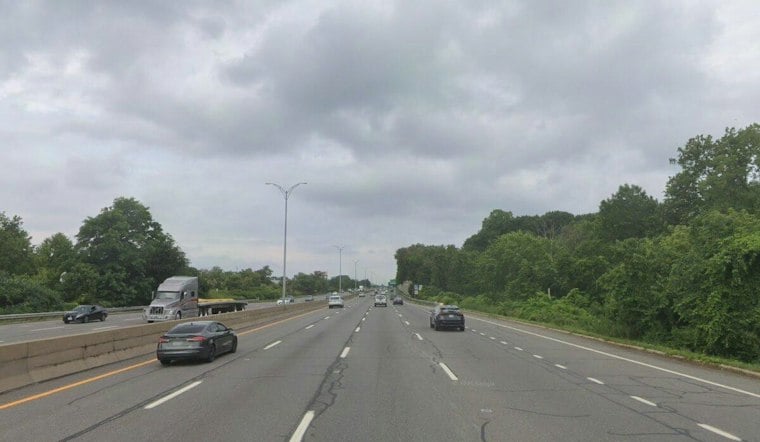
Bratenahl is a 1,400-resident village of waterfront estates and mansions, and its police force patrols side streets along with a three-mile stretch of Interstate 90 that cuts through the village's southern edge, per the same account. The village is surrounded by Cleveland and shares a zip code with the city's Glenville neighborhood, a predominantly Black area, a detail that has fueled scrutiny of who, exactly, is getting pulled over on that stretch of highway.
A Years-Long Pattern of Scrutiny
The current data follows a trail of earlier findings. The Marshall Project — Cleveland estimated, by analyzing Mayor's Court records from late 2022, that the majority of drivers stopped in Bratenahl were Black, even though the village's police force was not consistently recording driver race at the time. That gap in record-keeping prompted Police Chief Charles LoBello to order officers, starting in early 2023, to log the race of every driver stopped, the station notes.
The push for more complete data showed results, at least on paper: race was left blank in 45 percent of traffic stops between January 2020 and September 2022, according to a News 5 Cleveland investigation. By a later stretch, that number had fallen to 15 percent omitted in February, and race was recorded in every single stop logged in March, per a separate News 5 report on the department's improved tracking. Even as the paperwork improved, officers cited Black drivers in 69 percent of their stops between February and the end of 2023, Ideastream has reported.
Bratenahl police officers underwent mandatory anti-bias training after the 2022 Marshall Project — Cleveland investigation first surfaced the disparities. Mayor Keith Benjamin has said racial profiling is unacceptable and has vowed to conduct a thorough review of the stop data, according to Ideastream's reporting. Benjamin has also said any analysis should account for the tens of thousands of drivers who pass through Bratenahl daily on Interstate 90, a factor he argues complicates simple comparisons of who gets stopped.
Officials Deny Profiling as Revenue Questions Linger
Bratenahl officials, including Benjamin and LoBello, have said officers do not racially profile drivers, and LoBello has said race is not used as the reason for a traffic stop, per the same Ideastream report. Benjamin has acknowledged the data could harm the village's reputation and said he takes the concerns seriously.
The scrutiny carries a financial backdrop. Ideastream reports Bratenahl has collected close to $400,000 in Mayor's Court fines, court costs and other revenue since 2024, while News 5 Cleveland separately reported the village has assessed more than $700,000 in fines, court costs and other revenue since 2020 — figures that reflect different time periods and accounting. Earlier reporting found the village collected nearly $114,000 in traffic-ticket revenue in 2023, after bringing in $251,000 in 2020, $315,000 in 2021, and $140,000 through August 2022, according to Ideastream. Bratenahl collects income taxes, and traffic enforcement has also been a source of revenue.
The village has also moved to tighten collection on unpaid court debt. Meeting minutes from Bratenahl's Aug. 20, 2025 Finance Committee show the village introduced a resolution authorizing the mayor to enter a delinquent-debt collection agreement with the Ohio Attorney General's office, with a 10 percent collection fee passed on to the debtor under that agreement.
Not Unique to Bratenahl
The disparity in Bratenahl tracks with patterns reported elsewhere in the region. In Cleveland, Black drivers accounted for roughly 63 percent of traffic stops in 2024 despite making up about 32 percent of the city's driving population, and were searched more frequently than white drivers, according to Cleveland.com. A Harvard economics professor's Cleveland-commissioned study, cited in that same report, concluded that racial disparity alone is not evidence of racial bias — underscoring the limits of what stop data by itself can prove.
Bratenahl's wealth and profile have made it something of a magnet for high-profile residents. Taylor Swift and Travis Kelce became residents of the village, with Kelce buying a 3.5-acre Bratenahl property for $5.35 million in March, according to the original reporting. That attention has not quieted local political interest in the stop data: Cleveland Councilman Kevin Conwell, who represents areas near Bratenahl, has said he wants to meet with Benjamin to discuss the findings.
For drivers who end up in Bratenahl's Mayor's Court, the costs are concrete. Eon Fawcett paid $345 in fines, fees and court costs after being cited for speeding and failing to use a turn signal in late September, while Brandon Shelley left court the same day with a $260 payment plan tied to a speeding and expired-plates citation, according to the reporting. Bratenahl police force records show the department was not consistently recording the race of drivers stopped as recently as late 2022, a gap that set the stage for the tracking changes now shaping the current debate.




