

























































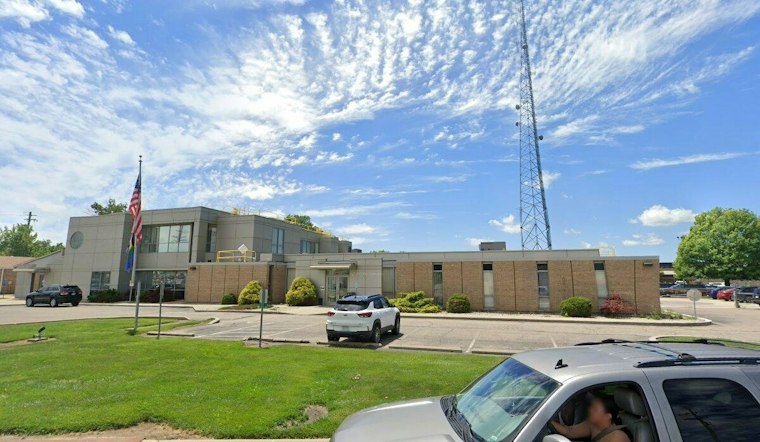
Blanchester village leaders voted 4-1 on Thursday to remove the village's Flock license plate reader cameras, with the cameras expected to come down within three days. The decision came despite objections from Police Chief Robert Houghton, who had urged leaders to keep the surveillance technology in place.
The vote took place during a Blanchester village council meeting, according to WKRC, which reported that a crowd at the meeting wanted the cameras removed. The station's report also noted that Blanchester has now become at least the 13th Tri-State community to disable Flock cameras, joining a wave of departures that has swept through the region in recent months.
Houghton had previously laid out the scope of the village's surveillance setup to the Wilmington News Journal, describing a department that operates five Flock license plate readers, one pan-tilt-zoom camera and one Condor camera. He said images were retained for 30 days and that officers only received alerts when a plate matched an entry already flagged in law enforcement databases, according to the Wilmington News Journal.
Budget Questions Loomed Over the Cameras Before the Vote
Even before Thursday's vote, the village's relationship with Flock Safety faced financial headwinds. The same News Journal report quoted Houghton saying Blanchester likely would not be able to afford renewing its roughly $20,000-a-year Flock contract when it expired the following spring unless new grant funding came through. A later article from the paper put the contract's expiration more specifically, noting the village's agreement with Flock Safety ran through spring 2027.
Debate over the cameras had already been simmering in town for weeks. At a Sept. 30 town hall, discussion was largely dominated by the Flock camera question alongside resident feedback on a proposed village-wide recycling program, the News Journal reported. The cameras were not purely theoretical to residents, either: a Flock alert led officers to a vehicle belonging to a 49-year-old Blanchester man with an active aggravated-menacing warrant, who was then arrested, according to another News Journal account of police activity in the village.
Blanchester Joins a Regional Retreat From Flock
Blanchester's vote lands amid a broader regional reckoning with the automated license plate reader technology. Florence, Newport and the Hamilton County Sheriff's Office have all disabled Flock cameras, per WKRC's reporting. The sheriff's office, described as the largest Tri-State user of the cameras, permanently ended its program after previously pausing it, with officials estimating savings of slightly more than $34,000, WKRC reported separately.
Across the Ohio River, a similar pattern played out in Northern Kentucky. As of early October, all five cities and counties examined by WVXU had terminated or paused their relationships with Flock. That same report noted that as recently as May, Newport Police Captain Kevin Drohan had made the case to city council for buying the Flock cameras the city had been testing for free — a reminder of how quickly sentiment around the technology has shifted in just a few months.
Not every community has moved in the same direction. WKRC reported that Union Township trustees voted to end their Clermont County community's Flock contract and remove about 30 automatic license plate reader cameras, a process expected to take four to six weeks. Lebanon, by contrast, had covered its 20 Flock cameras while weighing whether to continue the program, and its city council ultimately voted to retain its contract, keeping those cameras covered for now rather than removing them outright.
Privacy Concerns Driving the Pushback
WKRC has suggested that public pressure, privacy concerns and unanswered questions appear to be among the reasons Flock cameras have been coming down across Greater Cincinnati. Wilmington, meanwhile, has taken a different tack, discussing the possibility of additional safeguards as a resolution authorizing a Flock contract received its first reading before that city's council, according to the News Journal.
For now, Blanchester's decision leaves its police department without the alert system Chief Houghton had defended as a tool for catching flagged plates tied to active warrants. Whether the village revisits the technology before its contract's spring 2027 expiration remains to be seen.





