

























































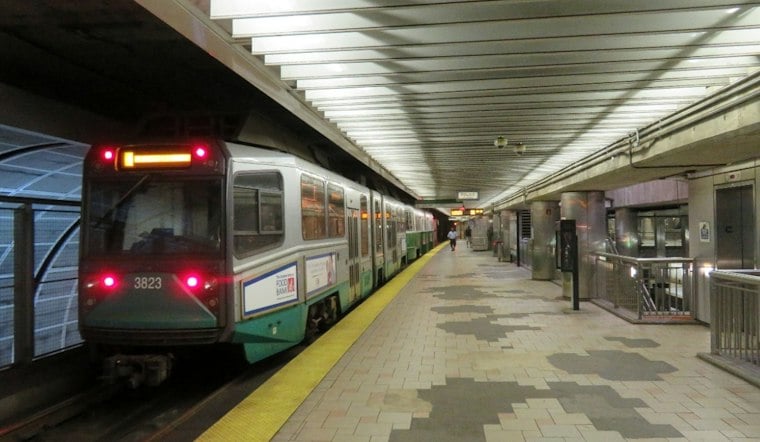
Boston's subway fare just earned a distinction that has nothing to do with how often the trains run on time: the MBTA is now ranked the most affordable metro system for local riders anywhere in the United States. A $2.40 single ticket on the T works out to just 1.21% of Boston's average daily wage of $198, according to new global research comparing transit costs to local incomes.
How Boston Stacks Up Against the World
The finding comes from Remitly, which compared the cost of single and annual tickets across 94 metro systems worldwide, weighing those prices against local salaries using World Bank income data. Globally, the MBTA ranked 10th for affordability of one-way fares, per the same analysis. Remitly was careful to frame the findings narrowly, describing the rankings as a reflection of financial value rather than quality of service, which the research did not assess.
Context from elsewhere in the study shows just how wide that value gap can be. The cheapest single ticket on Earth belongs to the Caracas Metro in Venezuela, priced at roughly 2 cents, while Switzerland's Lausanne Metro tops the list at $7.22 per ride — nearly 400 times the Venezuelan fare, per Remitly's analysis. On the other end of the affordability scale, Remitly found a single ticket on the Rio de Janeiro Metro eats up 6.85% of that city's average daily wage, making it the least affordable fare the firm measured anywhere in the world.
Who Rides for Less — or Free — on the T
Plenty of Boston-area riders already pay less than the standard $2.40, or nothing at all. The MBTA notes that some riders are eligible for reduced fares or can ride the T for free, according to the transit agency's own fares page. Children age 11 and under ride free, and anyone 65 or older qualifies for a discount through a Senior CharlieCard, the agency states on its reduced fares page.
People with disabilities and Medicare cardholders may also be eligible for reduced fares through a Transportation Access Pass, the T's page notes, and riders between 18 and 64 who are enrolled in an approved state assistance program can qualify for income-eligible reduced fares. Those income-eligible CharlieCards can be loaded with cash value for roughly 50% reduced one-way fares, according to the MBTA's income-eligible fares page.
What the Discount Actually Does for Riders
The payoff of a cheaper fare isn't just theoretical. An MIT randomized controlled evaluation studied what happens when low-income Boston-area riders are given a 50% discounted MBTA fare, and the results were measurable: participants who received the discounted CharlieCard took about 30% more trips than those who didn't, according to MIT's Equity Project. Those same riders also took more trips to health care and social services once the fare barrier dropped.
That same MIT research found the discount wasn't a cure-all. Participants in the study still reported reliability, affordability, frequency, and crowding as their top concerns about public transportation in the Boston area — a reminder that a low headline fare doesn't erase the day-to-day friction of riding the system.
How Boston's Discount Programs Compare Nationally
Boston's income-based discount isn't unique, but it's also not the norm nationally. The Regional Plan Association examined 18 income-based reduced-fare programs across major U.S. cities and transit agencies and found that 14 of them set income thresholds higher than the baseline 130% of the Federal Poverty Level, according to the RPA's reduced-fares research. The MBTA's Income Eligible Reduced Fare Program was among the programs the RPA reviewed. Across seven case studies the organization examined, the highest participation rate recorded for any single program topped out at 50%.
None of this new research addresses whether the T's trains show up on time or how crowded they get during rush hour — Remitly's analysis explicitly measures cost against income, not operational performance. For now, the headline number stands largely on its own: a $2.40 ride that, relative to what Bostonians earn, beats out nearly every other subway system in the country.




