

























































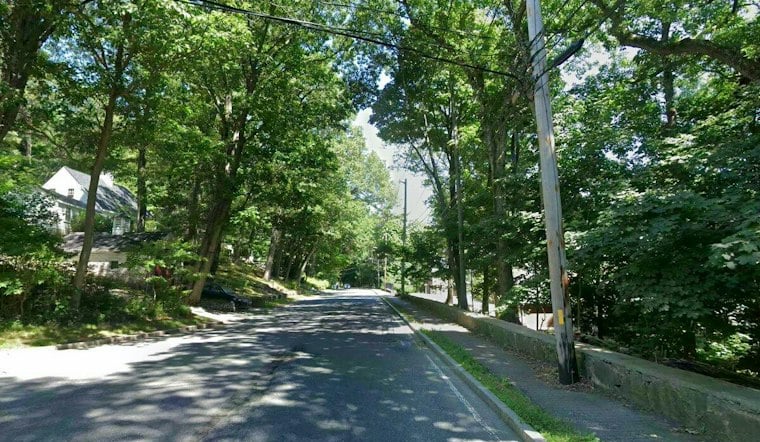
Boston set a goal of expanding traffic calming on neighborhood streets, but residents in Jamaica Plain and the South End say they still lack clear answers about when their streets will be considered. On Allendale Street, a wooded 25 mph road on the Brookline–Jamaica Plain border, the city installed speed humps and later removed them at Mayor Michelle Wu’s direction.
Boston’s 2023 Safety Surge set a target of up to 500 new speed humps a year on smaller neighborhood streets. According to Streetsblog Massachusetts, the city installed hundreds during the program’s first year, including in the Fenway, Fields Corner, South Boston and Jamaica Plain. Installations continued in 2024 in Dorchester, Roxbury and other neighborhoods.
The city’s approach came under review in early 2025, as Wu began her reelection campaign and the transportation department undertook a 30-day review, Streetsblog Massachusetts reported. The city also removed its online map of proposed speed-hump locations sometime that year, leaving residents with less public information about which streets remained under consideration.
A disputed decision on Allandale Street
In February 2025, Wu directed staff to remove about a dozen recently installed humps on Allendale Street, Streetsblog Massachusetts reported. An email from city engineer Dan Merrow linked the instruction to the mayor’s office and recorded his objection.
In a Jan. 29, 2025, email, Merrow wrote that “This decision has caused an incredible amount of internal conflict for me” and “I don’t think it’s the right choice.” He warned that the planned changes would not meet the department’s safety goals, writing, “We know there will be excessive speeding,” according to Streetsblog Massachusetts. A photograph accompanying its report showed a pickup truck exceeding the 25 mph limit on the street.
South End residents look for a plan
Jacob Oppenheim, a board member of the Worcester Square Neighborhood Association, said Boston had largely stopped building speed humps, according to Streetsblog Massachusetts. Residents had been told Worcester Square streets were slated for installation by 2026, but drivers continue to use them as a cut-through to avoid traffic on Massachusetts Avenue, Oppenheim said.
At a September neighborhood association meeting, Michaela Nee said the city was not then installing speed humps and was reevaluating its proposed map, Streetsblog Massachusetts reported. Mayor Wu’s chief of streets, Chris Osgood, told residents their streets would not get humps during that construction season. He said Boston was increasingly incorporating traffic-calming measures into capital work such as annual resurfacing. Osgood and the mayor’s press office could not say how many humps Boston installed in 2026 or identify their locations, the outlet reported.
What the crash data can show
The available figures do not establish whether crash and injury patterns on the Jamaica Plain and South End streets discussed here warrant prioritizing traffic-calming measures. The City of Boston says its streets see 10+ fatalities, hundreds of pedestrian and cyclist injuries, and thousands of driver injuries every year, but those citywide totals do not show the pattern on these particular blocks. Analyze Boston also cautions that its Vision Zero crash records do not indicate the severity of specific crashes or whether medical care was provided in a particular case.
What Boston’s published guidance says
According to CBS Boston, most residential side streets are eligible for speed humps unless they are major thoroughfares, MBTA bus routes, or particularly hilly or curvy. The City of Boston’s Vision Zero page invites residents to identify a location and report a transportation safety concern, saying that input helps guide decisions when streets are redesigned; it does not describe a speed-hump-specific request process. Osgood told residents the city was increasingly coordinating traffic calming with capital work such as resurfacing, rather than handling it separately. The city’s Jamaica Plain Centre South Transportation Action Plan identifies Centre Street as part of Boston’s High Crash Network for people biking. That corridor-level designation does not establish crash patterns on the specific residential blocks discussed here.
A citywide safety question, with local data limits
At an April 22, 2026, Boston City Council hearing on delayed and canceled transportation projects, questions about speed-hump delivery became part of a broader debate over project oversight. Based on estimates from five city employees, The Boston Globe reported that Boston installed about 600 speed humps in 2024 and fewer than two dozen in 2025. The Globe also reported that 11 current or former Cabinet employees said a directive requiring mayoral approval had brought most city transit and street-safety projects close to a standstill over the previous year.
City officials said the city was evaluating options and that the next phase was not about slowing progress, according to The Boston Herald. Osgood said Boston would coordinate traffic-calming work with capital projects such as resurfacing rather than handle it separately. Gove also told councilors the city would begin its spring speed-hump program the following month.
Councilor Ben Weber, who represents Jamaica Plain, told the hearing that a dozen streets in his district were being used as cut-throughs and that residents wanted speed humps, Streetsblog Massachusetts reported. Weber said the city lacked a firm process and metrics for assessing street-safety requests. Interim chief Osgood and his team were expected to announce a new process for the next construction season, Weber said.
Installations resumed on a limited set of streets
Some projects did proceed in 2026. Weber said speed humps were installed over the summer and fall on Moraine, Atherton and Castleton Streets and Spring Park Avenue in Jamaica Plain. He said Maxfield Street, an 800-foot stretch in West Roxbury, was expected to get humps later that month; the installation had not been confirmed as complete when the report was published. Together, the five streets cover about one mile, roughly one-tenth of one percent of Boston’s total street mileage.
The reported pace in Boston contrasts with Somerville’s recent traffic-calming work. As of an August 2026 Globe report, Somerville had gone four years without a traffic death on its streets after installing 139 striped speed humps on busy corridors since 2019. Serious crashes there fell 50 percent in 2025 compared with the prior year, the Globe reported. Boston’s chief of streets told the Globe that the city installed 300 speed humps total from 2016 through 2022; the 2023 Safety Surge set a far higher annual target, but installation totals later fell sharply.




