

























































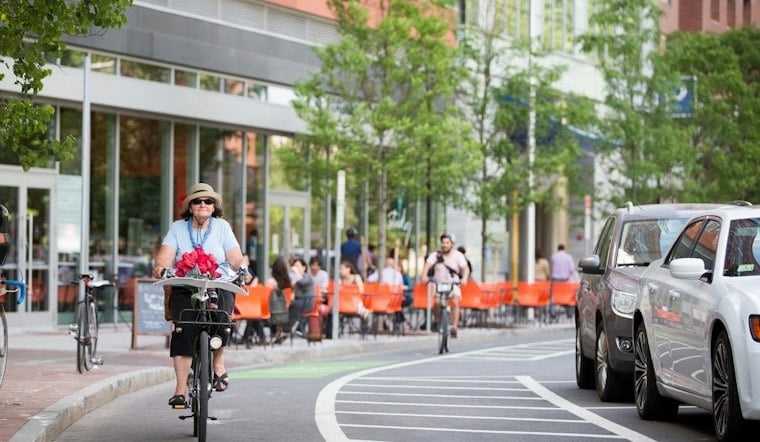
Boston will begin tracking crashes involving e-bikes and e-scooters, city officials announced Friday, as part of a broader update to the city's Vision Zero Action Plan aimed at eliminating dangerous crashes and traffic deaths on Boston roads. The announcement comes as the city works to rebuild momentum on street safety projects that stalled for more than a year amid internal turmoil in the city's transportation department.
What the Updated Plan Covers
Mayor Michelle Wu's office said the initiative is part of a broader update to the city's Vision Zero Action Plan, according to The Boston Globe. Alongside the new e-bike and e-scooter tracking, the update includes a broader set of street-safety strategies. Boston already collects and reports crash data for pedestrians, cyclists, and cars, and uses that data in its public Vision Zero dashboard.
The Vision Zero plan includes crash-trend analysis and identifies high-injury locations. Mayor Wu said Boston has made meaningful progress over the last decade redesigning streets to prevent serious crashes. Truck safety was also discussed at a City Council hearing.
Bike Network Expansion and Recent Council Hearing
Boston also plans to continue expanding its bike-lane network, focusing on filling gaps in existing routes and using more durable separation materials. The city's transportation chief, Chris Osgood, told the City Council's Committee on Planning, Development, and Transportation that Boston has seen about a 60 percent increase in bike ridership and a 23 percent reduction in bike crashes since the city began annual bike counts in 2016, according to Streetsblog Massachusetts. That hearing also covered truck safety and the status of the city's citywide plan for a connected network of safe bike routes.
Street-Safety Work Follows Communication Blackout and Review
The street-safety push follows an effective blackout in public communications over the past year and a poorly managed review the previous year. The review undermined the city's ability to deliver projects and frustrated safety advocates.
Wu appointed Chris Osgood to lead the department and execute her street safety plan this year, naming him interim chief of streets after the death of city planner Louisa Gag, who was killed while cycling in summer 2026. Wu directed city workers to remove a controversial bus lane on Boylston Street and ordered a 30-day review of other recent streets projects.
Following Gag's death, the city installed protected bike lanes and other safety changes on the Mission Hill block where she was struck, and planned similar changes on Tremont Street from Terrace Street to Parker Street, with construction scheduled to begin Oct. 13, weather permitting.
A Statewide Spike in Pediatric Micromobility Injuries
The push to start tracking e-bike and e-scooter crashes comes amid mounting concern about injuries tied to the devices across Massachusetts. Mass General Brigham reported a 173% increase in pediatric e-bike and e-scooter cases in Greater Boston from summer 2025 to summer 2026, and a 200% increase in pediatric micromobility injuries treated since 2023, according to WCVB. A UMass Memorial pediatric orthopedic surgeon separately estimated that emergency-room visits for children hurt on e-bikes had increased close to tenfold over the prior year, and a Baystate Health pediatric emergency physician said e-bike or e-scooter accidents accounted for about 90% of trauma pages in Springfield during one recent week, per WBUR.
Those numbers have played out in tragic local incidents. A 14-year-old e-bike rider in Medway was airlifted to a trauma center after being struck by a car, and weeks later a 12-year-old girl died in Haverhill when the motorized scooter she was riding collided with a bus, WBUR reported. A statewide commission study released in January found a patchwork of local e-bike and motorized-device ordinances varying from town to town, and in December 2025, Plymouth's Select Board rejected a proposed bylaw, in a 3-2 vote, that would have required helmets, set age restrictions, and imposed fines for reckless riding.
City officials say the new tracking is part of the updated Vision Zero Action Plan, which aims to make streets safer.




