

























































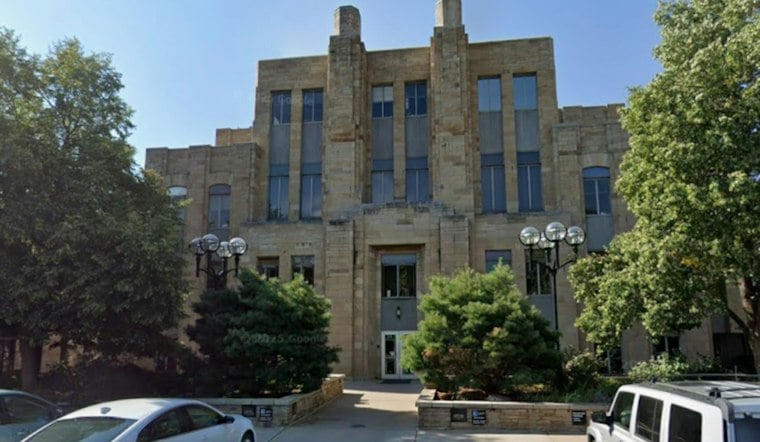
Boulder County voters have decided to grow their Board of County Commissioners from three members to five, according to unofficial results current as of 1am Wednesday. The measure, known as Ballot Question 200, passed with 74,676 votes in favor and 39,098 opposed, a roughly two-to-one margin that signals a significant shift in how the county's government will be structured in the years ahead.
Those figures come from unofficial tallies reported by Longmont Leader, which noted that final results remain subject to certification. The expansion effort was spearheaded by Big Tent Boulder County, a citizen-led group that pushed the measure onto the ballot, as reported by Axios.
A Second Question Decides How the New Seats Get Filled
Voters also weighed in on a companion measure, Ballot Question 201, which asked how the two new commissioner seats should be elected. The hybrid option narrowly prevailed, drawing 55,623 votes compared with 50,463 for an alternative that would have elected all five commissioners strictly by district, per the same Longmont Leader report.
Under the winning hybrid model, three commissioners would live in designated districts and be elected only by voters within those districts, while two additional commissioners would be elected by voters countywide. That marks a departure from the current system, in which commissioners must reside in one of the county's three districts — north, south, and east — but are each elected by voters around the entire county, as the Daily Camera reported.
What Changes, and When
The shift won't happen overnight. The first election for the expanded board is scheduled for November 2028, when voters will elect two additional commissioners, and the five-member board itself is set to begin serving in January 2029, according to the Longmont Leader's reporting. Before that can happen, a redistricting commission is expected to convene in 2027 to develop and approve the new district boundaries needed to accommodate the larger board.
The push for expansion followed a familiar debate over representation versus cost. Big Tent Boulder County organizer Bob Yates argued that a five-member commission would bring in more diverse perspectives and give residents better access to their elected officials, according to KUNC. Axios reported that supporters more broadly argued a larger board would improve representation and prevent any single commissioner from wielding excessive influence.
Commissioners Warned of Cost and Slower Decisions
Not everyone welcomed the change. Commissioner Claire Levy told KUNC that adding two more full-time commissioners could require laying off five or six county employees to cover the cost, warning the move “would require us quite simply to lay off five, six people.” Axios reported that two of the three sitting commissioners raised concerns about additional costs and slower decision-making tied to a bigger board.
This isn't the first time Boulder County has wrestled with the idea. Axios noted that efforts to expand the board have failed multiple times since the 1970s, including as recently as 2018, and The Denver Post reported that a separate push to get a similar question on the 2020 ballot was also stymied.
Boulder County Isn't Alone in the Debate
Boulder County's vote arrived alongside a similar decision in Douglas County, where voters were also deciding this November whether to expand their own Board of County Commissioners, KUNC reported. The Denver Post noted that five of Colorado's 64 counties have already made the move to a five-member commission, with Adams County the most recent to do so after voters authorized its expansion in 2012.
If certified, the result would mark a real change in how political power is distributed across Boulder County government, giving residents two more seats at the table than they've had in decades. For now, the practical effects are still years away — but the vote itself settles a question that has stalled in county politics since the 1970s.


