

























































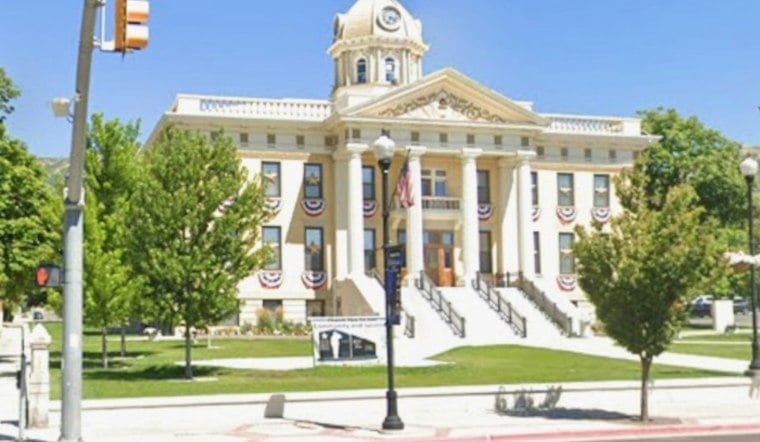
Box Elder County will have two new faces on its county commission after voters turned out incumbents Lee Perry and Boyd Bingham, both of whom backed a controversial vote that cleared the way for a massive data center project proposed near the Great Salt Lake. Perry lost his seat to Nathan Tueller, while Bingham lost to a fellow Republican, as the fallout from the Stratos project continued to reshape local politics.
According to The Salt Lake Tribune, Box Elder County voters had already ousted two county commissioners in primary elections earlier in 2026, a sign of how much anger the data center fight had generated before the general election even arrived. Tueller defeated incumbent Perry in the Republican primary for Seat B back in June and then ran uncontested in the general election, meaning his win was effectively locked in months before Tuesday's returns came through.
The Seat A race was closer, at least on paper. In early unofficial returns tallied around 8:30 p.m. Tuesday, Vance Smith had pulled in 7,215 votes to Alan Williams's 4,306, according to the same Tribune report.
A Vote That Reshaped the Project's Future
At the center of the turmoil is the Stratos project, a proposed hyperscale data center campus developed by Kevin O'Leary. In May, Perry and Bingham voted alongside fellow commissioner Tyler Vincent to let Utah's Military Installation Development Authority create the Stratos project area — a move that, per the Tribune, handed the state authority the power to bypass county zoning and land-use regulations within that footprint. Box Elder County had reported that the May interlocal agreement transferred land-use authority over the project area to the development authority for the next 50 years, as detailed by Utah Public Radio.
Estimates of the project's scale vary depending on the source. Utah Public Radio reported the project area could span roughly 20,000 acres near the northern tip of the Great Salt Lake, while The Verge described it as sitting on 40,000 acres and being pitched as the largest data center in the world. The power-generation figures diverge too: The Verge reported a planned dedicated gas power plant tapping an interstate pipeline to generate 9 gigawatts of electricity, while a water permit application reviewed by Deseret News described 11 clusters of data center buildings paired with a 7.5-gigawatt generation facility made up of fifteen 500-megawatt plants.
Perry Says the Vote Cost Him His Seat
Perry told the Tribune the data center vote cost him the election outright. He said he would not change his vote but planned to push back against the state and demand public explanations going forward, according to the paper's reporting.
Tueller, who will now hold Perry's old seat, struck a more measured tone. He said county commissioners could have communicated better with the public about the project, and that it remained unclear what options commissioners were actually given — including whether they could have negotiated property tax terms. Still, the Tribune's reporting notes Tueller did not think commissioners were wrong to approve the project area given the state's difficult position.
The Seat A Contest and the Anti-Data-Center Vote
In the Seat A race, Williams described himself as the only anti-data-center candidate on the ballot, telling the Tribune his top goal was stopping the Stratos project, which he considered the county's greatest threat. He said he had worked on multibillion-dollar projects elsewhere that ruined small communities, and he did not want that repeated in Box Elder County.
Smith, who held the early lead in unofficial returns, took a different approach. His campaign website showed no stance for or against data centers, and he told the paper the Stratos controversy had magnified an underlying desire among residents for stronger county leadership overall.
The anger among residents wasn't limited to campaign rhetoric. A survey of more than 500 registered Box Elder County voters found that more than 70% of respondents opposed construction of the data center, according to results cited by Utah Public Radio. That opposition came even as commissioners unanimously approved a separate ordinance on June 10 imposing a 180-day moratorium on new data centers and data center power plants on unincorporated county land — a pause that, notably, does not apply to the Stratos project itself. Box Elder wasn't alone in taking that step: Iron County commissioners approved a similar 180-day pause on new and incomplete data center, power plant and utility-scale solar applications in May while they studied impacts and local regulations, per the same Utah Public Radio report.
O'Leary, the developer behind Stratos, has also faced lawsuits over accusations that people opposing the data center worked with the Chinese Communist Party or Chinese government, according to the Tribune's reporting. The legal fight adds another layer of tension to a project that has already upended the county's political leadership well before a shovel has hit the ground.




