

























































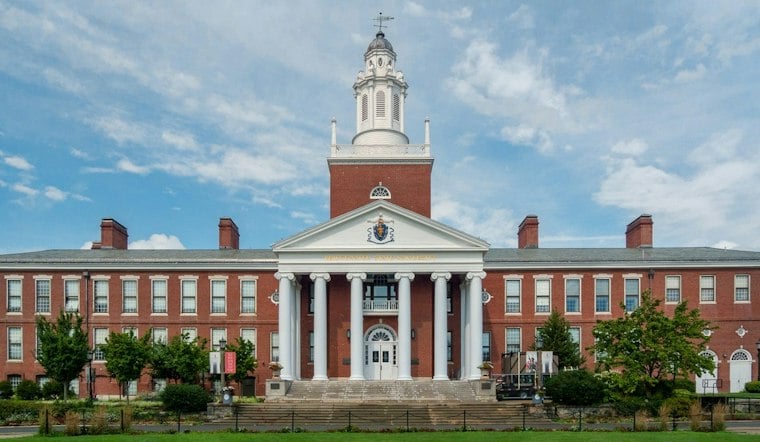
A Bridgewater State University police officer has spent months sharing his days with a black Labrador Retriever named Arby, who could one day become the eyes for someone who is blind or visually impaired. Officer Joseph Locke has been raising the dog through the university's partnership with Guiding Eyes for the Blind, and if Arby passes the organization's assessment, he will move on to formal training and eventual placement with a partner.
According to Bridgewater State University, Arby has shared every moment with Locke since arriving on campus in December, attending Guiding Eyes training sessions alongside him. Locke and other department members have worked on basic obedience and socialization with the dog, the university says. As reported by WCVB, Arby is described as a one-year-old American Labrador Retriever who is currently the only dog in the Guiding Eyes program at the university.
A First-of-Its-Kind Arrangement, Described Two Ways
Bridgewater State describes its collaboration with Guiding Eyes for the Blind as the first time a police department has worked with the organization in this way, per the university's own account. WBSM, however, described the arrangement in a mid-December report as making Bridgewater State police the first police department in the country to raise a guide dog. The two characterizations differ slightly, but both point to the same unusual pairing of police work and guide-dog training.
Bridgewater State's broader Guiding Eyes program traces back to early 2020, when it first got underway at the university, the school's site notes. That program relies on student volunteers who train dogs as service animals for people with visual impairments, with one earlier case involving student raiser Ashley Schepis caring for a four-month-old black Labrador named Watkins.
How Long Does Puppy-Raising Actually Take
Exactly how long puppy raisers spend with their dogs depends on which account you read. The university's most recent telling says raisers are assigned puppies that live with them full-time for 12 to 15 months, while an earlier Bridgewater State story described raisers working in teams to train dogs over a 12-to-13-month period. Guiding Eyes for the Blind, meanwhile, says on its own site that pups may stay in more than one home during a 12-to-18-month puppy-raising journey, with puppies learning key skills from volunteer raisers between 8 weeks and 16 months old.
After that stage, Guiding Eyes says dogs join Guide Dog Mobility Instructors in Yorktown Heights, New York, to learn guide work between 16 and 22 months old, and only dogs that show the self-confidence and composure necessary for guide work are assigned to continue. Bridgewater State's earlier reporting similarly notes that dogs in its program are brought back to the organization's New York headquarters for the final leg of training before being matched with a partner. Guiding Eyes says dogs that complete the full journey are typically matched with a person who is blind and serve as guides until retirement between 8 and 10 years of age.
Other Programs Take a Similar Path
Bridgewater State's approach echoes a national model used by organizations like Leader Dogs for the Blind, which says its standard puppy-raising arrangement involves caring for a puppy at home for 12 to 15 months. That group also allows college students to raise puppies on approved campuses, covering supplies, veterinary care and food in that arrangement, and assigns each raiser a counselor who holds monthly, hands-on puppy classes.
For Arby, the next steps hinge on how he performs when evaluated by Guiding Eyes for the Blind. If he passes, the university says, he will graduate from Locke's care, continue formal training with the organization, and ultimately be placed with someone experiencing vision loss — a path that, win or lose, has already made him a familiar face around the Bridgewater State campus.





