

























































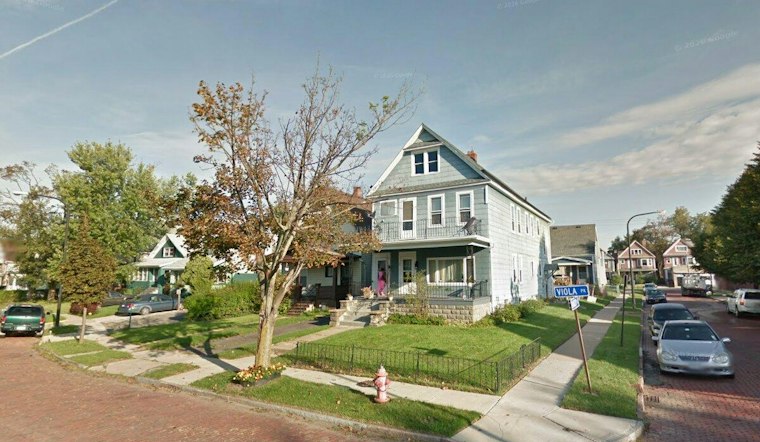
Drivers on Daisy Place used to nearly steer onto the sidewalk just to dodge divots deep enough to bottom out a car. Now the East Side street has a smooth new surface, and residents say the upgrade was long overdue — even though the historic brick underneath never actually left.
Ken Lee, who has lived on Daisy Place for about 25 years, said the road's condition had become a genuine problem for drivers, with cars bottoming out on bricks that functioned like an accidental speed bump, according to WKBW. He said drivers sometimes had to nearly climb onto the sidewalk just to avoid the worst of the gaps. Longtime neighbor Billy Banks, who has lived on the street for more than 20 years, shared photos of Daisy Place before the paving and said the deteriorating surface had made walking difficult and raised real concerns about injury.
Banks told the station the new pavement helps protect both vehicles and pedestrians while improving the street's overall appearance. The area's councilmember had requested the paving, citing the road's dangerous condition, and the city's Department of Public Works sent postcards asking residents whether they objected to the plan. No residents voted in opposition, per the same report.
The Bricks Are Still Down There
Despite the fresh asphalt, the historic bricks on Daisy Place remain intact beneath the new surface, the station reports. Buffalo may restore those bricks in the future, though restoring them is estimated to cost $2 million. Nothing in the reporting indicates that restoration has been approved, scheduled, or funded.
Not far away, Viola Park still has its historic brick roadway exposed and unpaved, and some residents there say they'd welcome the same kind of improvement Daisy Place just got. According to brickstreets.org, the brick stretch runs one block, east from Pansy Place to its intersection with Daisy Place.
Madino Osman, who lives on Viola Park, said the uneven road makes getting around more difficult, especially with children or other family members in tow. She said paving would ease the task of walking her children to the bus and reduce the discomfort family members feel from the bumps along the way, the station reports.
A City Divided Street by Street
Buffalo's East Side is dotted with these historic brick corridors, and not every neighborhood wants the same fix. Across town in South Buffalo, a plan to pave Eden Street, a brick road installed nearly a century ago, was put on hold after neighbors raised preservation concerns, according to a separate WKBW report. Some Eden Street neighbors signed a petition favoring paving, while others signed one calling for the brick to be preserved, and Preservation Buffalo Niagara applied to have the street designated a city landmark, citing a vitrified brick roadway installed in 1928.
A similar split played out on the West Side in 2013. When a city paving project on Ardmore Place uncovered an intact brick road dating back more than a century, residents pushed back against repaving and demanded restoration instead, according to The Buffalo News. Some residents reportedly grabbed gardening tools and hoses to remove remaining asphalt themselves, and the city ultimately restored the street, per a Carnegie Mellon University report on the episode.
That same Carnegie Mellon report notes that Buffalo generally consults residents when a brick street needs maintenance and adopts whatever course of action residents recommend — a pattern that tracks with both the Daisy Place paving and the paused Eden Street plan. The city's own guidance on street conditions notes that resurfacing ratings reflect a snapshot in time, since freeze-thaw cycles and utility cuts can change pavement conditions in ways that don't match an earlier inspection, according to the City of Buffalo.
Memory Versus Practicality
For some residents, the brick streets carry weight beyond pavement condition. Nicolas Price said the brick streets hold personal memories tied to time spent in his grandmother's neighborhood growing up, though he added that he liked the bricks without being too upset about seeing them change.
That tension — neighborhood history against safer, smoother streets — is one Buffalo residents across these brick corridors keep facing street by street. The city's historic preservation standards note that a property or area must have sufficient integrity of location, design, materials and workmanship to be considered worthy of preservation or restoration, according to the City of Buffalo. Whether that standard applies to Daisy Place specifically isn't addressed in the available record, leaving the bricks beneath the new pavement as a question for another day.




