

























































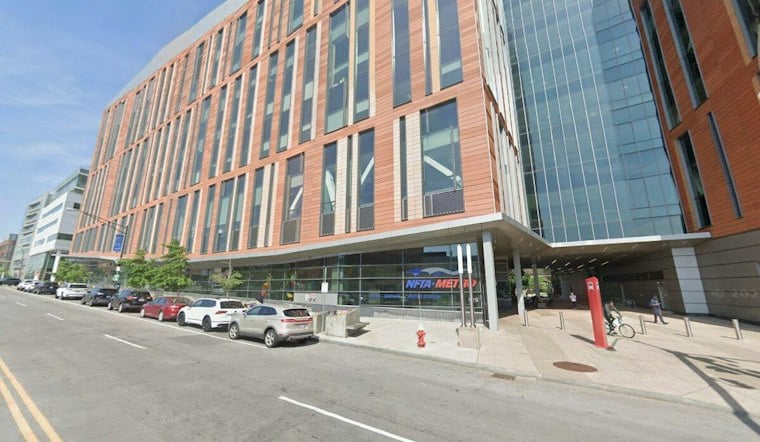
The University at Buffalo's new Jacobs School of Medicine and Biomedical Sciences is a 628,000-square-foot building that cost $375 million, and it comes with a feature few medical schools can claim: a subway station built directly into its lobby. The downtown Buffalo facility blends traditional lecture halls with high-tech, team-based teaching spaces, and its centerpiece is a seven-story atrium rising through the heart of the building.
A Seven-Story Atrium and a Subway Stop Under One Roof
According to buffalonews.com, the atrium anchors a building designed to provide high-tech spaces for teaching students, with a surgery training classroom where surgical lighting units hang from the ceiling and exam rooms outfitted like functioning doctors' offices. The same report notes that the Allen/Medical metro station built into the building features a sculpture known as “Gut Flora.”
That subway connection is no accident of design. Architecture firm HOK describes a station connected to the lobby that further activates the building by creating a space where students and faculty mix with NFTA riders. HOK's project page adds that the facility brings together 1,200 students, faculty, staff, researchers and clinicians, increasing the school's enrollment capacity by 25 percent, and that it includes a 400-seat, ground-level auditorium.
Reuniting an Old Medical School With Its Roots
The move effectively brought one of the nation's oldest medical schools back to where it began. Per HOK, the University at Buffalo returned the Jacobs School to its original roots and reunited it with the Buffalo Niagara Medical Campus, relocating the school downtown from its prior home.
Documents from the Buffalo Niagara Medical Campus indicate the $375 million building opened in December 2017, then opened to students the following month at 955 Main St. That account projected 2,000 faculty, staff and students would be there daily once the school was fully operational — a separate figure from the 1,200 people HOK's project description associates with the building's design capacity. The medical campus's report also noted that the NFTA's newly renovated Allen Medical Campus Station had been integrated into the school, and that a one-block tunnel beneath the building was expected to open.
A Campus That Grew From Three Companies to Billions in Investment
The medical school's arrival capped years of growth on the surrounding 120-acre Buffalo Niagara Medical Campus. The same BNMC report found that in 2002, the campus was in its infancy with just three companies, but by January 2018 it boasted 4.5 million square feet of development and $1.4 billion in investments. Separately, the Buffalo comptroller's office has described the 120-acre site as home to more than 17,000 employees, though that figure appears in a brief excerpt without further date or context.
Together, the figures paint a picture of a once-sleepy stretch of downtown Buffalo transformed into a dense cluster of medical, research and teaching facilities — with a new medical school, its subway stop, and its sculpture-adorned platform now sitting at the center of it.





