

























































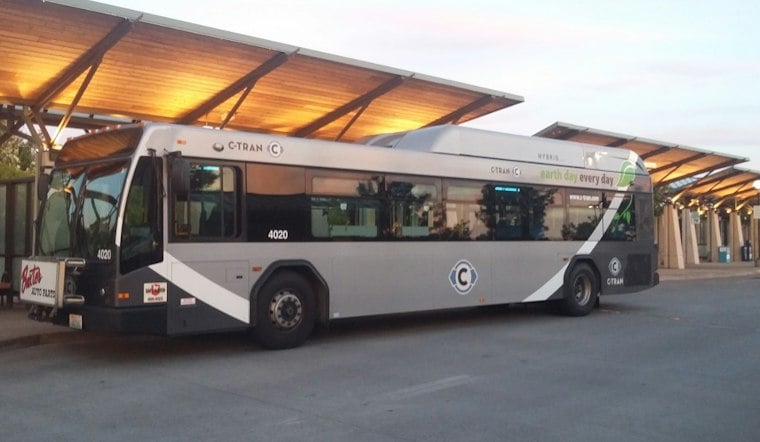
Clark County bus riders could be staring down a future with longer waits, fewer service days and routes disappearing altogether, if C-TRAN's sales tax rate stays stuck at 0.7%. That's the blunt warning agency staff delivered to the transit board Tuesday, projecting the agency could be forced to cut about a quarter of its regular bus service by the early 2030s.
Staff told the board that raising the sales tax rate to 0.9% would be enough to preserve current service levels, according to KATU. Going further, staff recommended a second increase to 1.1% around 2040, part of a broader expansion scenario that would let the agency grow rather than just tread water. Any such increase would need voter approval first.
The warning came during a public hearing held as part of C-TRAN 2045, the agency's long-range planning effort meant to chart the future of public transportation in Clark County over the next two decades, according to C-TRAN. The full C-TRAN 2045 Public Review Draft arrived after more than two years of collaboration with community members and local partners, the agency says.
What's Actually at Stake for Riders
The potential fallout isn't abstract. Per the KATU report, C-TRAN staff said service cuts could mean longer waits, fewer days of service and some routes going away entirely. Both current fixed-route riders and C-VAN paratransit users could face reductions, and the ripple effects could reach beyond the bus itself, making it harder for people to reach their destinations and potentially adding to traffic congestion as fewer people have a viable transit option.
C-TRAN's Taylor Eidt said the service-cut scenario would significantly degrade service and raise household transportation costs, per the dossier's record of the hearing. Eidt added that the agency would work with board members and local communities and seek operating efficiencies regardless of which path the board ultimately takes.
A Smaller Shortfall, But Still a Shortfall
There was a bit of better news buried in the numbers. Staff revised their projected 2030 operating shortfall down to about $3 million, a significant drop from an earlier estimate of roughly $9 million, the station's report notes. Staff attributed the improvement to stronger projected revenue and lower expected expenses. Still, the same report notes staff expect that shortfall to keep growing in the years after 2030.
On the expansion side, C-TRAN's growth scenario would mean more frequent buses, additional evening and weekend trips, and better connections to Vancouver's Amtrak station and Portland International Airport. Whether any of that materializes still hinges entirely on voters agreeing to pay more at the register.
Fares Cover a Sliver of the Bill
Fares currently cover less than 5% of C-TRAN's operating costs, the same report notes, leaving the vast bulk of funding to the sales tax base. Staff cited fare caps, past fare reductions and free student rides as reasons riders shoulder such a small share of the cost. The agency's recommended budget assumes a possible fare increase in January 2028, and staff expect to bring a formal fare proposal to the board sometime in the first half of 2027.
That farebox math tracks with C-TRAN's own recent financial history. Operating revenue per passenger fell from 76 cents in 2021 to 61 cents in 2022, and the farebox recovery ratio sat at 4.9%, meaning Clark County taxpayers covered more than 95% of operating costs that year, according to Clark County Today. Ridership that year also remained about 36% below pre-pandemic levels.
Questions From the Board, No Decisions Yet
Board member Glen Yung pressed staff on the plan's assumptions, asking what would happen if voters rejected tax increases while the agency tried to maintain or expand service. State Representative John Ley, speaking during public testimony, questioned whether riders should be asked to cover a larger share of operating costs themselves. Taylor Eidt emphasized that the plan doesn't commit the agency to any specific funding source, while Sue Marshall said future boards and the public would work through the finer details as funding becomes available.
Rian Davis raised a demographic wrinkle, noting that Ridgefield and Washougal appear to have grown by more than the draft plan's combined estimate of 8,000 added people over 20 years. Which routes or trips would actually be affected by any cuts remained an open question at the hearing, and the board took no action on the long-range plan Tuesday.
What Happens Next
The public can submit written comments on the plan through Nov. 16, and the board is expected to consider adopting it on Dec. 8. C-TRAN isn't alone in facing this squeeze: across the river, TriMet began the largest service reduction in its 57-year history in August, cutting 33 bus lines and one MAX line to address an estimated $300 million budget shortfall, according to OPB. That agency had already cut more than 400 staff positions in July to save $28 million, and still expects a long-term deficit of $158 million even after the cuts take hold. For C-TRAN, the Dec. 8 meeting will be the next real test of whether Clark County voters might be asked to chart a different course.





