

























































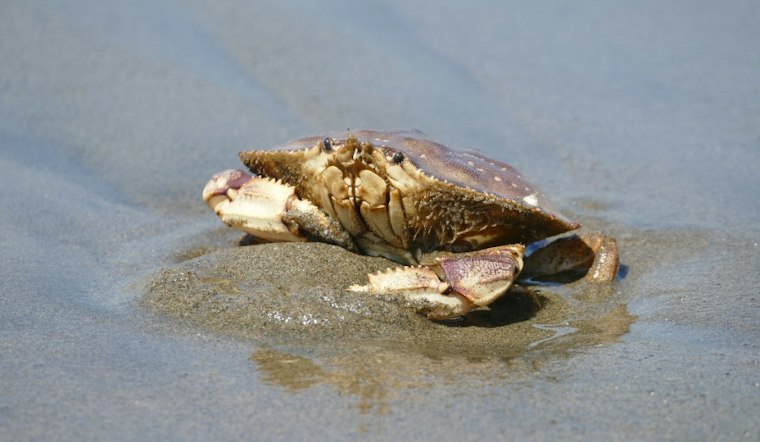
California will not have a commercial Dungeness crab season on dinner tables this holiday season. State wildlife officials have pushed back the start of commercial crabbing from the Oregon border all the way to Point Conception until at least Jan. 1, 2027, citing a troubling run of humpback whale entanglements throughout 2026.
The California Department of Fish and Wildlife announced the delay on Oct. 30, the same day it confirmed recreational crabbing would move forward under trap restrictions, according to CBS News. The commercial season would normally have opened Nov. 15, but officials say the delay is required because of how many whales got caught in gear this year, as first detailed by the Sacramento Bee.
CDFW Director Meghan Hertel said seven humpback whales have been confirmed entangled in fishing gear so far in 2026, with two of those entanglements tied directly to California commercial Dungeness crab gear, according to SeafoodSource. The Mendocino Voice reports that two humpbacks were confirmed tangled in California commercial crab gear this year, while five more were caught in gear nobody could identify. Separately, the Center for Biological Diversity has tracked 24 large whales entangled in fishing gear off California in 2026.
Why the Pause Buys Whales Time to Leave
Per CDFW, the pause is meant to let whales migrate out of California waters before boats start dropping traps again. California regulations require the department's director to close the Dungeness season if three or more humpback whales are found entangled in commercial crab gear, a threshold tied to the entanglement counts officials have been tracking all year. Crabbers have also been told to avoid setting gear in areas where whales are present, per the department.
“CDFW remains committed to working collaboratively with all sectors across California to protect whales and turtles from entanglements in fishing gear,” Hertel said, according to the Mendocino Voice. The department plans a risk assessment in mid-December that will help set the timeline for reopening the commercial fishery and decide whether to lift the current trap restrictions, though no reopening date has been confirmed.
Recreational Crabbing Opens Nov. 7, But Not Everywhere
Recreational Dungeness crabbing is still set to open Nov. 7 under trap restrictions in most areas, according to Local News Matters. The exception is the stretch north of Fort Bragg in Mendocino County, where scientists detected unhealthy levels of domoic acid in crab. State testing on Oct. 20 found domoic acid above the federal limit in three of six crab gut samples collected at Usal, the Mendocino Voice reports.
Taking or keeping Dungeness crab remains illegal in the affected stretch from Cape Mendocino south to the southern edge of the Ten Mile State Marine Reserve until health officials say the danger has passed, per the same outlet. Hoop nets and crab snares are still allowed for recreational crabbers even where trap restrictions apply, though hoop nets must be checked at least every two hours.
A Familiar Holiday Disruption
This marks the seventh consecutive year California has delayed its commercial Dungeness crab season, according to the Mercury News. Domoic acid wiped out Northern California's entire 2015-2016 commercial season and has caused delays in other years, while whale entanglements and a pricing dispute pushed last season's opener into early January 2026, with fishing zones reopening in stages that month, per SeafoodSource.
A year ago, the state delayed sport crabbing from the Oregon border to the Sonoma-Mendocino county line over domoic acid concerns before lifting that Mendocino County closure on Dec. 12, 2025, the Mendocino Voice notes. Oregon has not yet opened its own commercial crab season either, as it works through preseason testing.
The Marine Mammal Center has described this year as its biggest domoic acid poisoning outbreak among California marine mammals, saying the illness has grown more unpredictable and intense since the center diagnosed its first case in 1998. Harmful algae blooms have proliferated along the California coast for decades, according to the center, and domoic acid can cause short-term memory loss, seizures and death in humans who eat contaminated seafood.





