

























































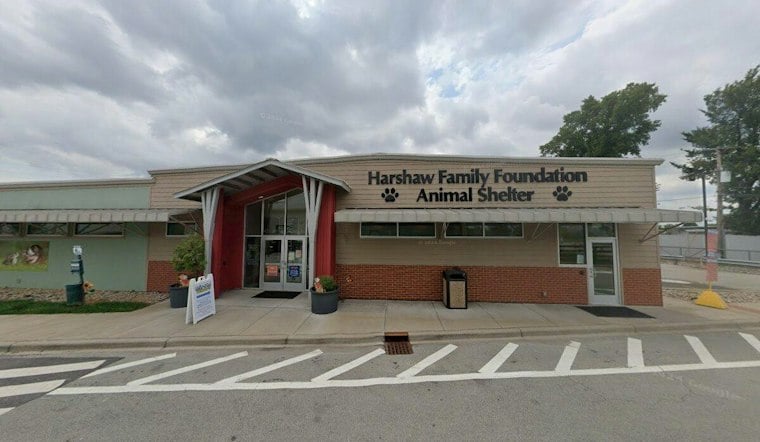
A 39-year-old Camp Taylor woman pleaded not guilty Tuesday to 44 counts of second-degree cruelty to animals, months after investigators say they pulled more than 40 animals from severely unsanitary and hazardous conditions inside her home. A judge set Erika Crick's bond at $5,000 cash during her arraignment.
Crick was arrested Monday on the 44 counts, according to WDRB+WAVE. The case traces back to Aug. 13, when Louisville Metro Police officers conducted a welfare check at a home in the 1400 block of Indiana Avenue in the Camp Taylor neighborhood. Crick was out of town at the time, and court documents said it was unclear who was caring for the animals inside, prompting Louisville Metro Animal Services to respond to the home.
Dead Animals, Newborn Puppies Found Inside
What an animal control officer found at the scene was described in stark terms: at least one dead animal and newborn puppies, along with an odor of feces and urine the officer called overwhelming. Investigators made repeated attempts to contact Crick, according to court documents, and authorities posted abandonment notices as the investigation unfolded.
By Aug. 14, Crick had acknowledged to police that she had been coming to the residence to feed the animals, and the investigation shifted into a neglect case. The following day, she contacted Louisville Metro Animal Services about possibly surrendering the animals, though she did not disclose how many were inside. Officers who responded that day estimated at least 20 dogs were in the home and reported a strong odor consistent with decomposition, while police documented extensive feces, urine and debris, along with contaminated flooring and bedding and heavily soiled, unsanitary areas throughout the property.
Dozens of Animals Pulled From the Property
By the time the removal was complete, authorities had taken more than 40 animals from the home, including dogs, cats, birds and a ferret. Investigators needed protective equipment to enter and remove the animals, and it took several days to find all of them hiding inside the house. The animals removed included two cats, two birds and a ferret, among the dozens of dogs.
Local television coverage from August offered additional detail on the scale of the rescue. WLKY reported that more than 40 animals were rescued from the home on Aug. 17, while a separate WLKY report described Louisville Metro Animal Services as actively removing 41 dogs and puppies from the property that same day — a discrepancy the available records do not resolve. WAVE3 reported that the Aug. 17 rescue totaled 41 animals, including 38 dogs, a ferret and two parakeets, and that humane agents returned to the property the next day to rescue cats and additional dogs still believed to be roaming freely.
Shelter Scrambled to Treat and Place Rescued Animals
The sheer number of animals strained resources at the shelter. Shelter staff stayed until nearly 10 p.m. the night of the rescue, spending hours bathing the animals and treating them for fleas, per WLKY's reporting. By the next day, at least two dozen of the rescued animals had already been placed in temporary foster homes after receiving medical treatment, grooming, food and rest, according to WAVE's coverage. One dog was sent for emergency medical treatment elsewhere in Kentucky, while another was recovering from surgery in Louisville.
The August intake added to what was already a difficult stretch for Louisville Metro Animal Services, which was over maximum capacity after taking in more than 30 dogs and puppies from the single home and was actively seeking foster homes, according to earlier Hoodline reporting on the shelter squeeze. The shelter already had more than 1,100 animals in its care before the Camp Taylor rescue began. Across all of 2025, the shelter recorded 9,845 total animal intakes and achieved a 93.99% live-release rate, completing 4,059 adoptions, returning 1,494 pets to owners and sending 1,275 animals to partner rescues.
Overcrowding has been a recurring strain on the system. In 2023, extreme overcrowding forced the shelter to temporarily lose a six-year streak of avoiding euthanasia for time and space constraints, and the shelter had previously reached maximum capacity on Sept. 15, 2022, after taking in 330 stray cats and dogs in a single surge. The Kentucky Humane Society, a separate organization, places more than 3,000 animals into temporary volunteer foster homes each year.
Charge Carries Statutory Basis Under Kentucky Law
Crick's 44 counts fall under KRS 525.130, the Kentucky statute titled Cruelty to animals in the second degree, according to the Kentucky General Assembly. Crick's case continues following her not guilty plea, with her bond set at $5,000 cash.





