

























































Carlsbad’s City Council voted unanimously last Monday to approve an ordinance that would ban the use of drinking water to irrigate nonfunctional turf, joining a growing list of California cities moving to cut off sprinklers from grass nobody actually uses. The council is scheduled to consider the ordinance again on December 1, and the ban would take effect only if approved a second time. If approved, the ordinance would roll out in phases over the next three years, starting with city-owned property and eventually reaching homeowners associations, while individual homes, cemeteries, public parks and golf courses are carved out entirely.
What Counts as Nonfunctional Turf
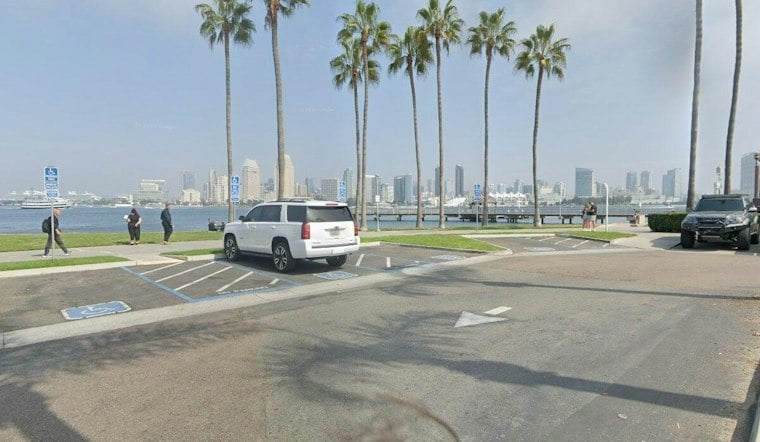
The ordinance, which the council approved in an initial vote on November 16 and is scheduled to consider again on December 1, would target what it defines as turf within street rights-of-way and parking lots, according to the San Diego Union-Tribune. That nonfunctional category also sweeps in grassy strips around industrial buildings, along streets and beside parking lots — basically the patches of green that exist for looks rather than use. Turf boxed in by barriers that permanently block recreational or assembly access is classified the same way, while functional turf is defined as ground cover in recreational-use areas or community spaces that people actually gather on.
If approved, the phase-in would give different property types time to adjust. Most public property would have to comply starting January 1, 2027, institutional, commercial and industrial properties would follow on January 1, 2028, and homeowners association common areas and similar entities would have until January 1, 2029. The staggered timeline mirrors the schedule built into Assembly Bill 1572, the state law adopted by the California Legislature in 2023 that Carlsbad’s ordinance is designed to satisfy.
Leaning on Recycled Water
Carlsbad isn’t starting from scratch. The city already uses recycled water to irrigate parks, golf courses and industrial properties, and has expanded its reliance on non-potable supplies in recent years. Its purple-pipe recycled-water system now stretches 97 miles with 1,000 connections, giving the city infrastructure already built for exactly the kind of shift this ordinance demands.
Not everyone at the council meeting was fully satisfied, though. Paige DeCino, who represented the local Sierra Club chapter before the council, said the ordinance made sense as a way to reduce potable-water use but cautioned against an unintended consequence: swapping real grass for plastic. The Sierra Club opposes artificial turf, arguing it harms the environment, and instead recommends low-water or xeriscape landscaping as the preferred replacement for thirsty lawns.
Carlsbad Joins a Statewide Wave
Carlsbad is far from alone in scrambling to meet the state mandate. Torrance’s City Council unanimously approved its own amendment implementing the ban on November 5, with the same 2028 deadline for institutional, commercial and industrial properties and 2029 for homeowners association common areas, according to the Daily Breeze. Fullerton’s council voted 5-0 on October 20 to pass its own version, per the Fullerton Observer.
Not every city is finding sprawling lawns to convert. Paso Robles evaluated about 65 acres of its city-maintained landscaping and found only about 1.5 acres actually met the legal definition of nonfunctional turf, according to the San Luis Obispo Tribune, though the city still plans to replace that turf with drought-tolerant plants and water-efficient landscaping. Elsewhere, the City of Alameda has already ripped out a spread of lawn at City Hall and replaced it with native plants in anticipation of the law, as reported by KneeDeep Times.
The Stakes Behind the Statewide Push
The motivation behind AB 1572 comes down to how much water outdoor landscaping consumes in the first place. Pacific Institute research officer Heather Cooley told KneeDeep Times that outdoor landscaping still accounts for half of urban community water use across California, and the organization estimates the law could cut urban water use by more than a fifth once fully implemented. The Metropolitan Water District, whose service area spans six counties, estimates that removing nonfunctional turf from nonresidential properties alone could save roughly 300,000 acre-feet of water annually, per the Daily Breeze — though these remain projections rather than measured results. Carlsbad’s ordinance is due for a second reading before the City Council on December 1.




