

























































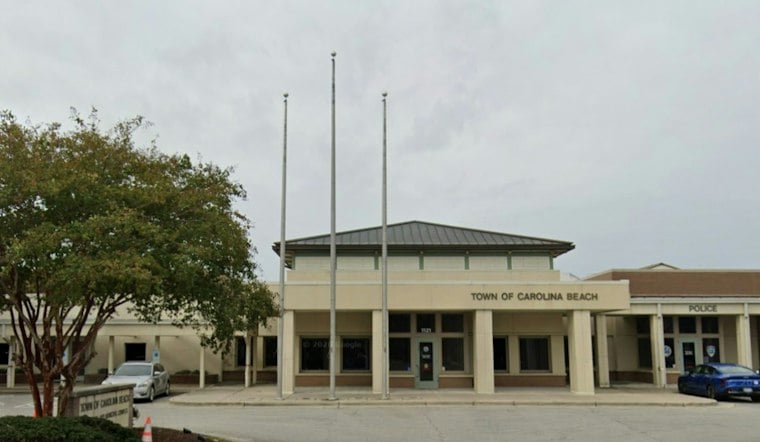
Carolina Beach's Town Council has voted to work with a UNC program built to draw private real estate investment to help shape a beachfront park on land the town bought to keep high-rise condos out of downtown. A presentation last week put retail and development in the same conversation as open space, and some of the people who showed up did not like the mix.
The Town Council heard from the Development Finance Initiative on Nov. 10 and voted to collaborate with it. No park design is final, no developer has been picked, and commercial use is still an option under discussion rather than a settled plan, Port City Daily reported.
Land Bought to Stay Public
The town purchased nine Boardwalk-area parcels for $12 million, down from an initially proposed $15 million, according to Port City Daily. Five of those properties are expected to make up the future park site, WWAY reported. The town contacted DFI to figure out what to do with the acquired property that sits outside that park footprint.
Council members have said the purchase was meant to keep high-rise condos out of downtown. Mayor Pro Tem Deb LeCompte put it directly: the whole reason the town purchased the property was to keep high-rise condos out of downtown. She has also said residential development does not line up with the town's vision for the land. Town officials have described settling a property-related lawsuit as a way to keep the downtown area available for public use rather than high-density development.
Mayor Lynn Barbee has noted that the property sits in the middle of Carolina Beach's business district and has called the project one of the largest the town has undertaken. Seasonal amusement-park rides are not expected to return to the Boardwalk after the acquisition, the Wilmington StarNews reported in an account carried by the Charlotte Observer.
A Park Fee, Then a Developer Cut
Carolina Beach planned to pay DFI $114,700 over two years, using grant funds, for services tied only to designing the beachfront park. Port City Daily reported that the payment would cover only part of DFI's work. The balance would be at risk and paid as a fee by the developers of each successful commercial project, equal to 1 percent of that project's total cost.
That split is the practical hinge. The town's check is for park design. A commercial project that actually gets built would send DFI a percentage of its cost. Town Manager Bruce Oakley said commercial projects on parcels outside the park could help offset the debt on the properties and increase the tax base.
Separately, the New Hanover Community Endowment approved a provisional $3.5 million grant to the town for plans for a public park and event stage, WWAY reported. The grant is provisional, and it is aimed at those park and stage plans, not a finished development agreement.
Town staff have said Carolina Beach has already received multiple calls from interested developers. Associate director Eric Thomas, who hopes to lead the DFI project, suggested a storefront along the sides of a park as a way to maximize land value and offset the cost of the public investment.
Retail Language in the Room
DFI is a UNC-Chapel Hill program that helps North Carolina local governments attract private investment for real estate projects, according to the initiative's own description. It says it has assisted with more than 250 projects in three states and 78 North Carolina counties, drawing more than $1 billion in private investment for communities in the state. At the council presentation, the group showcased earlier retail and mixed-use work.
Kristen Dunn spoke during public comment later that day. She said DFI used the words retail and development frequently, called aspects of the proposal worrying, and said the emphasis alarmed business owners in attendance. She hoped the Boardwalk district would not become a Mayfaire-type place. Tom Hayes echoed her concerns and urged the council to consider how the property will be used next summer.
LeCompte questioned the gap between DFI's prior work and the vision for the Boardwalk area. She said most of the plans involved buildings, and that those buildings did not match what residents had in mind. The town bought the land to stop one kind of private development. The advisory team it invited is in the business of making other private development financeable. That is a distinction residents can hear without a final site plan in front of them.
A Seasonal Calendar, Several Clocks
Director Marcia Perritt said DFI could kick off the project by January 2027. The group plans to prepare a development plan within nine months, with public engagement continuing until DFI makes its recommendation to the council, estimated around January 2028. Town halls are proposed between March and October 2027. Perritt and Thomas also said securing a contract with a developer could take nearly two years from January 2027.
Those dates do not describe construction. The StarNews account said the town expects site work to begin in 2028. Separately, Barbee has described a preferred schedule of beginning a first construction phase next winter and a second phase the winter after that, WECT reported. He has also said the town should not rush crucial decisions, that it has to get the project right, and that delay would hit surrounding businesses harder. He has raised the construction limits of a seasonal town, where the months that matter most for shops are the months that are hardest to tear up.
No builder has been selected, and no commercial use has been locked in. A January 2027 start would still leave public engagement running through the 2027 tourist season.
Four Lots Still on the Table
In a Nov. 12 mayor's report, Barbee said the town was looking at the four purchased lots not committed to the park. The choices he put on the table included operating parking, selling the lots, or pursuing a public-private partnership. As he framed it: should the town operate parking on them, or should they be sold? That question is narrower than a mixed-use district and wider than a park fence.
DFI's regional file is not a blank slate. Port City Daily noted an earlier Oak Island feasibility study for a public-private partnership on town-owned land around a planned recreation center. Wilmington hired DFI in 2013 for a pre-development process on the Water Street Parking Deck, the UNC School of Government has recounted. A 2015 account of that pre-development research described public interest in a mixed-use property with ground-floor retail, two residential buildings and about 650 parking spaces. That was Wilmington research from a decade ago, not a Carolina Beach proposal, but it is the kind of portfolio LeCompte was measuring against a Boardwalk the town said it bought for public use.
What comes next is still a process, not a groundbreaking. If DFI starts in January, engagement would run from spring through fall 2027, a council recommendation is estimated around January 2028, and a developer contract, if the town goes that way on the non-park lots, could take nearly two years from the kickoff. Until then, the four leftover lots can be parking, a sale, or a partnership, and the park the endowment money is provisionally aimed at still does not have a finished design.





