

























































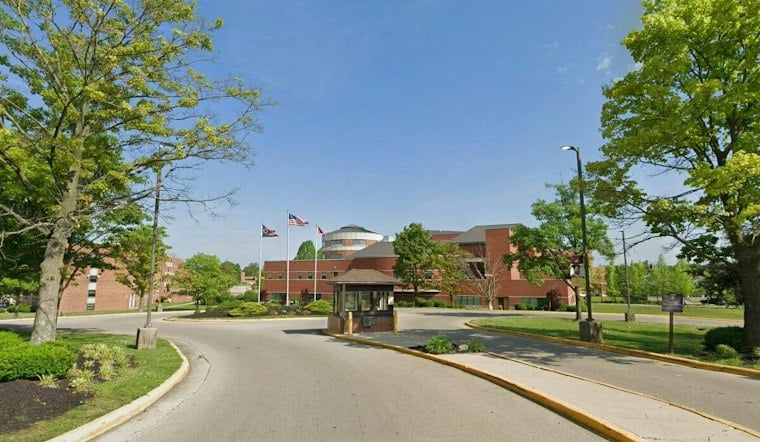
Central State University held a grand opening Thursday for two new research buildings on its Greene County campus, unveiling labs for food-safety DNA testing and the planned use of artificial intelligence and drones in agriculture. The event drew a visit from a top U.S. Department of Agriculture official as part of a broader tour of the nation's historically Black land-grant universities.
According to WHIO, USDA Assistant Secretary for Civil Rights Devon Westhill visited the Central State campus Thursday morning, with Kentucky State University and West Virginia State University also listed as nearby stops on the USDA's tour of 1890 land-grant institutions. Central State became an 1890 land-grant institution in 2014, a designation tied to the university's agricultural research and extension mission. Westhill said USDA wanted to participate in the new research and extension facility, and said the university is putting its funding toward research and facilities that USDA and its partners want to see, per the same report.
Central State President Morakinyo Kuti said the university's work contributes to improving lives in the communities around it, telling WHIO that Central State's reach extends through Xenia, Greene County, and beyond. The newly opened buildings include a research building meant to house faculty, researchers and students, and a storage building for equipment and farmer demonstrations, the station reported.
Inside the New Labs
Among the spaces unveiled is a food safety lab, where the testing process moves through three distinct rooms: food is processed in the first room, its DNA is tested in a second room, and that DNA is protected from outside contamination in a third room, according to the station's report. Kuti said the food safety work is aimed at securing food from its growing stage all the way to consumers' plates.
The campus also now includes a precision technology lab intended to use artificial intelligence and drones to support resource-conserving farming, a lab for checking the cleanliness of water and soil, and a lab dedicated to studying diseases in the human body, per the same account. Those additions build on research priorities Central State had outlined for the broader complex, which the university previously said would pursue discoveries in precision agriculture, food safety, and basic science.
A Years-Long Build With Conflicting Price Tags
The research complex has been years in the making. Central State planned a 40,000-square-foot research facility and a separate storage building for equipment. Farm and Dairy reported that storage building was expected to be finished in early 2024, and Central State's own materials had listed the 40,000-square-foot complex for completion in 2025.
By August, Kuti told the Xenia Gazette that the research building's first stage was scheduled to open in September, with space for extension activities for students ranging from kindergarten through graduate school. Reports have since diverged on what the full project ultimately cost. The Dayton Daily News reported the complex totaled $38 million, including roughly $23 million already spent and another $15 million still needed to finish it, while Spectrum News 1 described it as a $40 million research building containing 15 laboratories covering food safety, precision agriculture, robotics, molecular biology, and soil and water research. The two outlets also differ on how much land the project sits on, with the Dayton Daily News citing 120 acres and Spectrum News 1 reporting 118 acres.
Research Partnerships and Funding
Central State has said the entire project is funded by the USDA and the state of Ohio as part of its annual support for the university's 1890 Land-Grant mission. The land-grant designation has brought the university about $220 million over time.
The complex includes labs for soil and water, food safety, agriculture, and artificial intelligence research. The paper also noted that researchers plan to collaborate with Montgomery County on studying PFAS contamination in soil. Central State's extension educators already serve communities across 42 Ohio counties, according to Spectrum News 1, which also pointed to tight national cattle supplies and limited processing options as ongoing challenges for smaller beef producers trying to move products from farms to consumers.





