

























































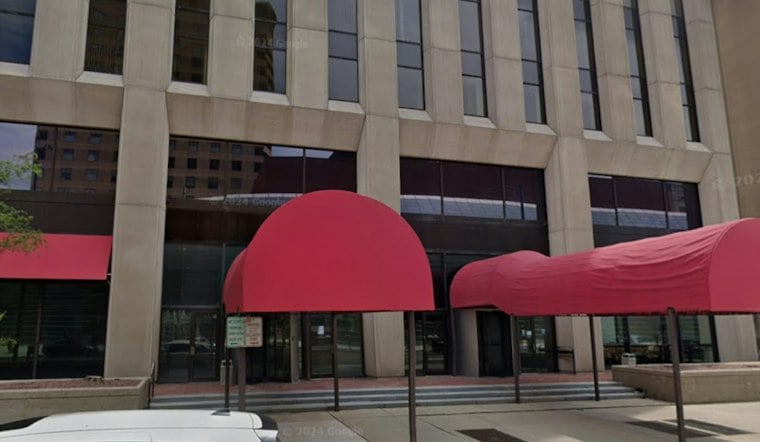
Dayton City Manager Shelley Dickstein declared an emergency to speed up stabilization work on the vacant 27-story office tower at 10 W. Second St., the city's second-tallest skyscraper, after a planned sale of the property collapsed and left the city managing the building once again. The tower, long known as the KeyBank Tower and formerly the Mead Tower, overlooks Courthouse Square in the heart of downtown Dayton.
According to Dayton Daily News, a prominent downtown property and business owner had held a purchase option for the tower but did not complete the purchase, leaving the city responsible for managing the empty high-rise. Steve Gondol's request for an emergency declaration was dated September 14, 2026, and the declaration was issued in mid-September to expedite hiring a contractor for critical work, the paper reported, citing staff writer Cornelius Frolik's reporting.
City Regains Control After Ground Lease Falls Apart
The arrangement that unraveled traces back to a ground lease agreement the city signed three years before publication with Arkham Red LLC, a company belonging to Chris Riegel. That lease included an option for Arkham Red to buy the property for just $10, and the company had committed to invest about $4 million in repairs and renovations within three years, with plans for at least 85,000 square feet of occupied space and at least 90 full-time employees, per the Dayton Daily News report. Riegel also owns Stratacache, a digital signage business that the paper reported has faced significant financial challenges and laid off employees; Riegel has owned or owned Stratacache Tower, the city's tallest building, Stratacache Plaza, the Premier Health Building, and other local properties, some of which he has since sold or listed for sale.
The city regained management responsibility for the 10 W. Second St. property in April 2026, the Dayton Daily News reported. The property had carried more than $600,000 in unpaid rent and tax obligations, which the city agreed not to pursue. Dayton has maintained simple fee title to the building and underlying land since it was constructed, according to the paper's reporting, and Chris Shaw said the lease agreement would have eliminated $1 million in holding costs for the city had it gone through.
Freezing Pipes and a $83,000 Contract
With the building vacant and winter approaching, the Dayton City Commission approved spending $83,000 to hire Hobbs Industrial Piping to drain the water, plumbing and mechanical systems and protect the lines from freezing, the Dayton Daily News reported. Some stabilization work has already taken place at the tower, but the city must maintain access to complete the remaining activities, and the work requires keeping utilities and some elevators in service.
Steve Gondol, Dayton's director of planning, neighborhoods and development, said the building has multiple systems and no immediate reuse opportunity or buyer, according to the newspaper. A memo from Gondol estimated utility and stabilization costs of about $400,000 through the end of 2026 and warned that ongoing management expenses may require quick responses and expedited approvals. The city commission approved funding to winterize the building and preserve its condition for future revitalization, and Dickstein said the city is assessing the costs of carrying the property and maintaining its structural integrity, noting the city had no direct financial obligations tied to the building before circumstances changed. Ongoing holding costs are expected, and the city appears likely to face costs in the hundreds of thousands of dollars in 2026. Dickstein said an evaluation of future development options is underway.
A Familiar Scene Across the Street
The emergency declaration echoes a situation playing out directly across the street, where the city declared its own emergency to repair the building at 34 N. Main St. after its facade and parapet partially collapsed. That 14-story tower, built in 1926 and once called the Paru Tower and Society Bank building and later home to KeyBank, came into city ownership through receivership in 2016 before being transferred to the Montgomery County Landbank to support redevelopment efforts, according to Spectrum News 1. Officials there said high winds had left the parapet wall at risk of further collapse, posing a hazard to nearby properties and the public, and structural engineers consulting with a commercial roofing specialist inspected the remaining parapets and walls before removal and stabilization work began.
The Dayton Daily News reported the city spent at least $3.5 million stabilizing that neighboring building in 2025. Separate reporting indicates the city and county land bank had already spent $1.5 million stabilizing the roof after a storm knocked facade sections loose and damaged the neighboring Stratacache Tower, blowing out dozens of windows, according to a report carried by Yahoo News. Dayton approved a $70,000 contract with a Cleveland architectural firm to study whether the Main Street building could be redeveloped or should instead be demolished. Dickstein, speaking about that property, said proposed reuse options included housing, mixed-use development or first-floor retail rather than office space, adding that one or two groups were looking at the building and that more information could draw additional interest.
Together, the two towers illustrate the financial and logistical strain vacant downtown high-rises can place on a city once private ownership plans fall through. The 10 W. Second St. tower is under city stewardship, while its neighbor at 34 N. Main St. is jointly owned by Dayton and the Montgomery County Landbank. Officials continue to weigh stabilization costs against the uncertain timeline for redevelopment of either building.





