

























































A preliminary plan for a large data center campus near Dayton Airport has Union, Ohio residents buzzing after developer Panattoni presented its vision to city council this week, describing a phased project spanning about 201 acres with four data-center buildings and an administrative building. The pitch drew a crowd of more than 50 people inside the council chambers and another 50-plus outside, with the meeting also streamed live on YouTube.
According to the Tippecanoe Gazette, the project flyer places the campus just north of Dayton Airport on Montgomery County Line Road between Peters and Dog Leg roads. The site is already zoned L1 light industrial, meaning no rezoning is required, per the developer. A concept rendering in the flyer depicts the campus sitting beside an existing electrical substation amid surrounding farm fields.
The flyer lays out three data-center buildings of 320,000 square feet each, plus a fourth at 288,000 square feet, with roughly 300 megawatts of electrical capacity once fully built out. Panattoni expects to construct the campus in phases, the outlet reports, and the City of Union has been negotiating with the company for an unspecified period before this week's public presentation.
Jobs and Tax Impact Still a Question Mark
Despite the scale of the proposal, Panattoni has not released job-count or tax-revenue estimates, the Gazette's reporting notes. The company has said project-specific estimates will be shared once they are available and validated. The flyer does indicate the campus is expected to support permanent jobs in facility operations and related services, and construction will require electrical, mechanical, civil and general trades, with Panattoni saying it will prioritize hiring qualified local contractors, suppliers and businesses.
Union's council is led by Mayor Michael O'Callaghan and Vice Mayor John Bruns, alongside members Robert Bennett, Linda Black, Stephen Brookover, Josh Rarick and Lynne Thomas-Roth. Panattoni says it has 20 years of experience building in the City of Union and is a member of the Ohio Chamber of Commerce. Founded in 1986, the company reports having developed more than 700 million square feet of real estate nationwide, and its data-center team says it has delivered about 9.2 gigawatts of capacity across 16 campuses exceeding 100 megawatts each over team members' careers.
Who Pays for Power, Water and Sewer
Per its project website, Panattoni says it will cover 100 percent of the power, substation and other infrastructure costs needed by the campus, and that the project will not cause Ohio families' electric rates to rise. The company also says enough water and sewer capacity already exists to serve the campus, while it evaluates using treated, recycled water from the local water treatment facility. Any required infrastructure extensions would be funded through the project itself.
Panattoni says it plans building placement, setbacks, landscaping, lighting, screening and sound-reduction measures meant to limit effects on nearby properties, and it will address traffic and site activity in construction plans for each project phase. Residents can review more details, FAQs and updates, or submit questions, through Panattoni's project website.
Open House Set for Nov. 30
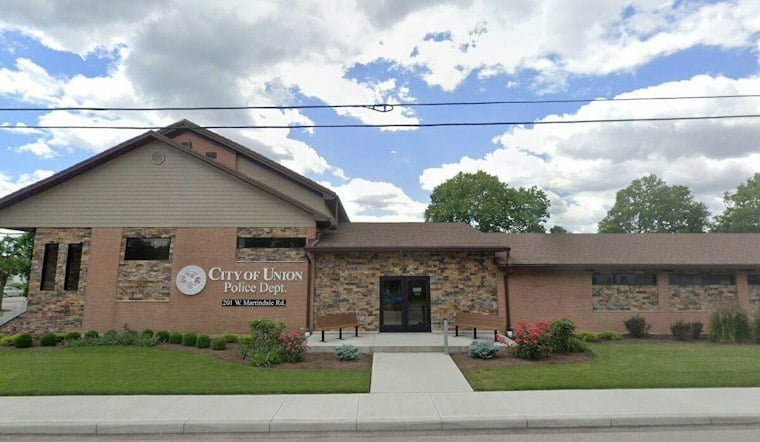
Panattoni will hold an informational open house for residents, subcontractors and scholarship applicants on Nov. 30 from 5 to 9 p.m. at 201 W. Martindale Road in Union. The event will skip a formal presentation in favor of one-on-one meetings with project representatives and tables where attendees can review materials directly.
How Union's Project Compares to Other Ohio Sites
Union's proposal is modest next to other Ohio data-center plans moving through the pipeline. In Piqua, J5 LLC — doing business as Shaytura LLC — is seeking about 1,400 megawatts for a campus on roughly 608 acres at Farrington and Washington roads, a project DataCenterDynamics reports is nearly five times the size of Union's flyer and is tied to Meta as the reported operator. That Piqua development agreement includes a 15-year, 100 percent exemption on certain building-improvement valuation tax increases and a 30-year, 100 percent real-property-tax exemption.
Further south, Pike County officials are gathering public input on a proposed agreement with SB Energy and OpenAI for the PORTS-Pike Technology Campus, which SB Energy — a SoftBank subsidiary — plans at 10 gigawatts, or more than 30 times Union's proposed capacity, on less than 500 acres of private land under its current permit application. According to the Herald-Dispatch, that deal is projected to generate an estimated $3.3 billion in county revenue over 15 years, with a proposed Pike 2040 investment framework announced Nov. 18 aimed at directing funds toward education, workforce development and local infrastructure.
The Grid Behind the Boom
Ohio's data-center rush is straining the electric grid statewide. AEP Ohio's data-center tariff applies to loads above 25 megawatts and can impose minimum demand charges based on at least 85 percent of agreed capacity during a ramp-up period of up to four years, with the overall commitment extending as long as 12 years, according to cleveland.com. A separate AEP Ohio agreement can require a project to repay 100 percent of certain covered construction costs if it is canceled before its target energization date or delayed more than 12 months beforehand.
Statewide spending on baseline grid-reliability projects jumped from about $64.44 million in 2023 to $2.71 billion in 2025, a 4,105 percent increase, per wfmj.com, which identifies the data-center industry as the largest contributor to growing energy demand — though a PJM spokesperson said baseline transmission projects aren't approved because of any single customer or industry trend. Nationally, data-center power demand has climbed an average of 19 percent a year since 2000 while U.S. grid capacity has grown just 2 percent annually, Fortune reports, with Lawrence Berkeley National Laboratory projecting data centers could consume as much as 12 percent of U.S. electricity by 2028.
The buildout has also sparked pushback and new power infrastructure elsewhere in the state. Signal Cleveland reports that all 18 local data-center moratoriums and exclusions on recent Ohio ballots passed, even as the Ohio Power Siting Board approved an 800-megawatt gas-fired plant in Ashville to supply two EdgeConneX data-center buildings and a 1,350-megawatt plant in Millersport to power four Vantage facilities. A study in Nature Sustainability, cited by Signal Cleveland, estimates Ohio's data centers already produce 2.9 million metric tons of carbon dioxide emissions annually, the third-highest total of any state.





