

























































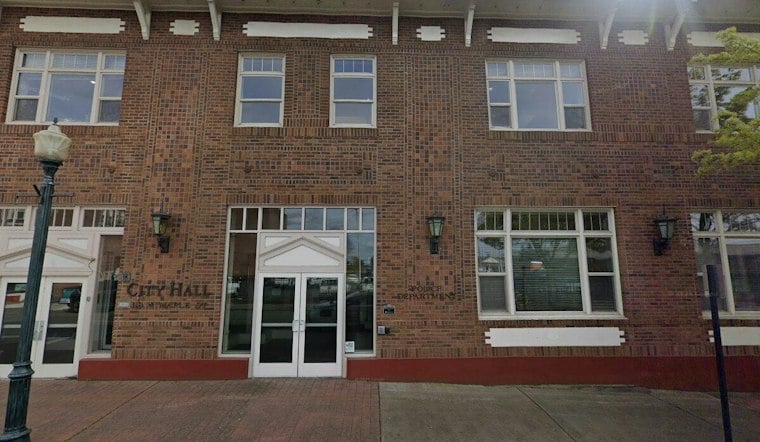
Two of Centralia's most influential business organizations are pushing back hard against a pair of new taxes the city council is considering to close a budget gap worth nearly $2 million. The Centralia-Chehalis Chamber of Commerce and the Port of Centralia both formally opposed the proposed business and occupation tax and a companion square-footage tax, arguing the levies would hurt local companies and chase them toward neighboring towns.
The fight centers on a pair of taxes the city council voted 4-3 on Nov. 10 to direct staff to build into a draft budget, according to The Daily Chronicle. Councilor Jan Nontell's motion to consider the square footage and business and occupation taxes passed with support from Mayor Chris Brewer and Councilors Adriana Garibay and Ray Chapman-Wilson, the outlet reported. Nontell's motion included consideration of a business and occupation tax carrying a $100,000 annual exemption and a 0.002% tax rate.
A business and occupation tax is a tax on a business's gross income, not its profit — a distinction the Chamber of Commerce says matters a great deal. The Chamber warned that a gross receipts tax could create additional financial obligations for businesses regardless of whether they're actually turning a profit, and cautioned that stacking new municipal taxes on top of existing obligations could make Centralia less competitive than neighboring jurisdictions. The Chamber's board of directors signed the letter outlining those objections and also requested greater transparency in the city's budget process.
Centralia considered a local B&O tax during its 2024 budget process, too. The current debate follows that earlier consideration of a new revenue source, rather than introducing the idea for the first time.
Port Says Tax Could Undercut Centralia's Recruiting Edge
The Port of Centralia raised a related but distinct concern: that a square footage-based tax would apply regardless of whether a business was thriving or struggling, since it isn't tied to income at all. The Port argued that Centralia's current lack of business taxes is itself a recruiting tool, helping draw companies away from cities that already impose such levies. It named Chehalis, Ridgefield, Kelso and Winlock as competitors, warning that new taxes could make Centralia sites more expensive and less attractive to prospective tenants. The Port's letter was signed by Commissioners Peter Lahmann, Ally Pickard and Joel Cummins.
Centralia Deputy Mayor Kelly Smith Johnston, who owns and operates Clarity Consulting Partners, raised her own concerns during deliberations about the burden a business and occupation tax could place on local businesses. Ally Pickard, in addition to her role with the Port, also gave public comment to the council as a private citizen and Centralia resident on Nov. 10, urging the council to table budget approval and allow more time to review the available information. The council ultimately tabled approval of the proposed city budget that night.
Conflicting Figures on the Square-Footage Rate
The proposed square-footage tax would charge $0.09 per square foot for spaces between 10,000 and 20,000 square feet, with the first 10,000 square feet exempt, plus $0.12 per square foot for spaces larger than 20,000 square feet. The proposal's final terms are still being written into the draft budget.
Centralia would not be the first Washington city to pair a gross-receipts levy with a square-footage measure, though the mechanics can differ. Des Moines says its B&O tax has included both components since Jan. 1, 2025: its square-footage tax applies to certain business warehouse space exceeding 4,000 square feet, and the amount due is based on whichever component produces the greater tax. Centralia’s proposal, by contrast, would credit the B&O tax against the square-footage charge. Des Moines’ tax rules provide one in-state comparison.
The structure under discussion would also let the two taxes offset one another — the B&O tax would be credited against the square-footage levy, meaning companies wouldn't be hit with both taxes in full, per the Chronicle's earlier report. That detail matters for a council trying to close what the paper described as a roughly $1.9 million deficit while balancing the budget over the next two years without cutting city staff.
A Shortfall Years in the Making
The budget pressure isn't new. The Daily Chronicle has reported that Centralia's tax revenues, including sales tax, have recently risen by as much as 23%, but cost increases have outpaced that growth at 26%. The city's total general-fund reserves top $9 million, but its unallocated reserves — the money actually available to absorb a shortfall — sit at less than $700,000, according to the same reporting. City staff have projected roughly $33 million in general-fund spending over the next two years, a slice of the city's preliminary total budget of about $161.3 million.
Cities may impose a local B&O tax in addition to the state tax, and those revenues can be used for lawful government purposes. The guide also notes that imposing a local B&O tax generally does not require voter approval, though a referendum may be possible. The state auditor’s municipal revenue guide describes the framework.
Centralia has weighed taxing local businesses before: in 2024, the council considered a local business and occupation tax as part of its budget debate. The current proposal also involves a local business and occupation tax.
What Comes Next
The council is set to take up the proposed budget's first reading at its next business meeting on Nov. 24. City staff are expected to present projected revenue from the proposed taxes alongside projected costs of retaining all city staff, including seasonal and part-time workers, giving councilors their clearest side-by-side comparison yet before any final vote.



